Deck Ledger Flashing: A Critical Deck Connection
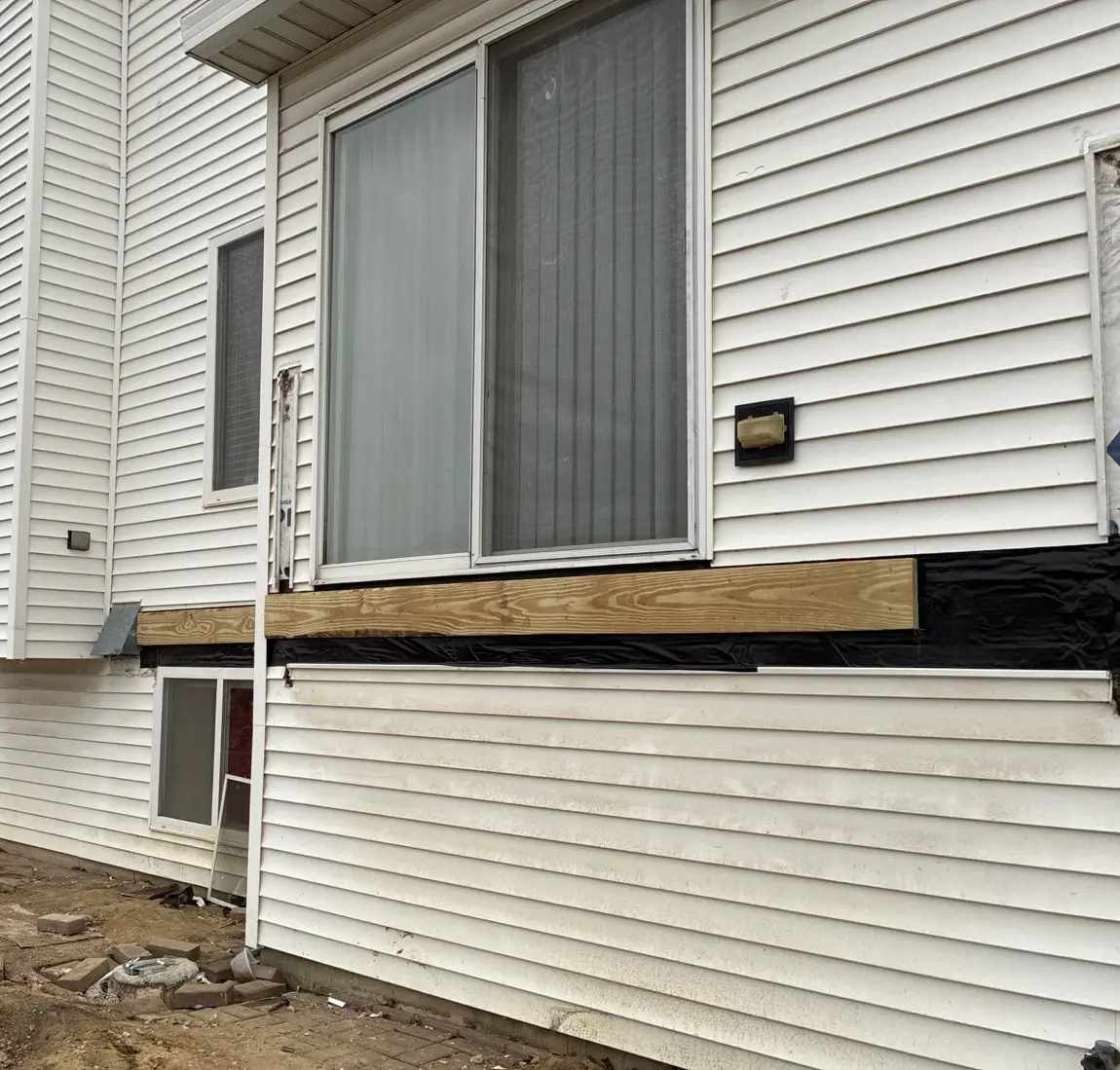
A deck ledger connects an attached deck to your home. It is one of the most important points for both structural support and water management. Without proper flashing, water can reach the ledger and nearby wall assembly. This can lead to rot, weakened framing, and corrosion.
Flashing keeps the water from reaching the ledger and the wall behind it. Poor protection allows moisture to rot the wood, damage the deck framing, and corrode the fasteners. That matters in the Chicago area where decks face rain, snow, ice, and freezing temperatures throughout the year. If you are building a new deck, replacing an old one, or resurfacing, here is what to know.
What Is a Deck Ledger?
A deck ledger is a structural board that connects an attached deck to the house. Deck joists connect to the ledger, while beams, posts, and footings support the outer portion of the deck. The ledger does more than hold the deck against the house. It carries part of the deck’s load and forms a critical structural connection to the home.
The connection has two important jobs:
- Transfer the deck loads to the home’s structure.
- Manage water so moisture does not collect around the connection.
Both are important. Water can damage even a structurally sound ledger if it reaches and remains around it.
Why Is Deck Ledger Flashing Important?
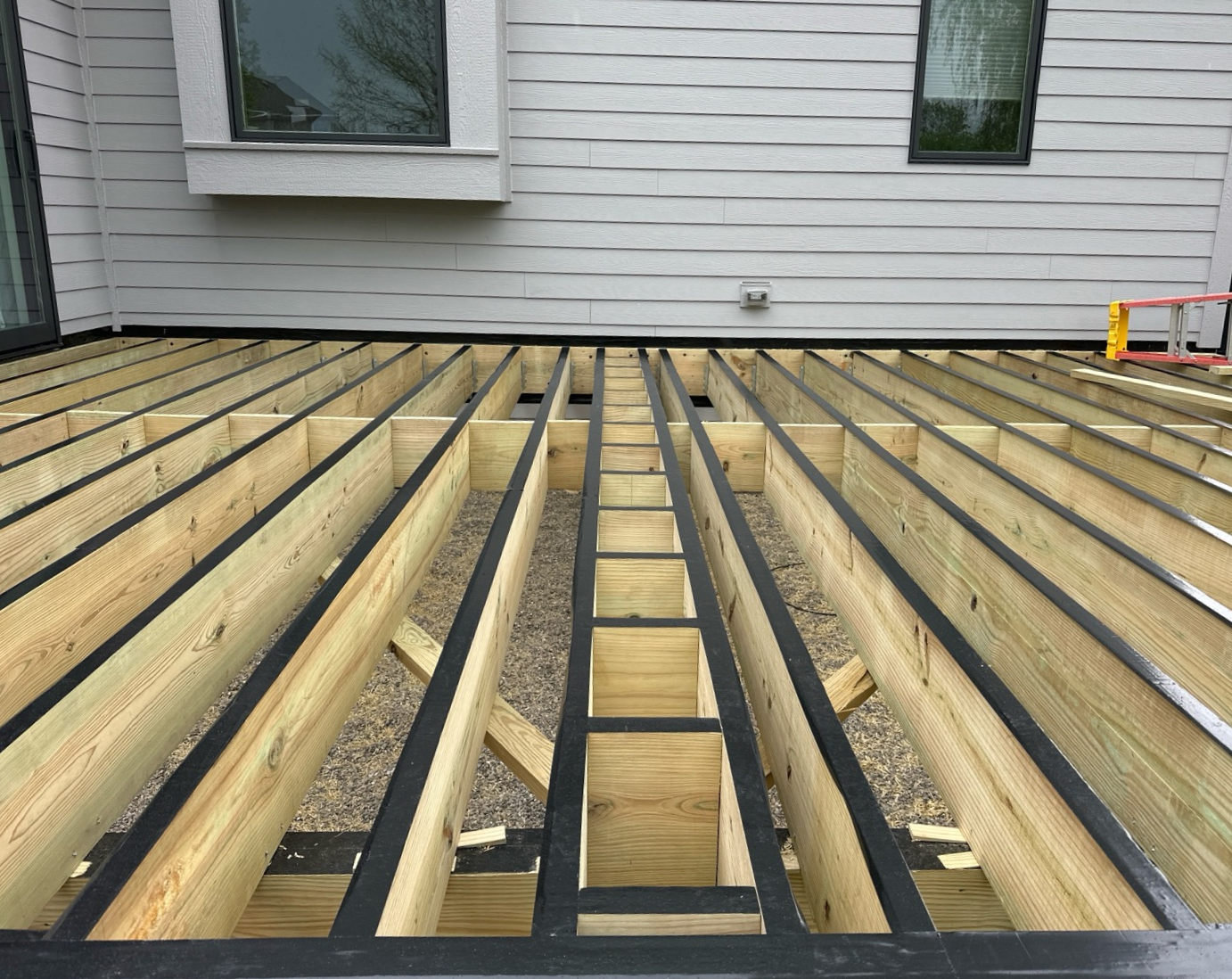
Water is one of the biggest concerns around a deck-to-house connection. Rain can run down the exterior of the home and reach the area around the ledger. Snow and ice add more moisture during the winter. If water gets behind the ledger or becomes trapped against the house, it can contribute to:
- Wood rot
- Deteriorated framing
- Corroded structural fasteners
- Moisture damage
- Water intrusion
- Damage to the surrounding wall assembly
This is one reason an older deck can look fine from above while having serious deterioration underneath. Proper flashing creates a path for water to move away from the ledger and the house. Flashing represents only one component of the overall system. The ledger, structural fasteners, siding, wall assembly, flashing, and drainage details all need to work together.
Why Ledger Flashing Matters in Chicago-Area Weather
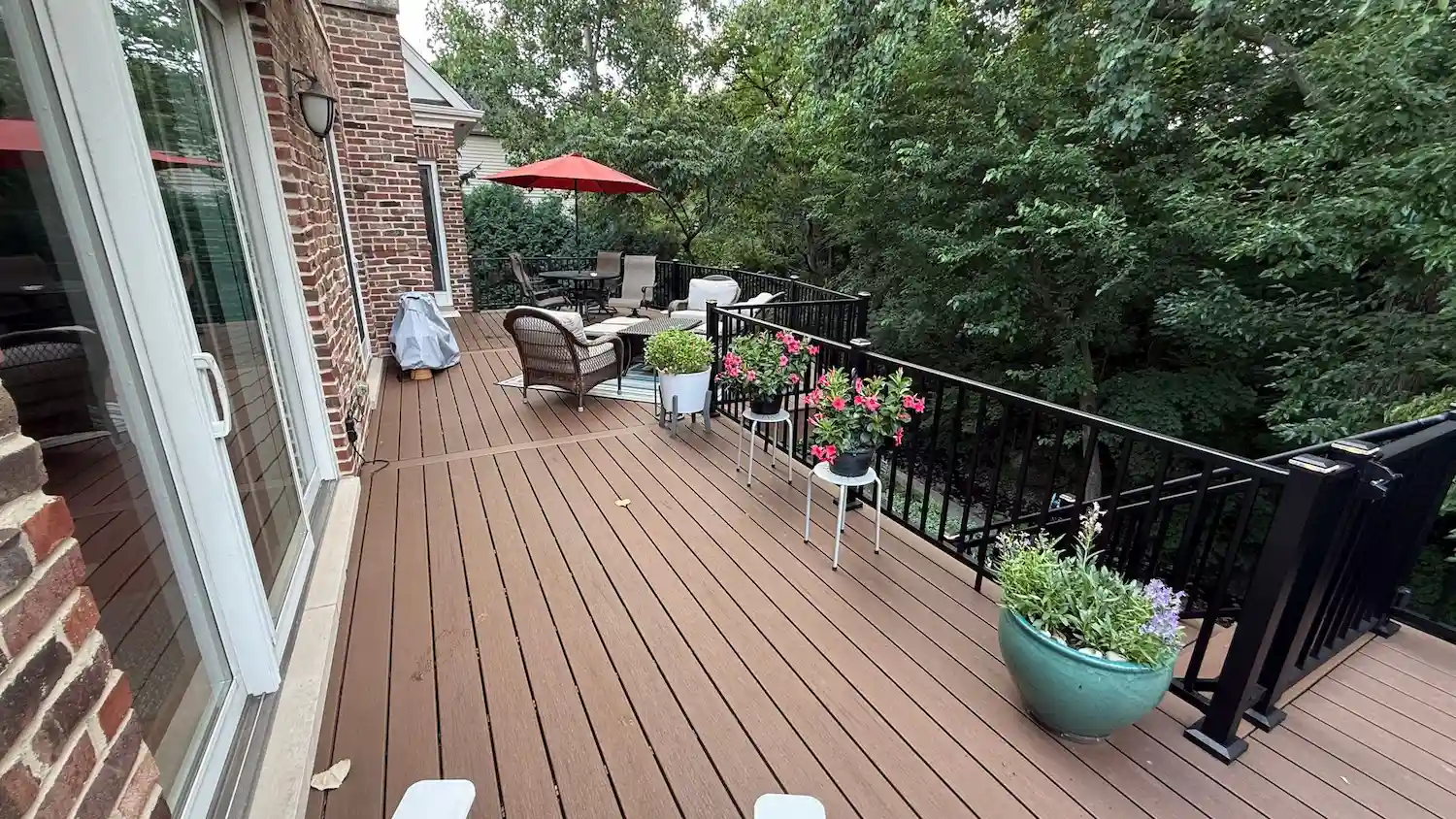
Decks in the Chicago suburbs experience significant seasonal changes. Spring and summer can bring heavy rain. Winter conditions introduce snow and ice that can affect the ledger connection. Freezing and thawing occur throughout the year. That repeated exposure can be hard on wood and other building materials.
When water repeatedly reaches an improperly protected ledger connection, surrounding materials can remain damp and begin to deteriorate. Over time, this can contribute to rot and other structural problems. This is especially important when evaluating older decks in Naperville, Plainfield, Downers Grove, St. Charles, Aurora, and Oswego.
Older decks may have damaged, missing, or improperly installed flashing. In some cases, you must open the surrounding materials to fully assess the condition of the connection. The goal is simple: manage water before it becomes a structural problem.
What Is Deck Ledger Z Flashing?
Deck ledger Z flashing is a Z-shaped, typically metal flashing that helps move water away from the ledger and the house. The exact detail depends on the home’s wall construction and the deck design. A typical flashing system has three functions. The upper section works with the water-resistive barrier. The horizontal section covers the top of the ledger. The outer edge directs water away from the connection. The flashing creates a controlled path for water instead of allowing it to collect behind the ledger.
You may also hear terms such as:
- Ledger flashing
- Z flashing
- Metal flashing
- Flashing membrane
- Flashing tape
- Self-adhered flashing
- Flashing cap
These terms do not necessarily describe interchangeable products. The important question is not simply, “What is the best deck ledger flashing?” What flashing detail is appropriate for this particular house and deck?
How Does Deck Ledger Flashing Work?
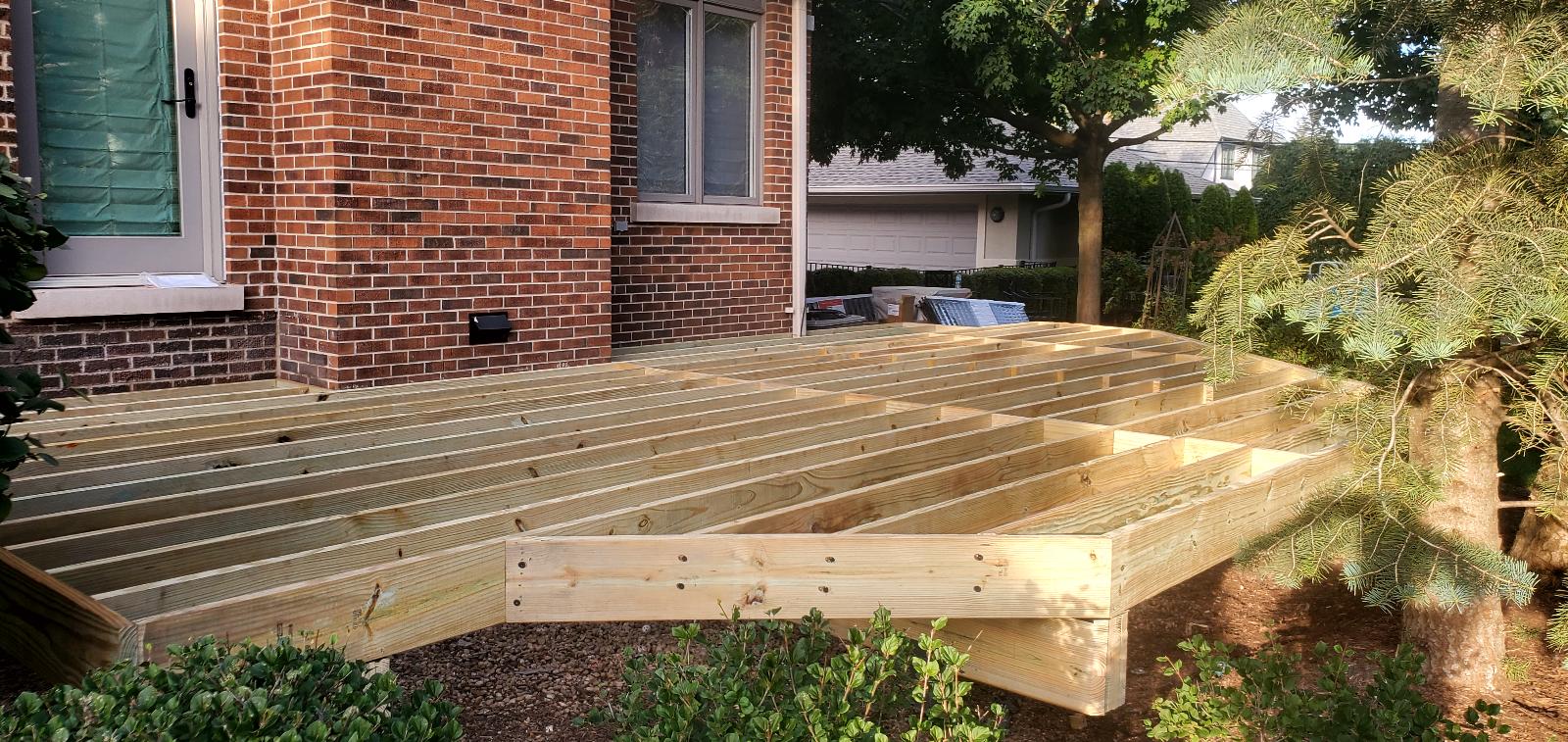
Flashing functions as an integral part of the home’s drainage system. The flashing directs water away from the exterior wall. The flashing then moves the water outward and away from the ledger. The goal is to prevent water from becoming trapped behind the deck connection.
This matters because the completed deck and exterior finishes conceal much of the ledger and surrounding structure. A piece of flashing placed on top of a ledger is not enough by itself. The flashing must work with the wall assembly and the way water moves through the exterior of the home.
Is Deck Ledger Flashing Tape the Same as Z Flashing?
No. Flashing tape and Z flashing are different components that can have different purposes within a water-management system. Installers can use self-adhered flashing membranes and tapes to seal and protect specific areas around the ledger connection. Z flashing provides a physical path for water to move outward.
Flashing tape does not correct a poorly designed structural connection or a drainage problem. The complete assembly matters, including the ledger, fasteners, flashing, wall assembly, siding, and drainage path.
How Is Deck Ledger Flashing Installed?
No single installation method works for every home. The construction of the home, siding, wall assembly, and deck design all affect the connection. A typical project includes several steps.
1. Evaluate the house
The builder needs to understand the home’s framing, siding, exterior wall assembly, and existing water-management system.
2. Prepare the connection
Installers may need to remove or adjust siding and other exterior materials around the ledger. This provides the access needed to properly install the structural connection and flashing.
3. Plan the water-management detail
The flashing needs to work with the wall assembly and provide a clear path for water to move away from the connection.
4. Install the ledger
The ledger must connect to the home’s framing. Use the correct structural fasteners and connection details for the project. A ledger should not rely on ordinary nails as its primary structural attachment.
5. Install flashing and moisture protection
The connection incorporates flashing, membranes, and other water-management components based on the home’s construction.
6. Connect the deck framing
Once the ledger connection is properly established, the joists and remaining framing can be connected. This work involves structural and water-management needs, treat ledger installation as part of the full deck system.
Common Deck Ledger Flashing Problems
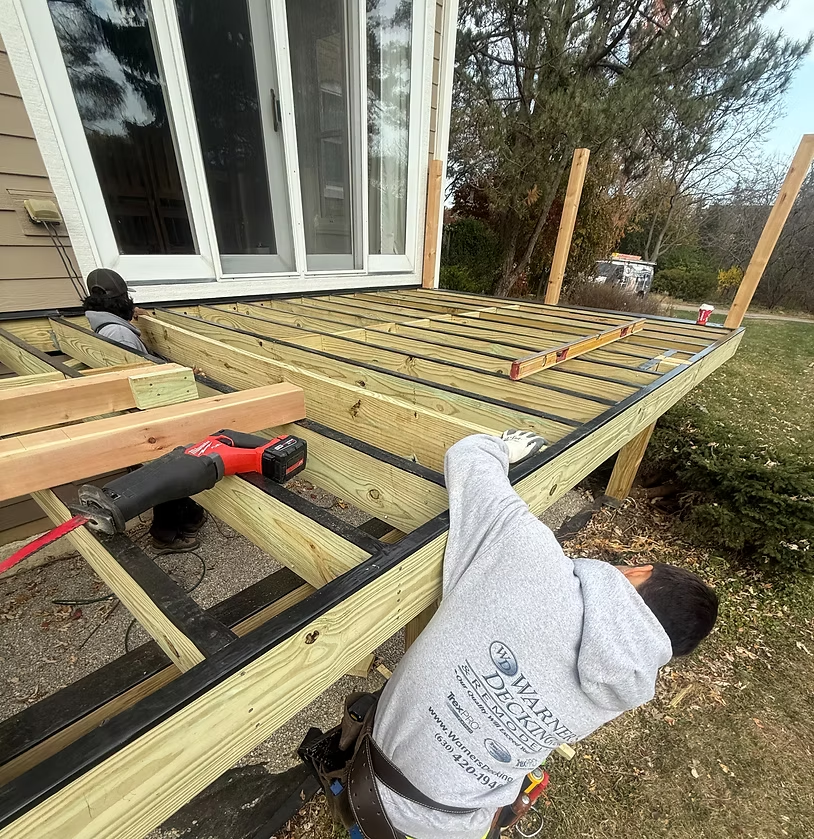
Problems around an older ledger are not always visible from outside the deck.
Common warning signs include:
- Missing or damaged flashing
- Water staining near the ledger
- Wood rot or deterioration
- Corroded structural fasteners
- Persistent moisture
- Separation between the deck and house
- Unusual deck movement
- Damaged siding around the connection
Rot is particularly concerning. Visible damage may represent only part of the problem. If water has reached the ledger for years, deterioration can extend into surrounding framing or wall components. If you notice signs of moisture or movement, have the deck and ledger connection evaluated before installing new decking.
What Happens When a Deck Ledger Rots?
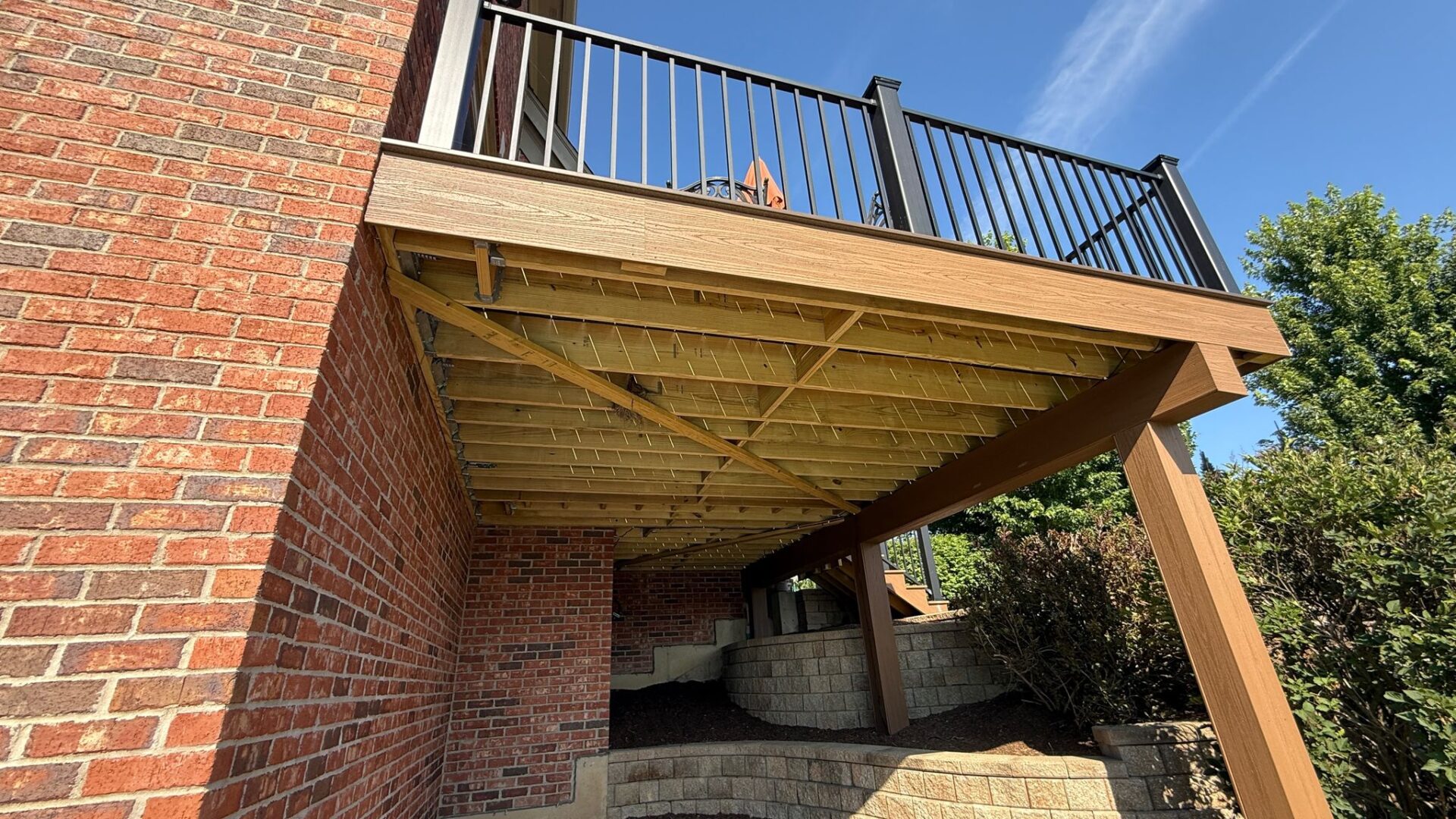
The repair depends on how far the damage has spread. A contractor may need to remove the siding around the connection to assess the extent of the damage. The damage may affect the ledger, rim joist, sheathing, framing, or other wall components.
A larger repair may involve:
- Removing the damaged ledger
- Replacing deteriorated wood
- Repairing damaged sheathing or framing
- Rebuilding the flashing detail
- Correcting the water-management problem
- Reconnecting the deck framing
In some cases, the condition of the existing structure may make complete deck replacement the better option. The important point is that new decking does not fix a deteriorated ledger. A contractor should evaluate the underlying structure before installing a new surface.
Can You Resurface a Deck With an Existing Ledger?
Resurfacing can make sense when the existing structure is still sound. A contractor should evaluate the ledger as part of the overall framing system. The evaluation should consider:
- Ledger and ledger attachment
- Flashing
- Joists
- Beams
- Posts
- Footings
- Stairs
- Railings
- Overall framing condition
If the existing structure is sound, resurfacing may be a reasonable option. Significant damage to the ledger or framing may require you to replace the deck rather than resurface it.
Can You Reuse an Existing Ledger When Replacing a Deck?
Reuse depends on the ledger’s condition and structural integrity. An existing ledger may be suitable for reuse on one project and require replacement on another. The ledger’s condition, not its age, determines whether you can reuse it.
Its condition, attachment to the house, surrounding framing, flashing, and overall construction all matter. Deck replacement provides an opportunity to inspect areas that the existing deck has concealed for years. After removing the old deck, the builder can inspect the ledger, fasteners, framing, and other components. This helps determine which parts can remain.
Questions to Ask Your Deck Builder

When comparing deck estimates, do not only ask about decking materials, colors, and price. Ask the builder about any components that will become hidden after installation. Consider asking:
- How will the deck connect to my house?
- How will the contractor manage water around the ledger?
- Which flashing detail will the contractor use?
- Which structural fasteners will the contractor use?
- Can the contractor reuse my existing ledger?
- How will the contractor evaluate the existing ledger and framing?
- How will the contractor address any rot or deterioration?
- How will the new deck work with my home’s existing siding and wall assembly?
A deck contractor should clearly explain the installation approach and what the project includes.
Deck Ledger Flashing FAQs
What is deck ledger flashing?
Deck ledger flashing is part of the water-management system around the connection between an attached deck and the house. It helps direct water away from the ledger and vulnerable areas.
What is deck ledger Z flashing?
Z flashing is a metal flashing installed above the deck ledger. It directs water away from the ledger and the deck-to-house connection.
Is flashing tape the same as Z flashing?
No. Flashing tape and Z flashing are different components. Contractors may use them together as part of a larger water-management system, depending on the project.
What is the best deck ledger flashing?
No single flashing product is suitable for every home. The appropriate solution depends on the home’s construction, siding, wall assembly, deck design, and water-management requirements.
Can I resurface a deck without replacing the ledger?
Possibly. A contractor should inspect the ledger, flashing, framing, fasteners, and overall structure. This inspection will determine whether the existing frame is suitable for resurfacing.
What are signs of a bad deck ledger?
Warning signs can include wood rot, water stains, corrosion, or separation from the house. They can also include unusual deck movement, damaged flashing, or damage near the deck-to-house connection.
Protect the Deck-to-House Connection
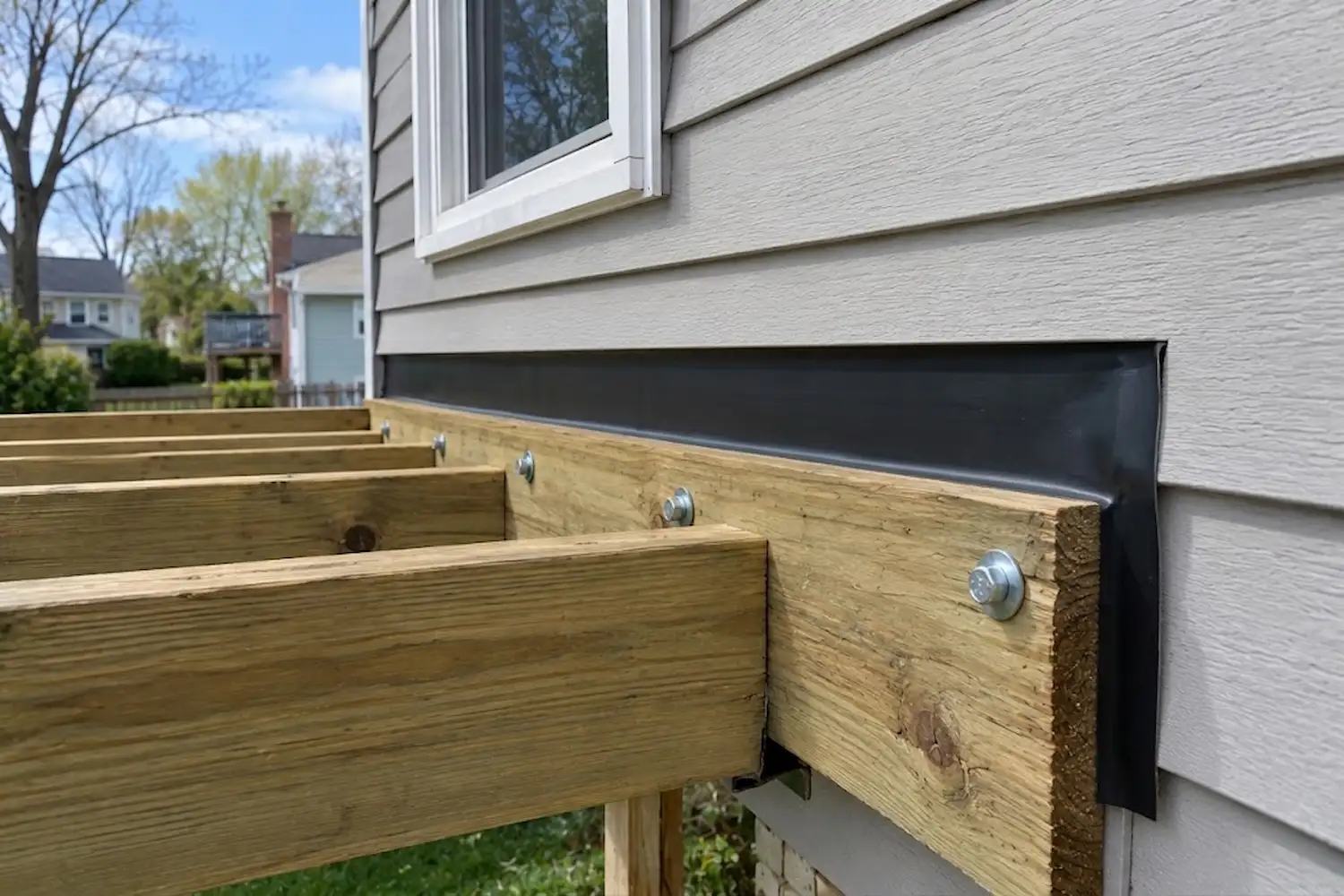
A deck consists of more than the decking boards visible from above. The foundation, posts, beams, joists, ledger, fasteners, flashing, stairs, and railings all work together as one system. For an attached deck, the ledger connection requires careful attention. It must provide structural support and manage water effectively. If you are planning a new deck or replacing an existing one, ask your deck contractor how they will connect the deck to your home. Ask how they will manage water around the ledger. The best time to address a ledger problem is before moisture turns into rot.