
Composite Decking Joist Spacing: 16″ vs. 12″ On Center
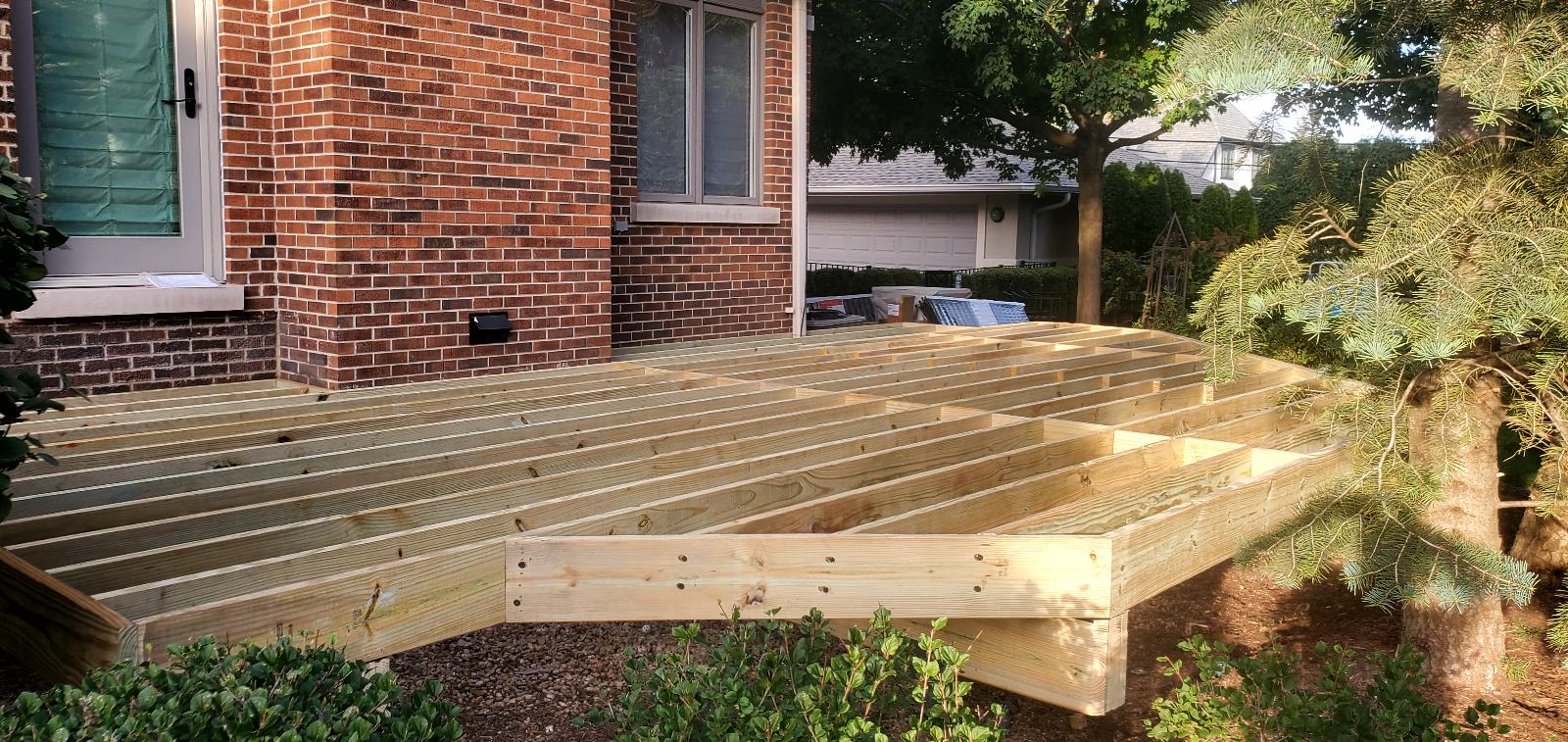
The framing under a composite deck matters as much as the boards on top. Trex recommends joists spaced no more than 16 inches apart when decking boards run perpendicular to them. For diagonal installations, space joists no more than 12 inches on center. Here’s why the spacing requirements differ, when you need closer joist spacing, and how to handle an existing deck with wider framing.
Why Diagonal Boards Need Closer Joists
A board laid perpendicular spans exactly the joist spacing between its supports. A board laid at 45 degrees crosses each joist at an angle, so it travels farther between two joists than the spacing itself. The distance along the board is the joist spacing divided by the sine of the angle.
At 45 degrees, that works out like this:
- 16″ joist spacing: about 22.6″ of board between supports
- 12″ joist spacing: about 17″ of board between supports
Diagonal boards need closer joist spacing to maintain the same support as boards installed perpendicular to the joists. Spacing joists 12 inches on center helps prevent excessive flex and keeps the deck feeling solid underfoot. The shallower the angle, the longer that span gets, so the framing has to get tighter.
What Spacing Means For Your Trex Warranty
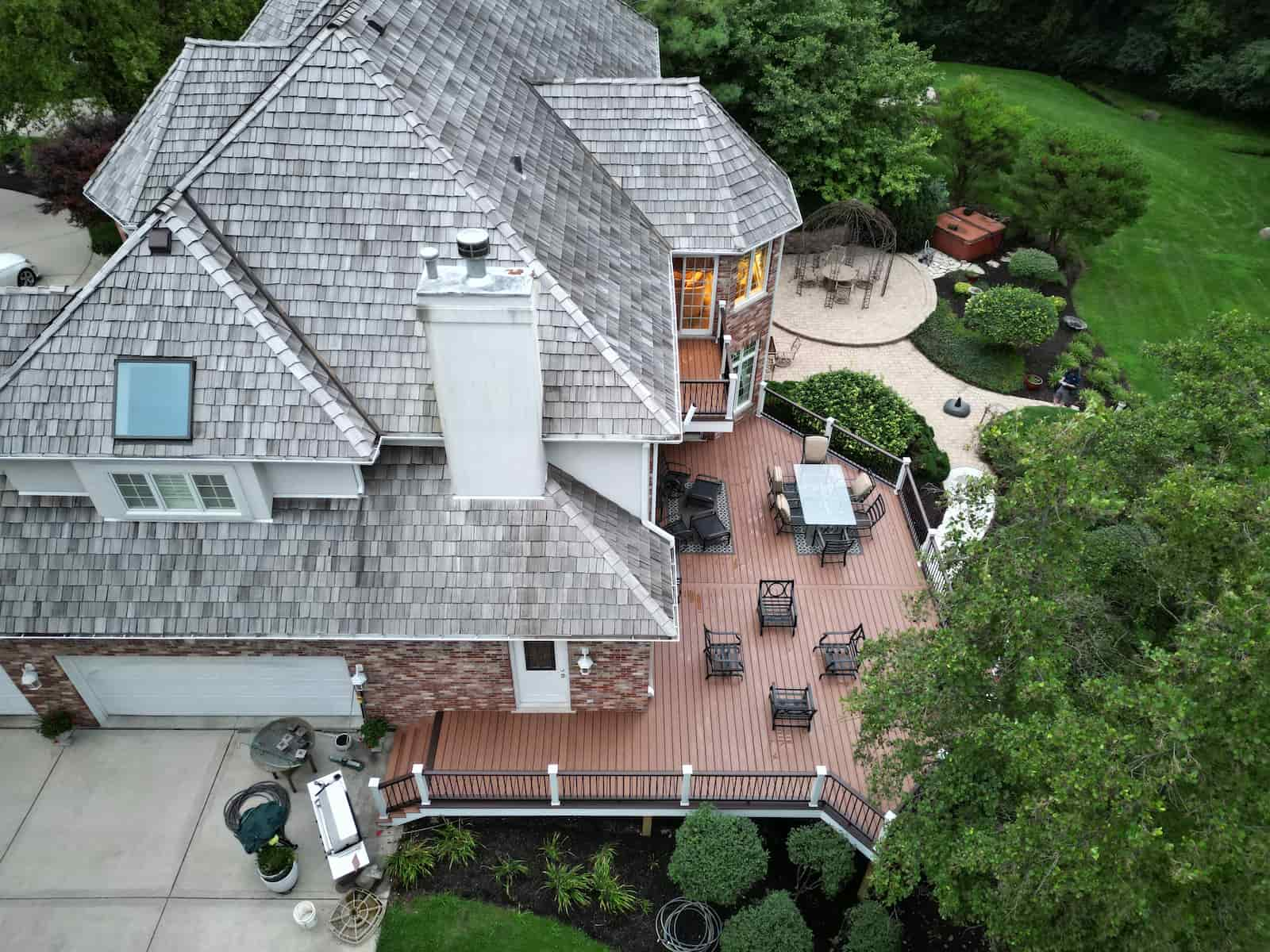
Trex’s warranty is tied to installing its products the way its instructions say. If your deck has wider joist spacing than Trex allows, you risk losing warranty coverage. That leaves you, the homeowner, responsible for the cost of repairs. If you are comparing quotes, ask each builder what joist spacing they are pricing for your layout.
Other layouts and loads that need tighter spacing
Diagonal boards are not the only case. Closer spacing, 12 inches or less, may be needed for:
- Heavy loads: hot tubs, planters and similar weight.
- Long spans: the farther a joist runs between supports, the more its size and spacing matter.
- Intricate patterns: picture frames, borders and breaker boards add blocking and changes of direction.
- Stairs: treads often need tighter support than the main deck surface. Check the guide for your product line.
Trex also says its decking must span at least three joists, so the framing under short runs and narrow sections needs planning too. Local code applies on top of the manufacturer’s rules. Naperville, Plainfield, St. Charles, and Downers Grove may require plans showing joist size and spacing.
Set the layout before you apply for a permit. See our Naperville deck permit guide for what that looks like.
Resurfacing a deck that is framed at 24 inches
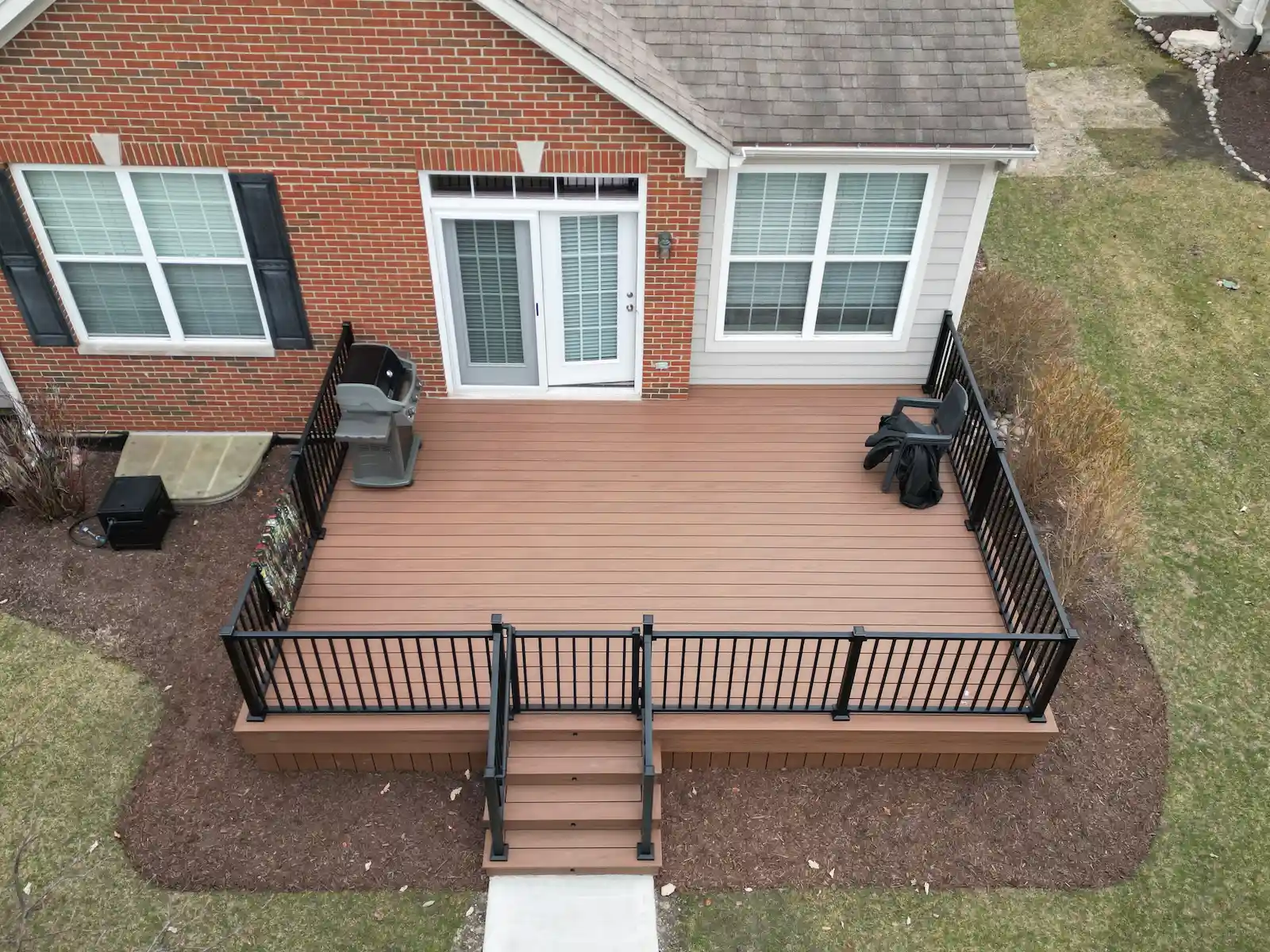
Many older wood decks have joists 24 inches on center, which is too wide for composite. The fix is simple: add one new joist between each pair of existing joists. That takes the spacing to 12 inches, which also leaves the option of a diagonal layout.
Check the frame first to see if you can keep it and replace just the decking. In our Shorewood resurfacing project, we checked the substructure first and kept it because it was in good condition. If the framing has rot, lacks adequate size, or attaches poorly to the house, you should spend the money on rebuilding it instead. Our deck resurfacing service starts with that inspection.
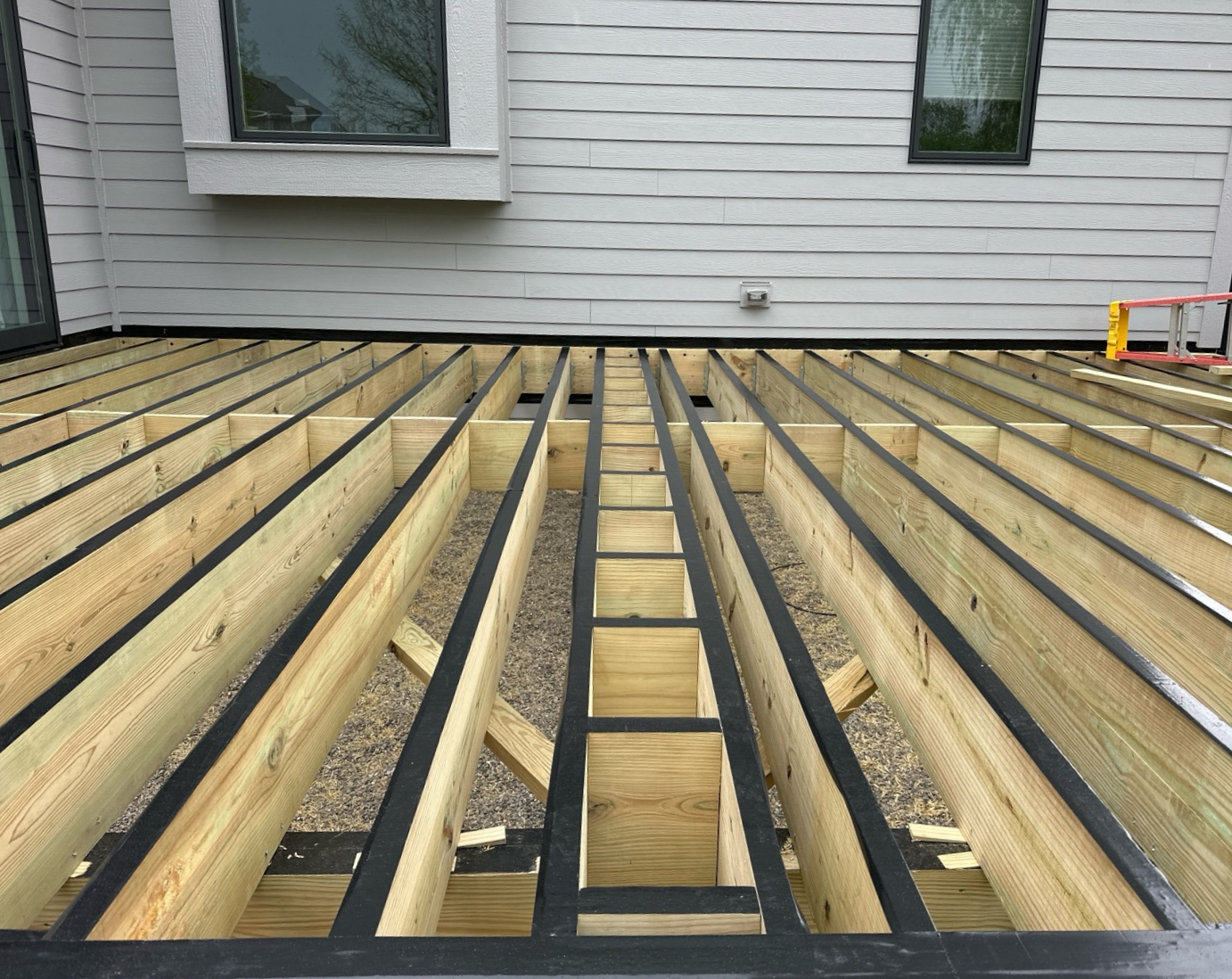
If you are replacing boards on an older frame, protect the tops of the joists with joist tape. Water can become trapped between the board and the joist. That is where framing rots first.
Does spacing change by brand?
Trex’s numbers are above. Other composite brands publish their own tables, and some vary by product line, board thickness and layout. We frame to the manufacturer’s current guide for whichever product you choose.
Common joist spacing mistakes
- Using wood-deck spacing. 24 inches doesn’t work for standard composite deck boards.
- Deciding on a diagonal layout after the framing is done. Switching means adding joists, so choose the layout first.
- Ignoring span and joist size. Spacing is only one part of the framing. Joist size, span and beam placement all matter. See our deck framing guide.
- Skipping blocking and breaker boards. Patterns and board ends need solid support underneath.
- Not checking the product’s current guide. Manufacturers update their instructions. A guide from a few years ago may be out of date.
Frequently asked questions
Can I use 24 inches on center for composite decking?
Not as a general rule. Composite decking should be no more than 16 inches on center.
Is 12 inches on center better than 16 inches?
It gives a stiffer feel, so some homeowners and builders choose it even for standard layouts. It adds joists and cost, so it is a trade-off, not a requirement for perpendicular boards.
Do hidden fasteners change the spacing?
The joist spacing requirement stays the same. Hidden fasteners affect board gaps and fastening, which we cover in our hidden fastener guide.
Does joist spacing affect my permit?
Often, yes. Many villages ask for a framing plan showing joist size and spacing. Check with your local building department.
Planning a composite deck?
Warner’s Decking has built composite decks in Naperville, Plainfield, St. Charles, Downers Grove, and nearby suburbs since 1988. They have been a TrexPro Platinum contractor since 2001. See our recent projects or request a free estimate.