Best Composite Decking Colors: Popular Ideas for Your Deck
Choosing the right composite decking color is one of the most important decisions in your outdoor renovation. It sets the tone for your backyard, shapes how the space feels, and influences how much maintenance it will need over time. Choosing the right composite decking color can be tricky. This guide helps you find the perfect match for your home.
Multi-Tonal Composite Deck Colors
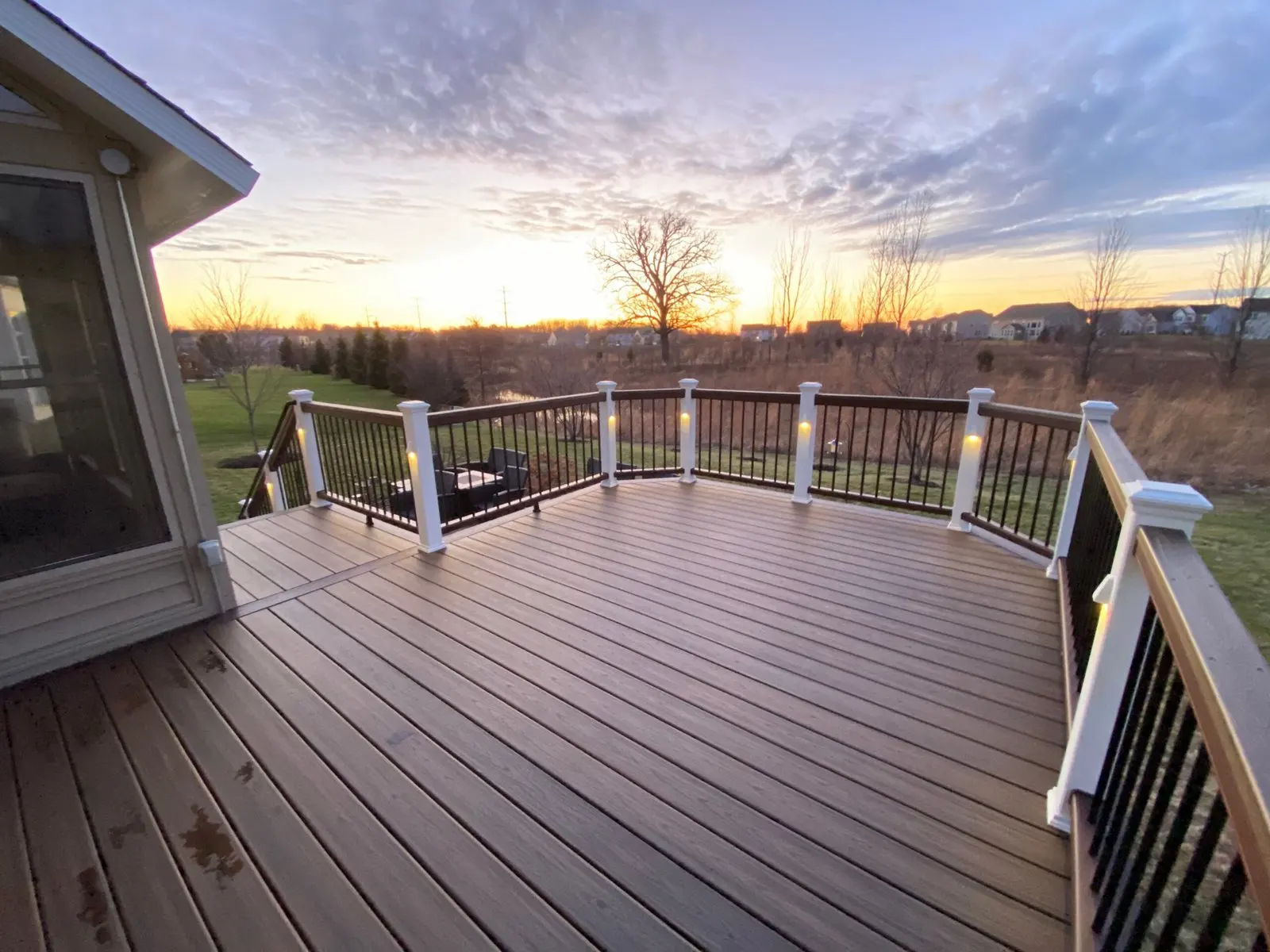
Multi-tonal boards have become one of the most popular choices for high-end composite decks. Unlike older flat-colored boards, these feature blended tones and realistic grain patterns that mimic premium hardwoods. Popular multi-tonal options include Trex and TimberTech collections designed with blended colors and realistic grain patterns.
* They provide the most realistic “wood-like” appearance.
Warm Brown Deck Colors
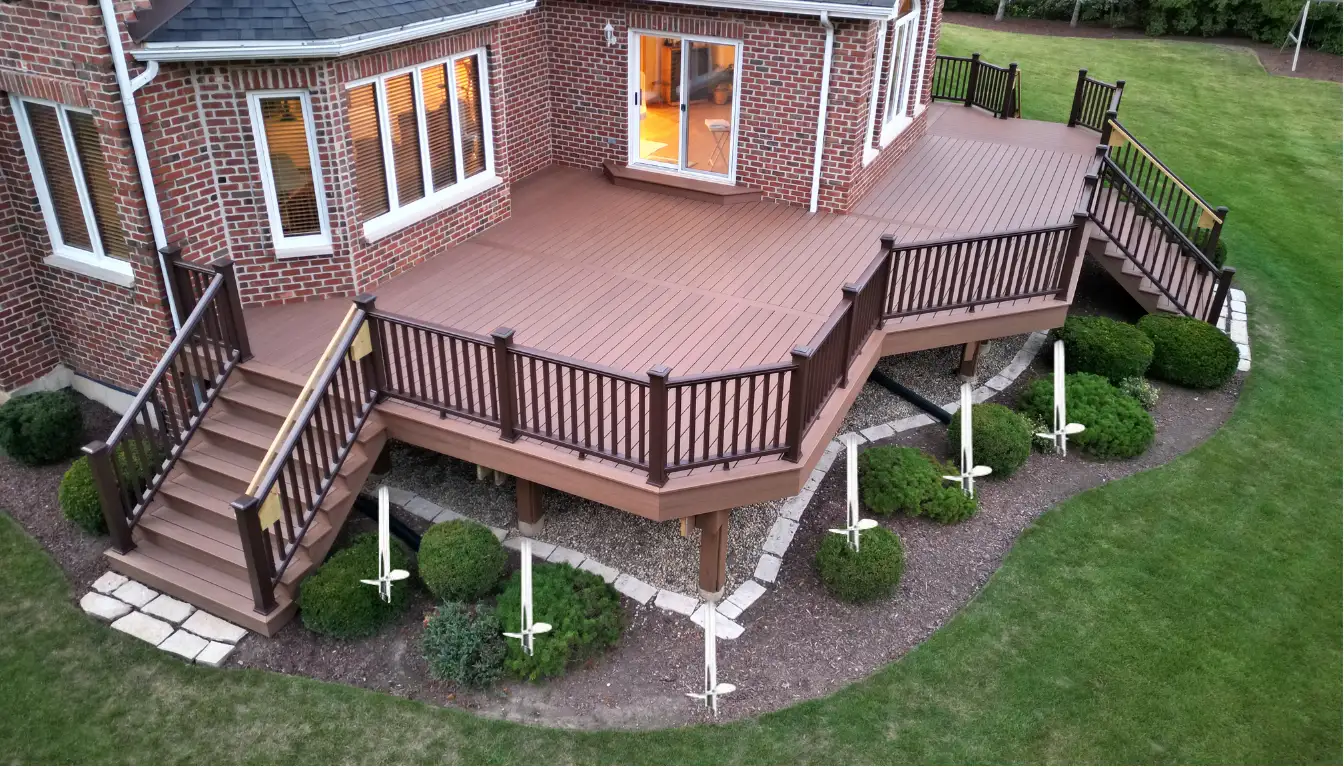
These are the classics. Warm browns create a natural feel that pairs well with almost any home style, from traditional brick to suburban siding.
Examples: Trex Havana Gold, TimberTech Mahogany.
The Vibe: Rich, cozy, and timeless.
Gray and Coastal Composite Deck Colors
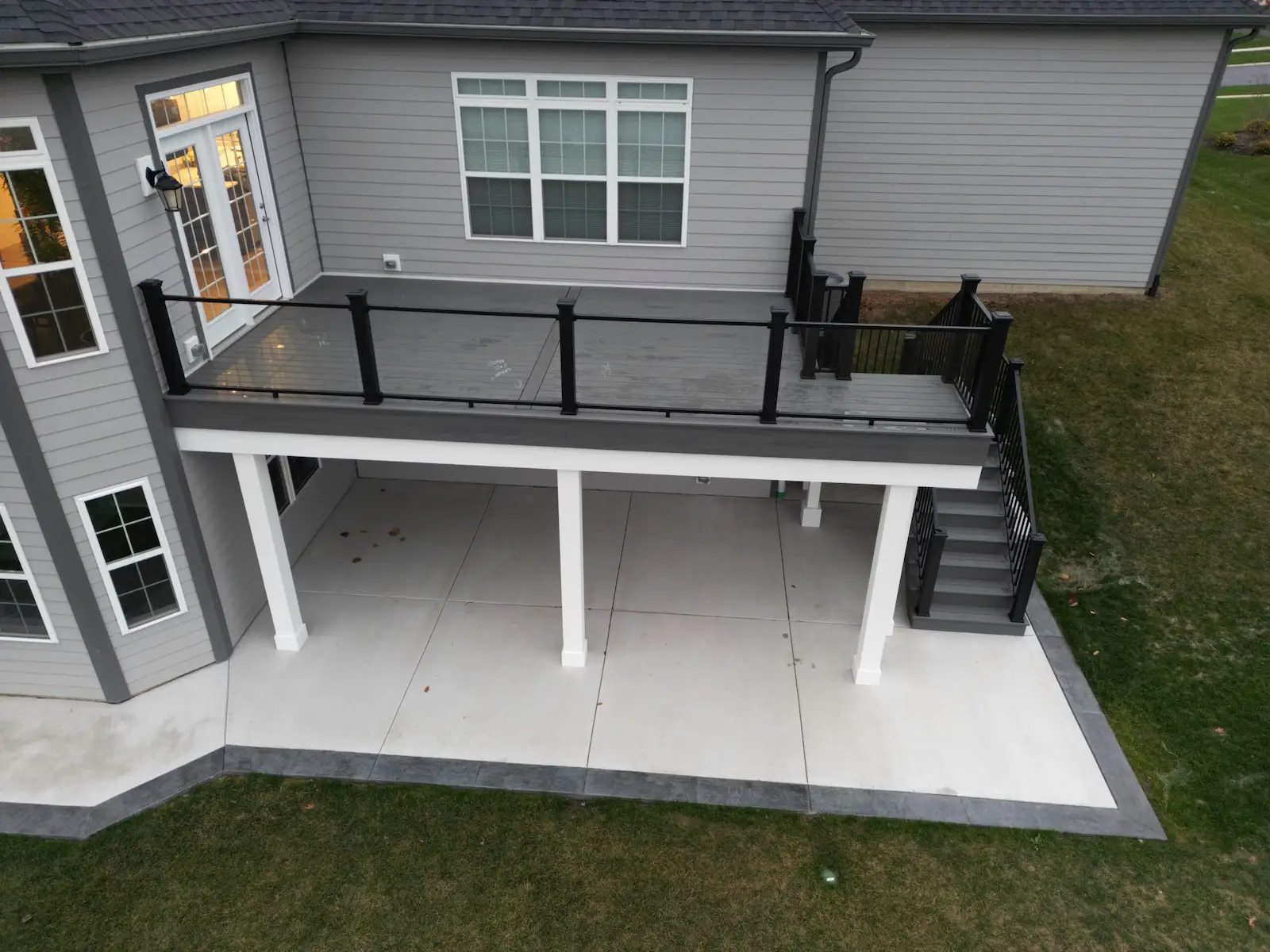
Gray has transitioned from a trend to a staple. Coastal grays from light driftwood shades to deep neutrals create a clean, modern look, including the popular Hamptons style.
Examples: Trex Foggy Wharf, TimberTech Coastline.
The Vibe: Modern, airy, and clean.
Dark Deck Colors
Darker shades like espresso, charcoal, and near-black boards provide a sophisticated, high-contrast look. These colors make a deck feel like a seamless extension of a luxury indoor living space.
The Vibe: Bold, modern, and high-end.
How to Choose the Right Color
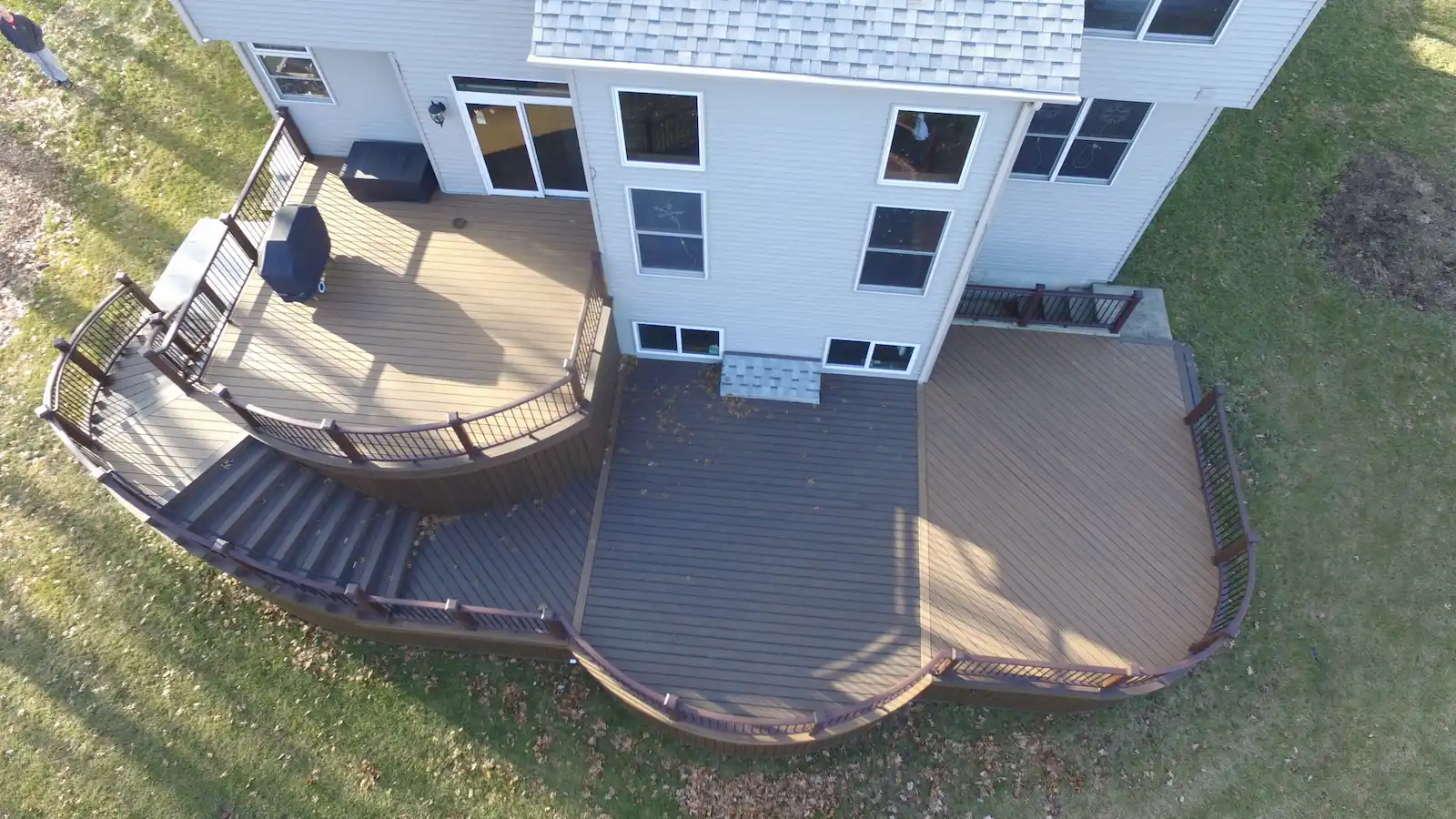
Don’t choose a color based solely on how it looks in a brochure. Consider these three factors to ensure you’re happy with the result.
Match Your Deck Color With Your Home Exterior
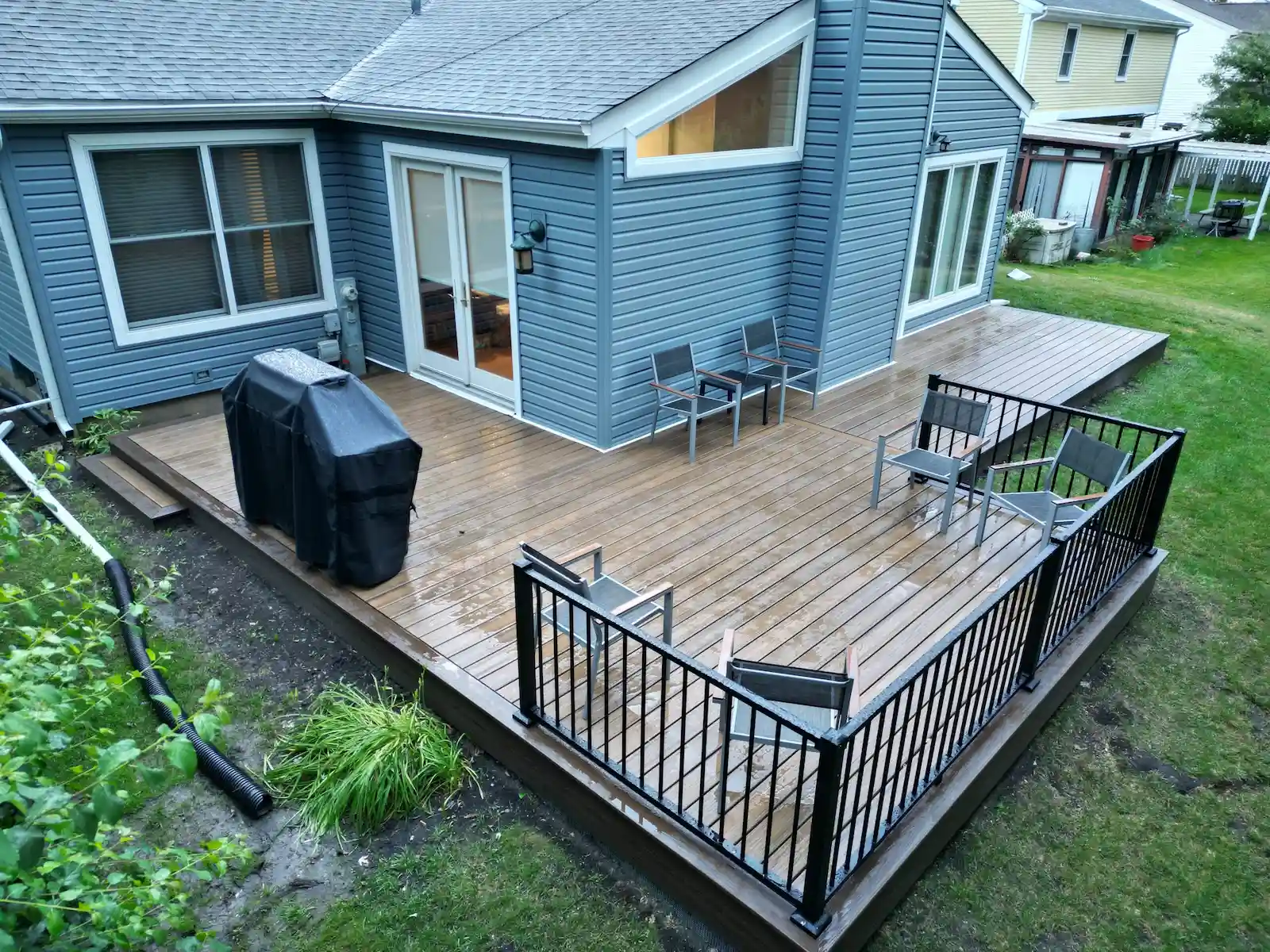
Look at the undertones of your home’s siding and trim. If your home has warm, earthy tones, stick to browns or taupes. If your home features cool tones such as white, slate gray, or navy, a gray or charcoal deck will create a more cohesive look.
Consider Sun Exposure and Your Backyard Layout
This is an important factor many homeowners overlook when choosing a deck color. If your deck has full southern exposure, remember that darker boards absorb more heat. In the peak of an Illinois summer, those dark boards can become quite hot even with heat mitigating technology. If your deck is a “sun trap,” lighter colors or neutrals are often more practical for comfort.
Choose a Color That Fits Your Maintenance Preferences
Lighter colors tend to show dirt, pollen, and debris more visibly than mid-tone or multi-tonal boards. A multi-tonal mid-tone brown or gray is the most forgiving choice for a clean, low-maintenance deck.
Current Composite Deck Color Trends
The trend in deck design is moving toward organic, earthy neutrals. Homeowners are leaning away from artificial-looking, solid colors in favor of boards that feel like natural material. Multi-tonal boards are becoming more popular because they create a unique, custom look for each deck.
Light vs. Dark Composite Deck Colors: Which Is Better?
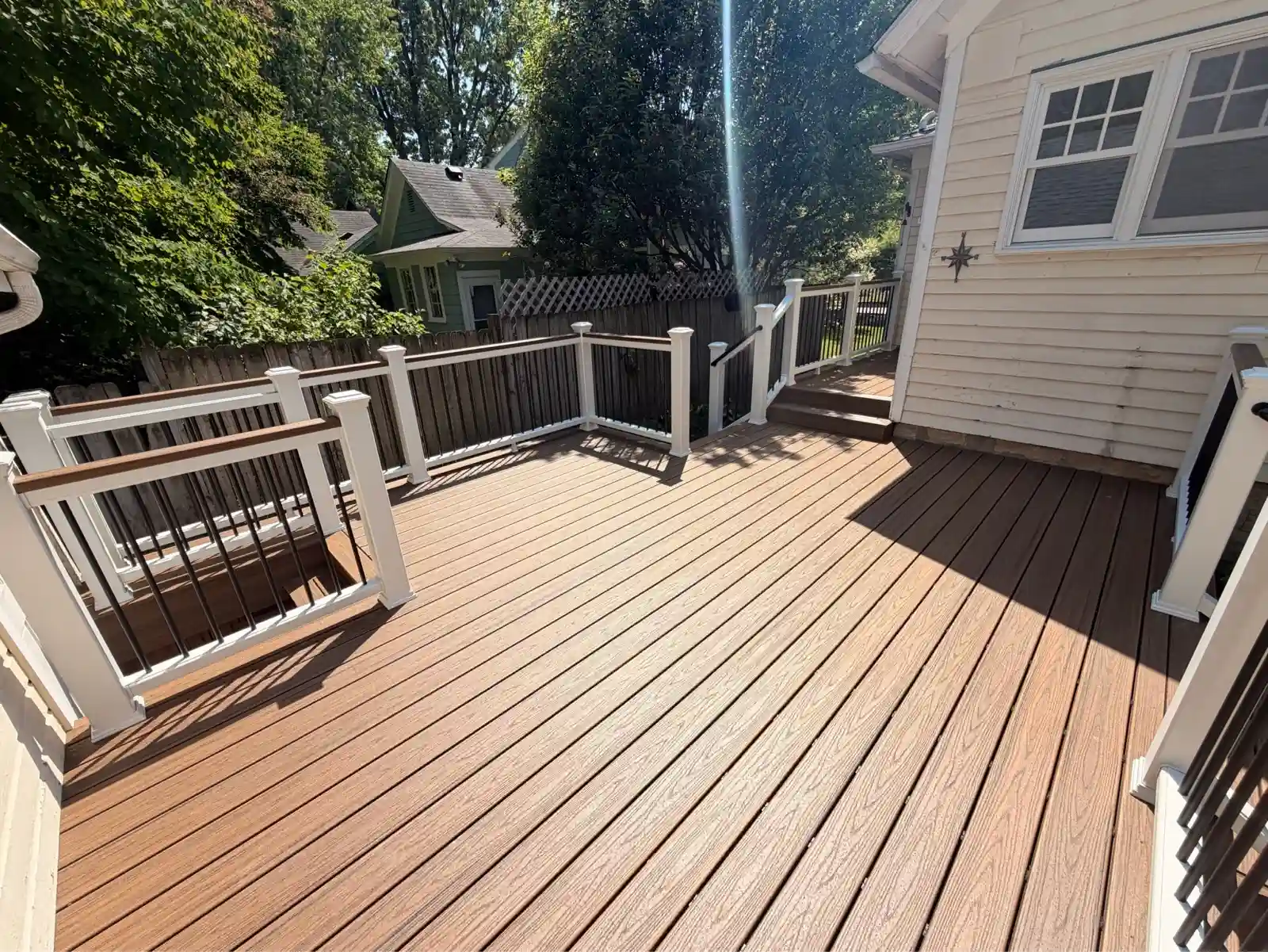
Home architecture is unique, and every homeowner’s needs are different. Only what works for your yard matters.
- Light Colors: Reflect heat, look clean in bright, sunny spaces, and hide dust well.
- Dark Colors: High contrast and modern look, but needs more cleaning in wooded areas with heavy debris.
Which Composite Deck Colors Hide Dirt Best?
If you are worried about footprints, mud, or pollen, multi-tonal, mid-tone colors are your best friends. The blend of colors and the depth of the grain pattern help camouflage dirt, making the deck look pristine even between cleanings. Solid black or white boards, by contrast, show everything.
Can You Mix Composite Deck Colors?
Absolutely, and it’s one of the best ways to upgrade a standard build. We frequently use:
- Picture Framing: Using a darker color to create a border around the perimeter of the deck.
- Breaker Boards: Running boards in a different direction to break up large spans.
- Accent Boards: Using a secondary color for stairs or railing posts to tie the design together.
Popular Composite Decking Brands and Their Color Options

We work with industry leaders because their color technology delivers both beauty and long-lasting durability.
- Trex: Known for a vast catalog of colors ranging from traditional wood looks to modern, vibrant grays.
- TimberTech: Highly regarded for their high-end, hyper-realistic wood grain technology and premium, sophisticated color palettes.
- Other Brands: There are several excellent composite options, and we help clients choose the right brand based on color and performance needs.
Frequently Asked Questions
What is the most popular composite deck color?
Multi-tonal browns and neutral grays remain the most popular due to their versatility.
What composite deck colors look best with gray siding?
Contrasting cool grays or charcoal boards often create the most striking aesthetic.
Additionally, these colors not only add aesthetic appeal but also promote a sense of calm and connection with nature. They are versatile enough to complement a variety of home styles, from modern to rustic, making them a practical choice for many homeowners.
Do dark composite decks get hotter?
Yes, darker colors absorb more UV rays and heat. We account for this based on your deck’s orientation to the sun.
What composite deck colors require the least maintenance?
Mid-tone, multi-tonal colors are the most forgiving for daily wear and tear.
Can you mix composite deck colors?
Yes! Combining colors for borders and accents is one of our favorite ways to add a custom, high-end feel to a project.
Still deciding?
We bring samples to your home so you can compare colors in your lighting and with your siding, landscaping, and outdoor space.