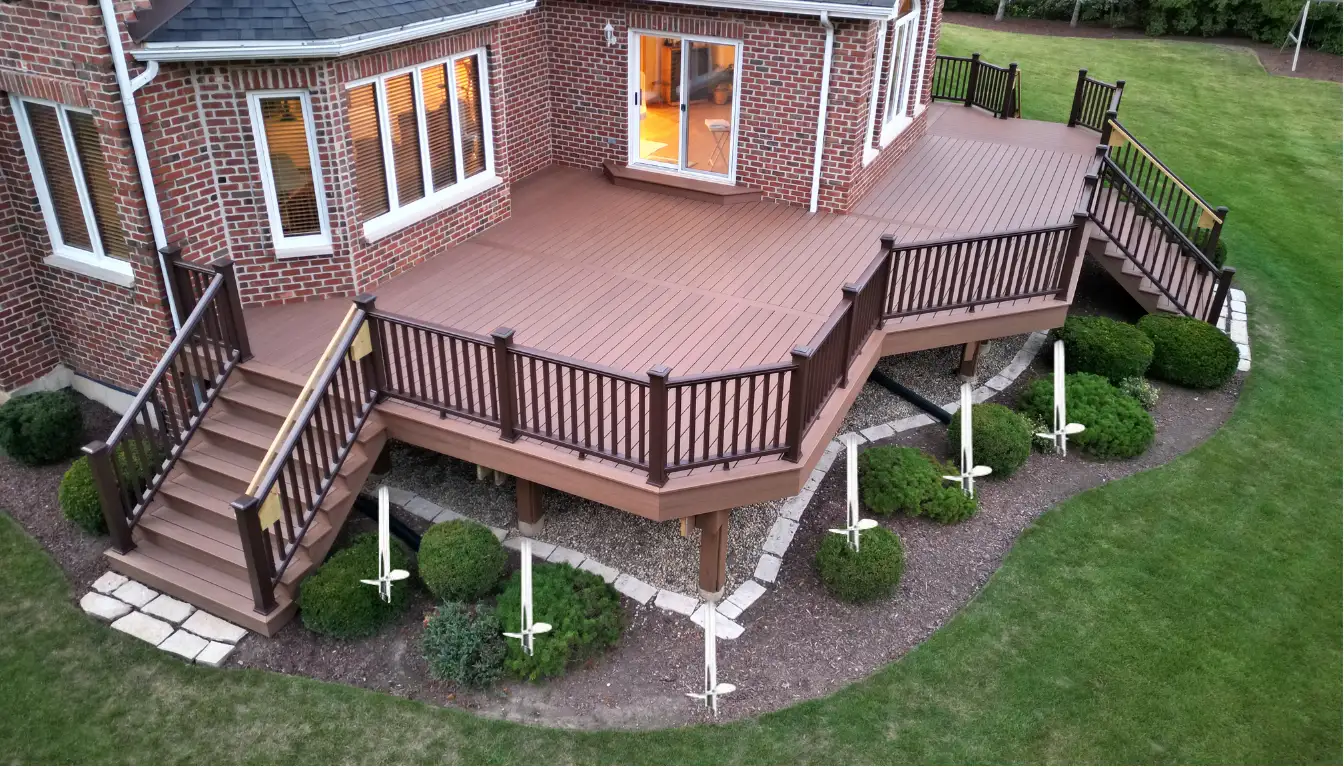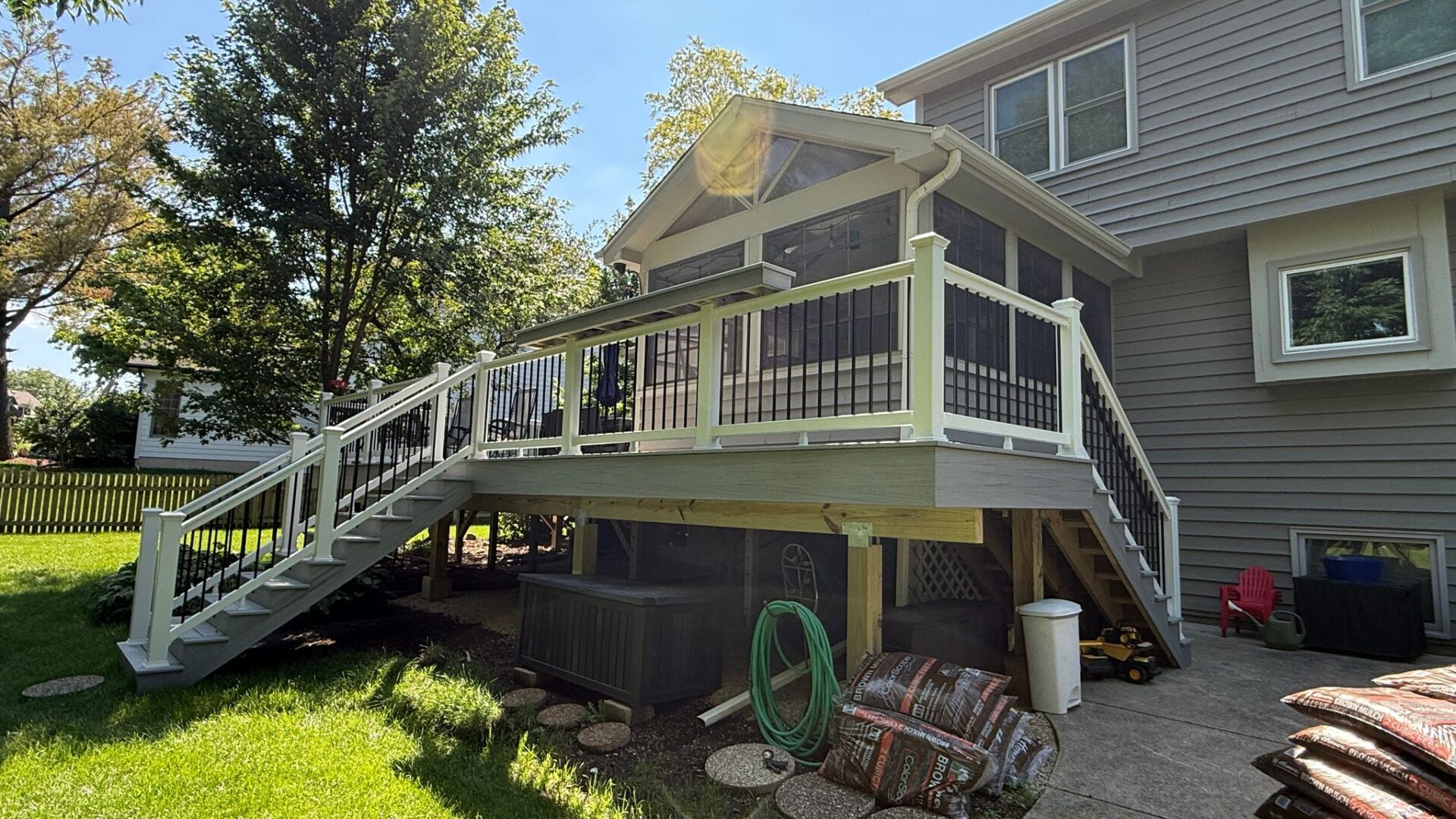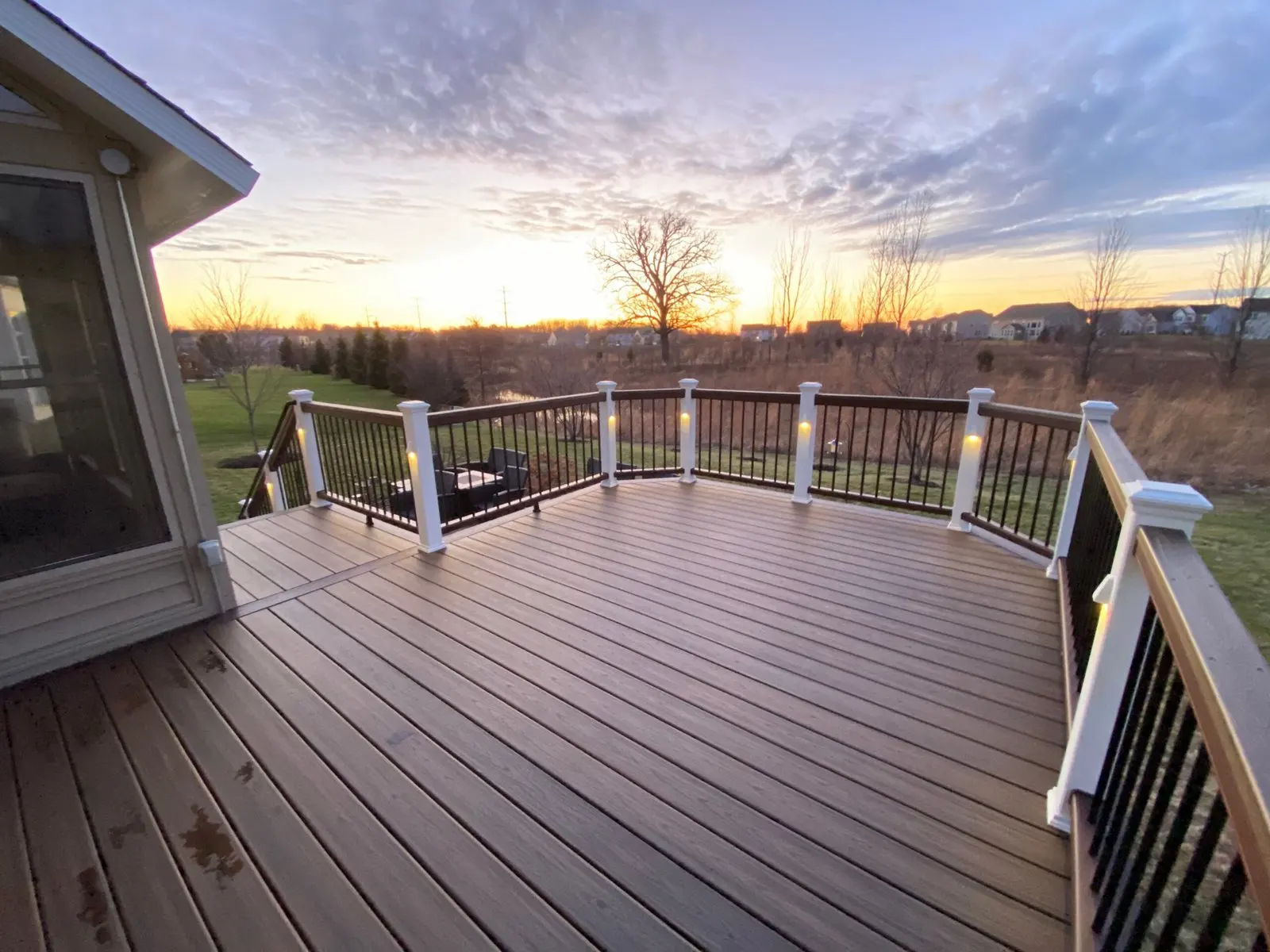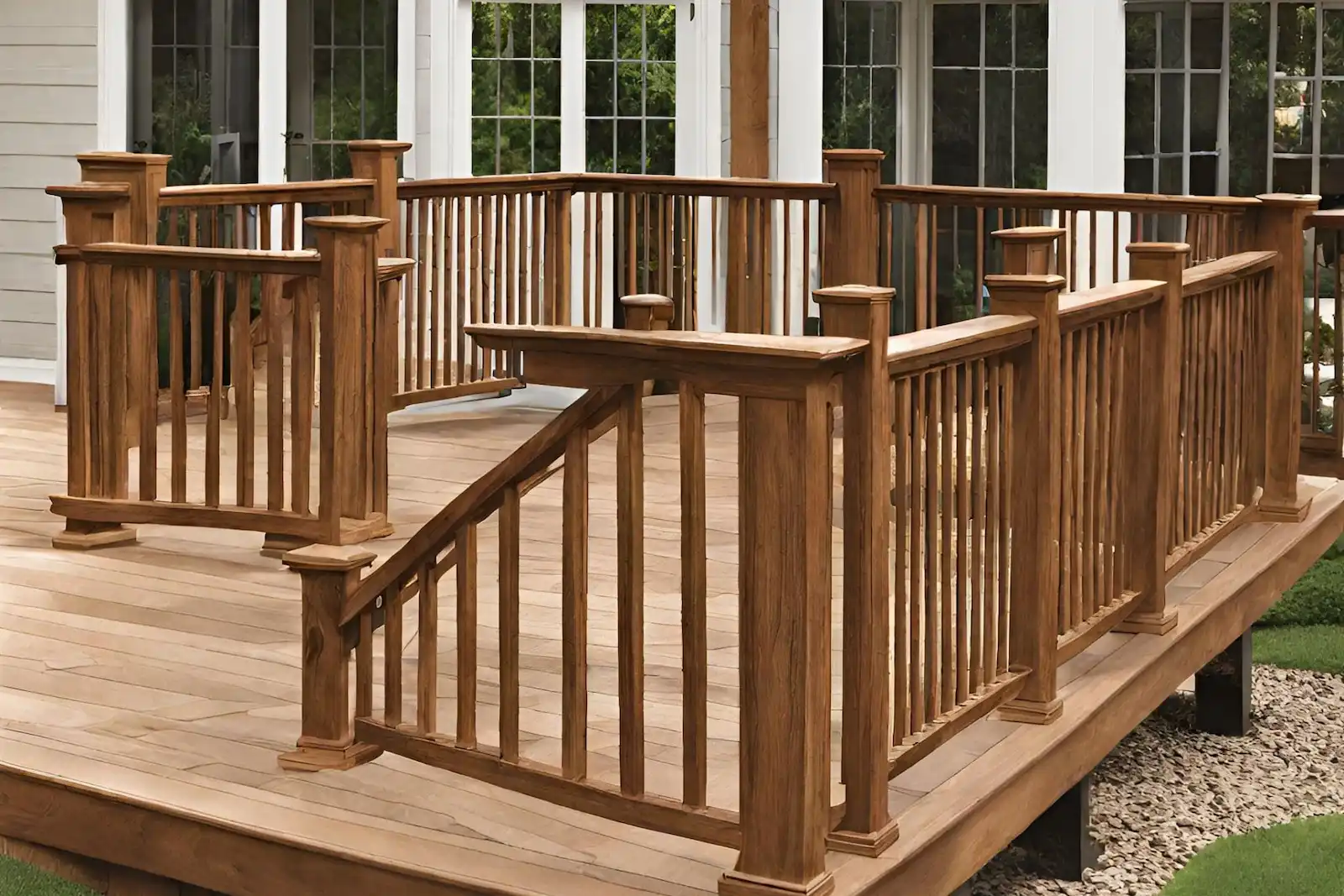
Deck railings are one of the most important parts of any deck. They serve an important safety function while also influencing the overall appearance and design of the deck. Several factors should guide your choice, including the wood type, railing style, installation method, and maintenance requirements. Each of those affects how well your railing performs over time.
At Warner’s Decking, we’ve spent over 38 years building custom decks across the Chicago suburbs. We’ve seen firsthand how humidity, heavy rain, and freeze-thaw cycles affect different materials. We use that experience to help homeowners choose materials that withstand local conditions. In this guide we cover all the information you need to choose the right wood deck railing system for your deck.
What Are Wood Deck Railings?
A wood railing is a protective barrier around an elevated deck or outdoor living area. Its primary purpose is safety, helping prevent falls. Wood railings also contribute to the deck’s overall appearance and complement the exterior of your home.
Common wood species include cedar, redwood, pressure-treated pine, and various hardwoods. Each type offers different levels of durability, appearance, cost, and maintenance. They are highly customizable with stain, paint, baluster styles, and post caps. This flexibility allows wood railings to complement both traditional and modern deck designs. They also pair well with composite decking, adding warmth and contrast to a low-maintenance deck.
Choosing the Best Wood for Your Deck Railing
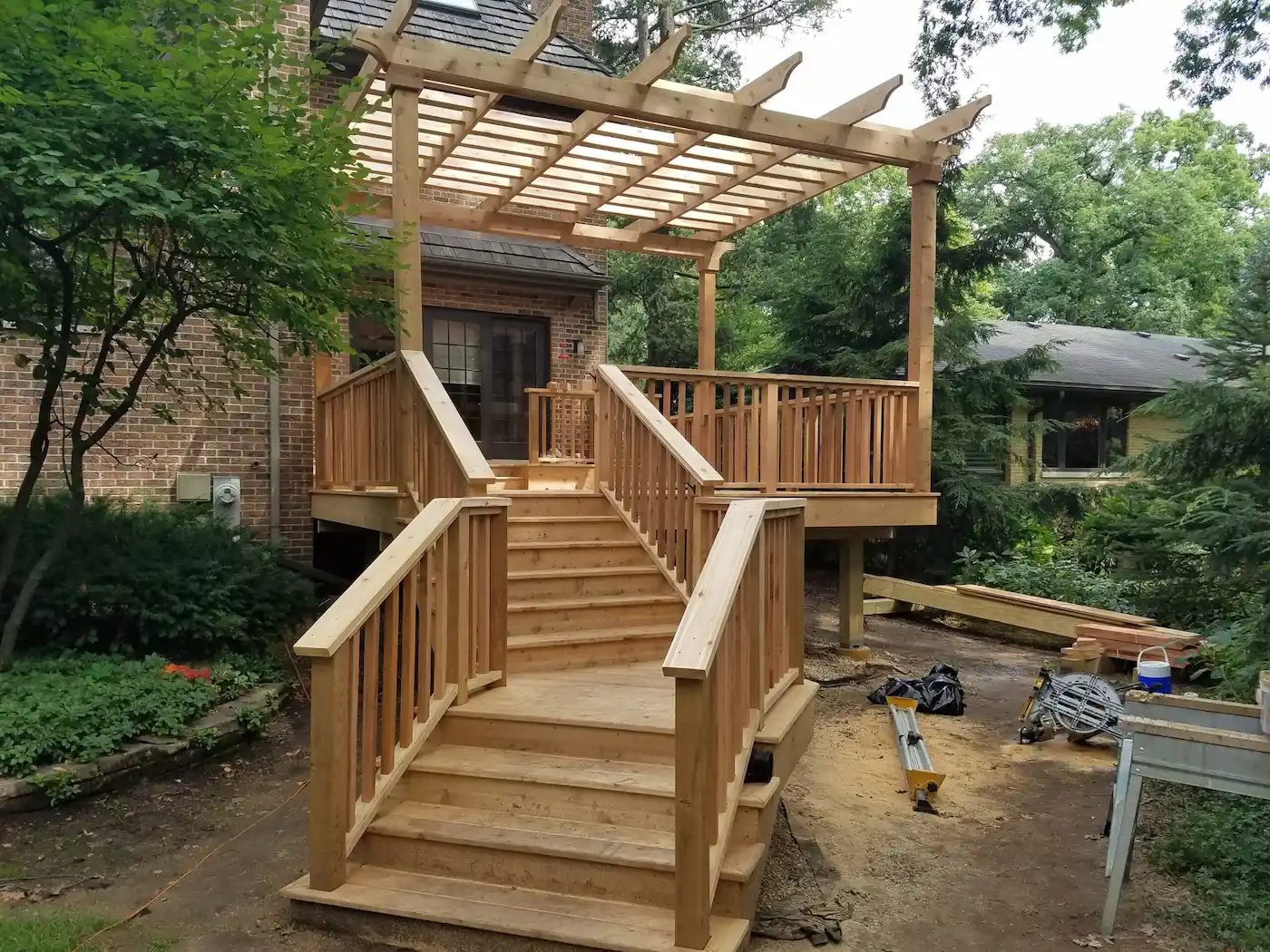
For homeowners across Naperville, Aurora, Plainfield, and the surrounding Chicago suburbs, local climate matters more than most people expect. Regional humidity, heavy rain, and repeated freeze-thaw cycles can stress wood fibers over time. Selecting a species that performs well in Midwest weather conditions can extend the service life of your railing.
Cedar Railings
Cedar is a popular choice for deck railings because of its natural resistance to moisture and insect damage. Its warm color and distinctive grain pattern complement both traditional baluster and modern picket designs.
One detail homeowners often overlook is fastener selection. Cedar contains natural tannins that can react with standard steel fasteners, causing dark staining around screw heads. Using quality stainless steel hardware prevents this reaction and preserves the wood’s appearance.
While cedar is naturally durable, it still requires regular maintenance. Freeze-thaw cycles can put significant stress on unsealed wood fibers. Keeping cedar properly sealed protects it from excessive checking, splitting, and premature weathering.
Redwood Railings
Redwood has a rich, premium color and excellent dimensional stability. The wood is less prone to shrinking, warping, and twisting than many other domestic wood species.
Redwood is a strong choice for custom railing designs where visual appeal is a priority. Like cedar, redwood requires periodic cleaning and refinishing to maintain its appearance. Redwood typically costs more than pressure-treated lumber. Its dimensional stability and appearance make it a worthwhile option for homeowners seeking a higher-end railing.
Pressure-Treated Pine Railings
Pressure-treated pine is a budget-friendly option for deck railings. Chemical preservatives added during treatment protect the wood from rot, fungal decay, and insects. Pressure-treated pine also provides reliable structural performance at an accessible price.
In our local area, pine is the species where we see the most freeze-thaw damage over time. Sealing a pine railing before its first winter reduces moisture from penetrating the grain and accelerating surface cracking. Reseal every one to two years to protect the wood.
Tropical Hardwood Railings
Ipe and mahogany are popular tropical hardwoods also used for deck railings. Homeowners value them for their extreme density, strength, and distinctive grain patterns.
That high density makes installation more demanding. Driving fasteners directly into tropical hardwoods can cause the wood to split. Pre-drilling pilot holes prevent splitting during installation. We recommend stainless steel fasteners because these dense woods can react with standard hardware.
The main trade-offs are cost and maintenance. Tropical hardwoods typically have higher material and installation costs. They also require periodic cleaning and oiling to maintain their deep color. When sourcing tropical hardwoods, choose suppliers who can verify responsible forestry practices.
Eco-Friendly & Alternative Options
For homeowners prioritizing eco-friendly low maintenance or sustainability, several alternative railing materials are worth considering:
Bamboo: Bamboo is a fast-growing, renewable material. When properly treated for exterior use, bamboo provides good resistance to warping and decay. It also offers a more contemporary appearance than traditional wood species.
Composite Railings: Composite railing is a separate category from solid wood. These materials combine wood fibers with plastic or polymer materials to create a low-maintenance railing option. Composite railings resist rot, splintering, and insect damage and pair well with composite decking.
Wood Type Comparison
| Wood Type | Key Traits | Pros | Cons |
|---|---|---|---|
| Tropical Hardwoods | Dense, tight grain | Highly weather- and pest-resistant; long-lasting | Higher cost; pre-drilling required; ongoing maintenance |
| Native Woods (Cedar, Redwood, Cypress) | Regionally adapted | Classic appearance; good weather resistance; locally available | Some species are less durable than tropical hardwoods; ongoing maintenance |
| Composite / Eco-Friendly (Bamboo, Recycled Composite) | Renewable or blended materials | Low maintenance; resistant to warping and pests | Less natural texture; bamboo has a more modern appearance |
Designing and Installing Wood Deck Railings
Style options range from traditional balusters to glass panels. The right choice depends on your home’s architecture, deck design, and desired level of visibility.
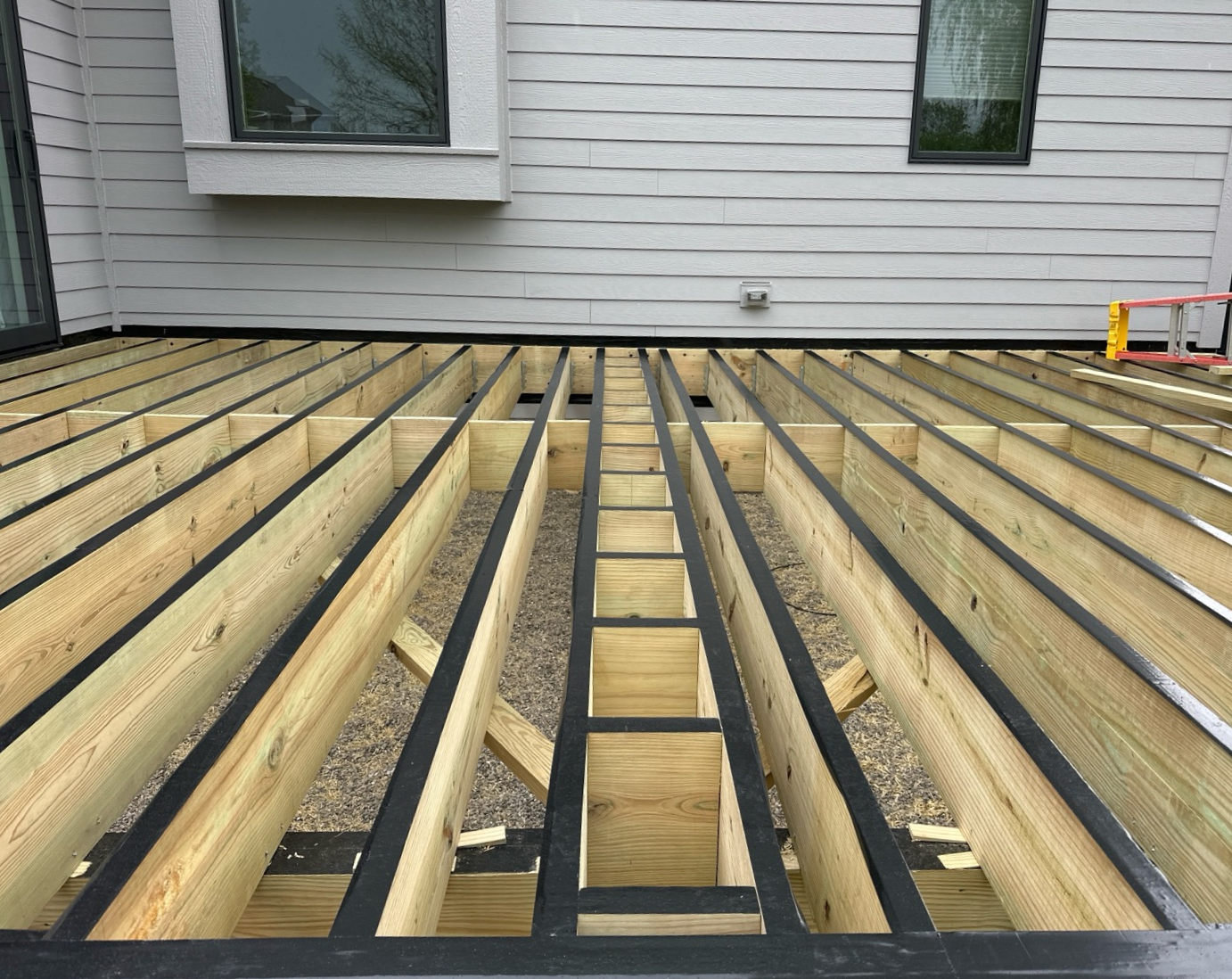
Installation requires careful measurements and secure connections. Position the posts correctly, then secure them to the deck framing. Install the rails, balusters, and post caps after securing the posts. Load-bearing connections must also meet local building code requirements for strength and stability
Safety Considerations and Building Codes
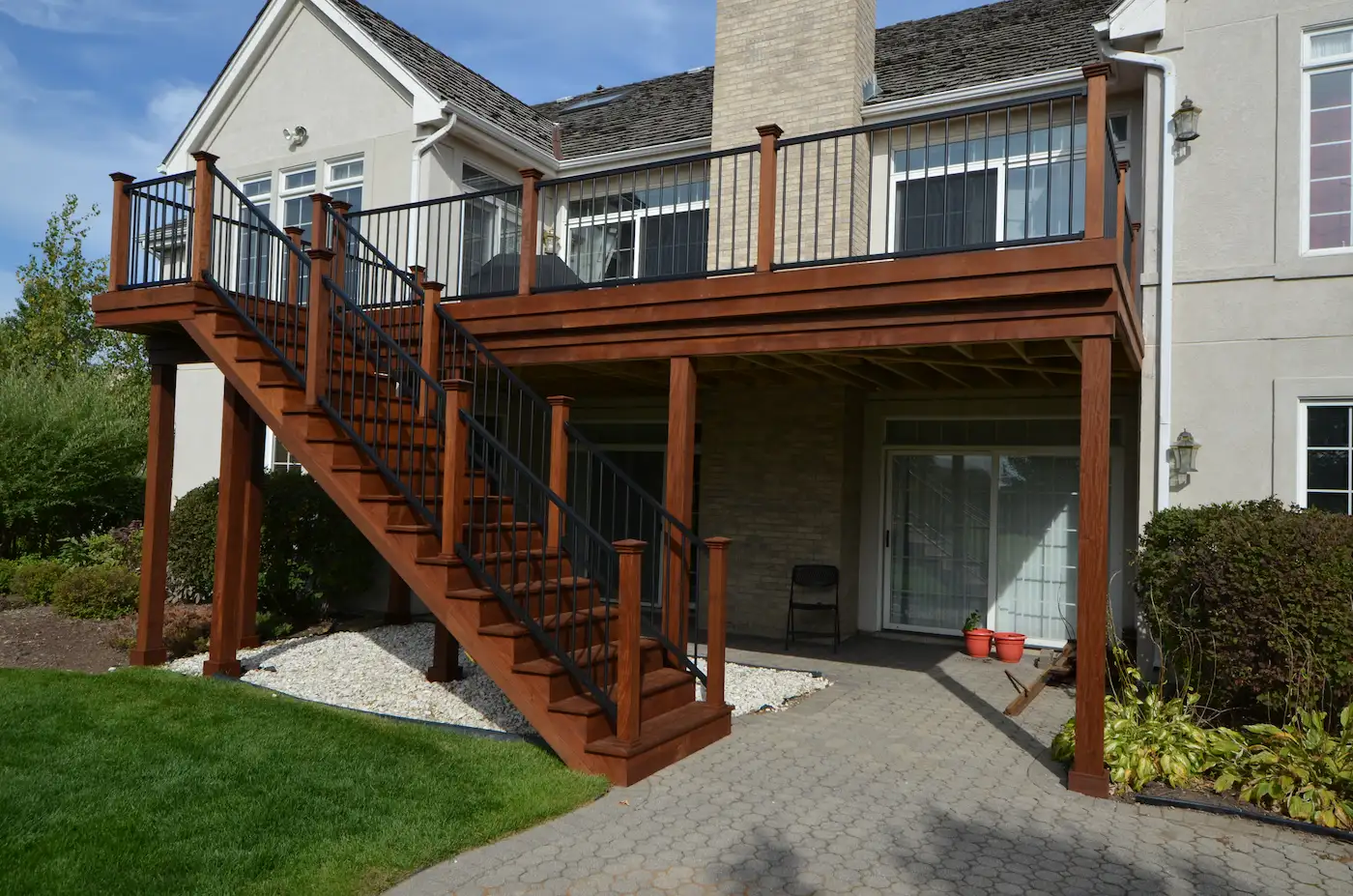
Building codes improve deck and balcony safety. According to the Consumer Product Safety Commission, falls from these structures cause thousands of injuries each year. The requirements aren’t arbitrary.
The IRC sets several baseline requirements for deck railings. Railings must be at least 36 inches high, with no more than 4 inches between balusters. This “4-inch sphere rule” prevents small children from passing through the openings. Railings must also withstand a 200-pound point load without failing.
Local municipalities may have additional permitting requirements. Naperville, Aurora, and neighboring suburbs also have their own inspection processes. We handle all permitting for our installations. If you plan to build the railing yourself, check with your local building department before starting the project.
Maintenance Tips for Wood Deck Railings
Wood deck railings need regular maintenance to protect them from moisture, weathering, and everyday wear. A consistent maintenance routine can preserve the wood’s appearance and extend the life of the railing.
- Clean regularly. Use a mild detergent or wood-specific cleaner with warm water to remove dirt and stains without damaging the surface. Avoid harsh chemicals and abrasive cleaners.
- Inspection and repairs. Inspect the railing for cracks, splintering, loose boards, and other signs of deterioration. Address small issues before they develop into larger structural problems.
- Seal and stain on a schedule. A quality sealant protects the wood from moisture and UV exposure. The right maintenance schedule depends on the wood species, finish, sun exposure, and local weather conditions.
- Protect exposed ends. Use caps or covers on exposed rail ends to limit moisture exposure. Protecting the end grain can reduce the risk of rot and deterioration.
- Plan around the local climate. Schedule a thorough inspection in the spring after the freeze-thaw season. Reseal every one to two years to protect the wood. The appropriate schedule depends on the wood species and sun exposure.
- Stay ahead of winter weather. Clear accumulated snow and ice when practical. Reducing prolonged moisture exposure can limit weather-related damage during freeze-thaw cycles.
- Refinish when needed. Sanding, staining, and resealing can restore the appearance of weathered wood. Refinish the railing when the existing finish begins to deteriorate rather than waiting for significant weathering or damage.
Ready for a Railing That’s Built to Last
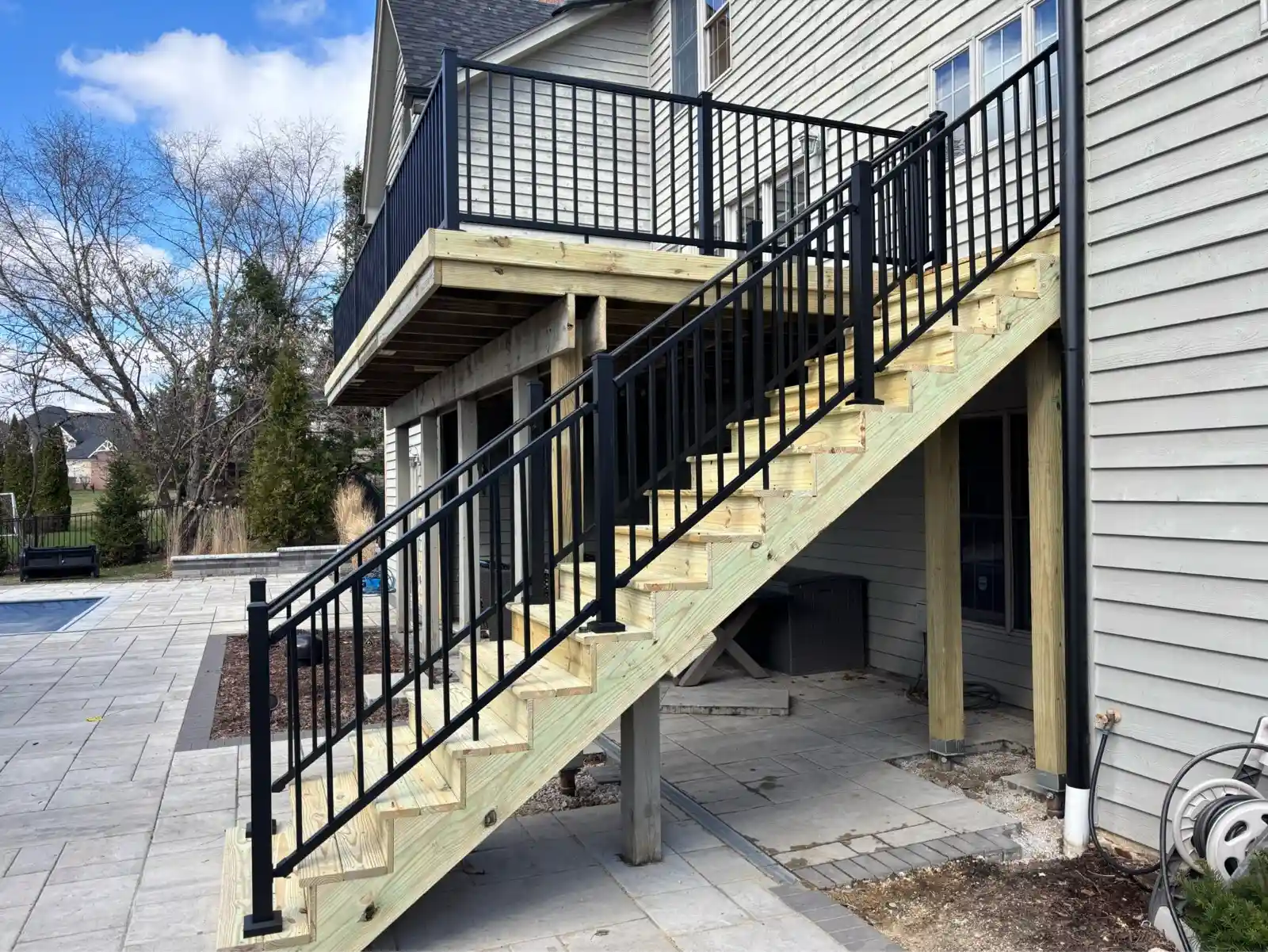
Regular maintenance is only part of keeping a wood deck railing safe and durable. Proper installation, secure connections, and compliance with local building codes are also important for long-term performance.
To guarantee the safety and longevity of your wood deck railings, availing of professional installation services are crucial. Our team at Warner’s Decking specializes in installing high-quality wood deck railings, ensuring that every aspect of the installation adheres to safety regulations and building codes. If you have any questions about your deck railing installation or need expert advice, don’t hesitate to give us a call. Our team is dedicated to providing you with the best solutions and services to enhance and protect your outdoor living space.
Frequently Asked Questions
How long do wood deck railings last?
Wood deck railings typically last 10 to 20 years. Wood quality, climate, and regular maintenance all affect how long a railing lasts. Regular sealing and inspection are what separate the low end of that range from the high end.
What maintenance do wood railings need?
Regular cleaning and inspection, plus an annual protective finish or stain. Skipping sealing is the most common reason railings fail early sun and moisture do the damage, but consistent care prevents most of it.
What safety codes apply to wood deck railings?
The International Residential Code (IRC) sets specific requirements for deck railings. These include a minimum height of 36 inches and a maximum baluster spacing of 4 inches. Railings must also withstand a 200-pound point load. Local permitting requirements may vary by municipality. CPSC injury data also explains why these safety standards are in place.
What are the advantages of wood railings?
Natural appearance, design flexibility, and durability when properly maintained. Wood is also easy to customize stains, paint, baluster styles to match almost any architectural style.
How do I choose the right wood for my railing?
Consider the local climate first. Cedar and redwood perform well in the Chicago suburbs. Tropical hardwoods offer greater density and weather resistance. However, they cost more and require more specialized installation. Choose a style that complements your home. Confirm local building code and permit requirements. Then consider each species’ maintenance needs and fastener requirements before making your final decision.