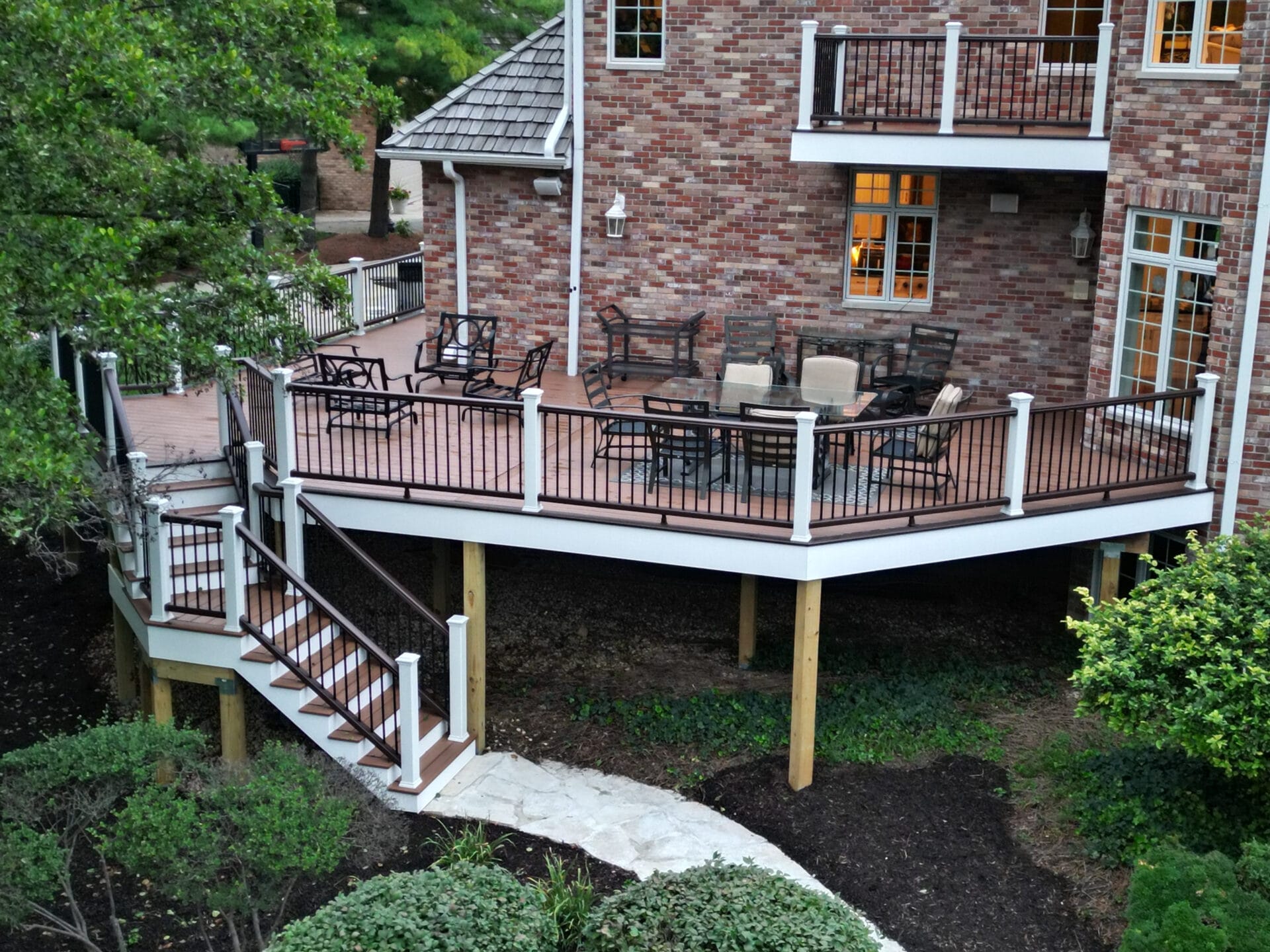
Parts of a Deck: Complete Deck Anatomy Explained
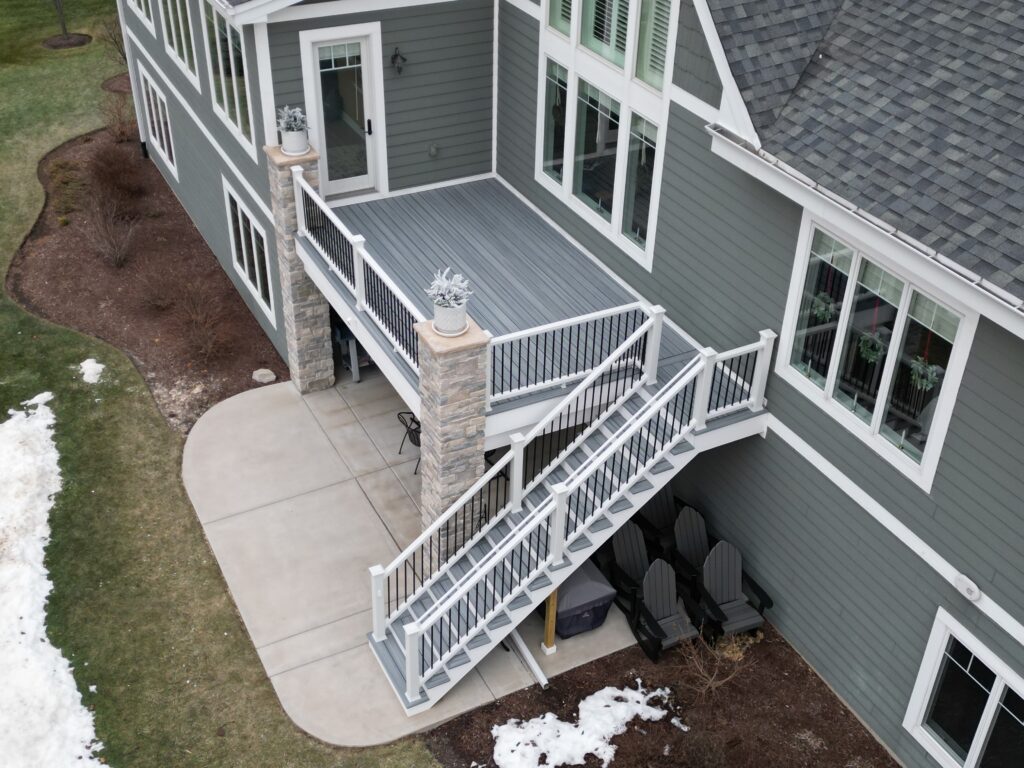
A deck may appear simple at first glance, consisting of boards, railings, and stairs. But every safe, long-lasting deck needs a carefully engineered structure underneath. Understanding deck parts helps homeowners make smart choices about construction, materials, safety, and long-term durability.
From helical piers below ground to stair treads and railings above, each part has a clear role. It supports the structure and helps prevent moisture damage. Below is a complete breakdown of deck anatomy from foundation to finished surface.
Understanding Deck Anatomy: How a Deck Is Built
Deck anatomy can be divided into two primary systems:
- Substructure (Structural Frame) – the hidden components that support the decking
- Surface & Safety Components – the visible elements you walk on and interact with
Both must work together while meeting local building codes to ensure safety and longevity.
Deck Foundation & Structural Support
Every structure begins with the foundation below ground. The foundation is what allows the entire deck frame to safely carry weight without shifting, settling, or failing.
Helical Piers & Preventing Moisture Damage
At Warner’s Decking, we use helical piers to anchor decks in stable soil. This helps prevent frost heave and settling better than concrete footings. Local building codes require installers to place these piers below the frost line, ensuring long-term stability.
Proper drainage around the piers is essential to prevent moisture buildup, which can cause rot and compromise structural integrity. By managing moisture at the foundation stage, we help extend your deck’s life and keep it safe and stable.
Support Posts and Anchors
Support posts transfer the weight of the deck frame down into the footings. These vertical components must be properly sized and securely anchored. Metal post bases lift wood posts above concrete to prevent ground contact.
Beams and Load Distribution
Beams run horizontally and carry the load from the deck joists. They distribute weight evenly across support posts and footings. Strong beam connections are essential for structural support, especially for larger or elevated decks.
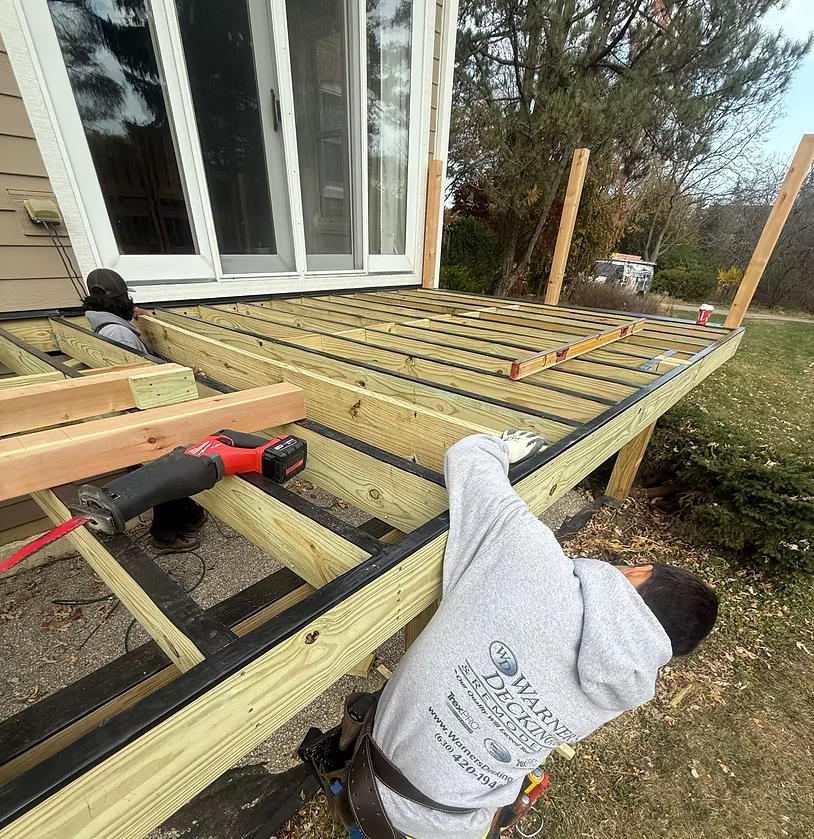
Deck Framing: The Core of Deck Construction
If the foundation is the base, the framing is the backbone. The deck frame supports the decking boards and determines how solid the deck feels underfoot.
Ledger Boards and Proper Attachment to the Home
The ledger board attaches the deck to the house. One of the most critical structural components in deck construction. Improperly installed ledger boards are a common cause of deck failure.
Install flashing between the ledger and the home to prevent moisture intrusion. This small detail plays a huge role in preventing rot and long-term structural damage.
Deck Joists and Proper Joist Spacing
Deck joists run perpendicular to the house and support the decking boards. Proper joist spacing is essential to prevent sagging or bounce. In many builds, contractors space joists 16 inches on center.
The spacing can vary by material and local building codes. Deck boards typically run perpendicular to the joists, which maximizes structural strength and ensures proper load distribution.
Rim Joists and Structural Stability
Rim joists run along the outer edge of the deck frame and tie the joists together. They provide lateral stability and help maintain the structural integrity of the deck frame. Without properly secured rim joists, the frame can shift over time.
Joist Hangers and Framing Connectors
Joist hangers are metal brackets that secure joists to beams or ledger boards. Though small, they provide critical structural support.
High-quality fasteners and corrosion-resistant hardware are essential for long-term durability and local building code compliance.
The Deck Surface
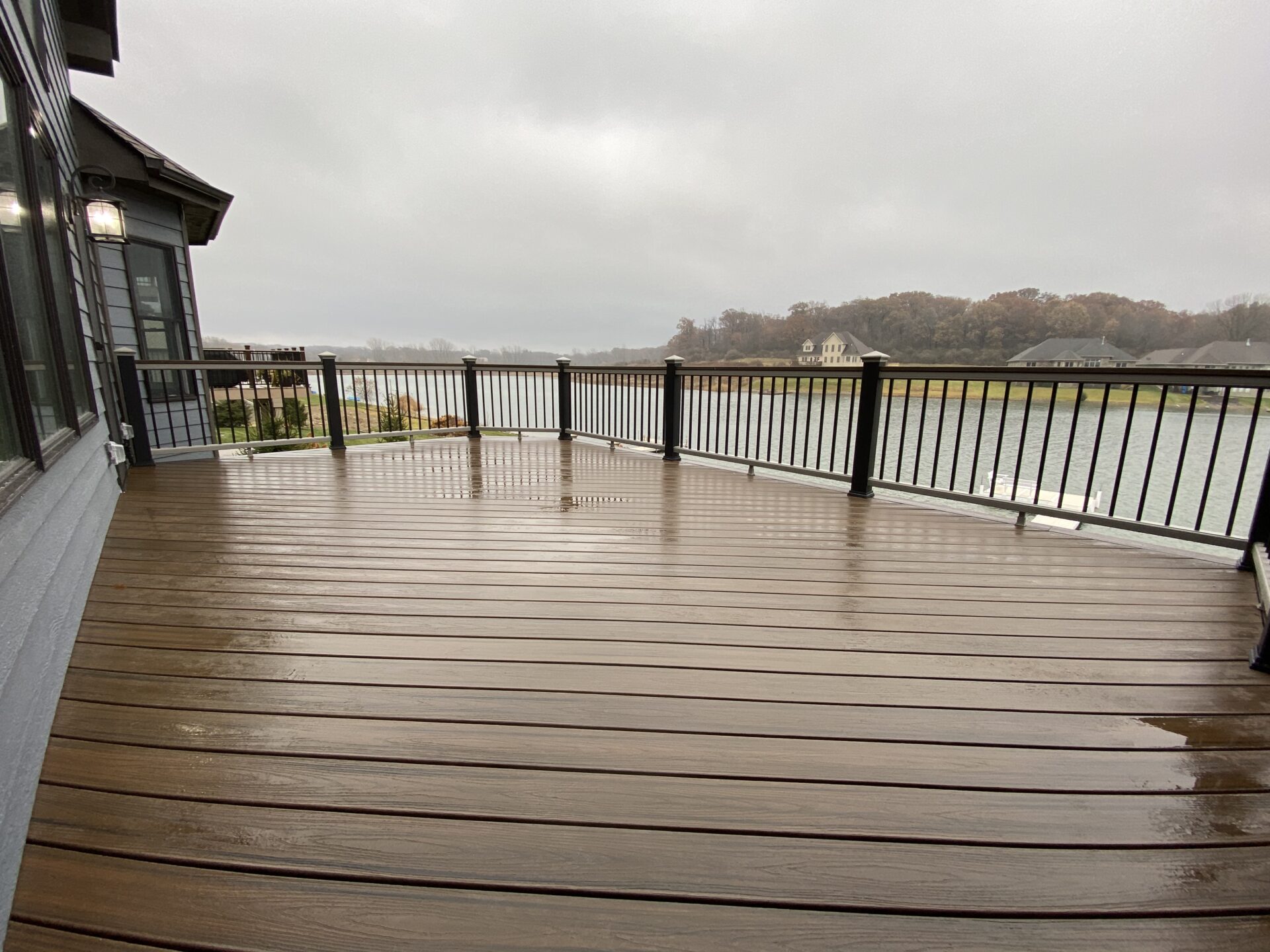
Deck Boards and Decking Materials
Deck boards form the walking surface. They may be constructed from:
- Pressure-treated lumber
- Cedar or hardwood
- Composite decking materials
The deck surface must be properly fastened to support the decking and allow for natural expansion and contraction.
Spacing between boards improves drainage and airflow, helping prevent moisture buildup. Board direction matters too. Most decking boards run perpendicular to joists for optimal support.
Hidden Fasteners & Deck Surface Fastening Systems
Hidden fastener systems create a smooth surface free of visible screws. Beyond looks, they can also reduce water soaking into the board surface.
Deck Railing System & Safety Components
A deck railing system is both a design feature and a safety requirement.
Rail Posts and Structural Railing Support
Anchor the rail posts directly to the deck frame, not just to the deck boards. This ensures the railing system can withstand lateral pressure and meet local building codes.
Top Rail, Bottom Rail & Balusters
The top rail provides a handhold and structural continuity. The bottom rail supports balusters, which fill the space between rails and prevent falls. Building codes regulate the spacing between balusters for safety, especially in homes with children.
Choosing the Right Deck Railing
Homeowners can choose from:
- Wood railings
- Aluminum systems
- Cable rail
- Composite railing systems
Deck Stairs & Stair Treads
Stairs connect the deck surface to the ground and must be built for stability and safety.
Stair Stringers
Stair stringers are angled framing members that support the stair treads. You must cut them precisely and secure them properly to the deck frame. Improperly supported stringers can lead to shifting or unsafe steps.
Stair Treads and Code Requirements
Stair treads are the horizontal surfaces you step on. Local building codes require consistent tread depth and riser height to prevent tripping hazards. Slip-resistant materials improve safety, especially in wet conditions.
Drainage, Flashing & How to Prevent Rot
Moisture is one of the biggest threats to any deck. This damage often stays hidden until you need major repairs. Preventing rot begins at installation and continues through proper maintenance.
How All the Parts of a Deck Work Together
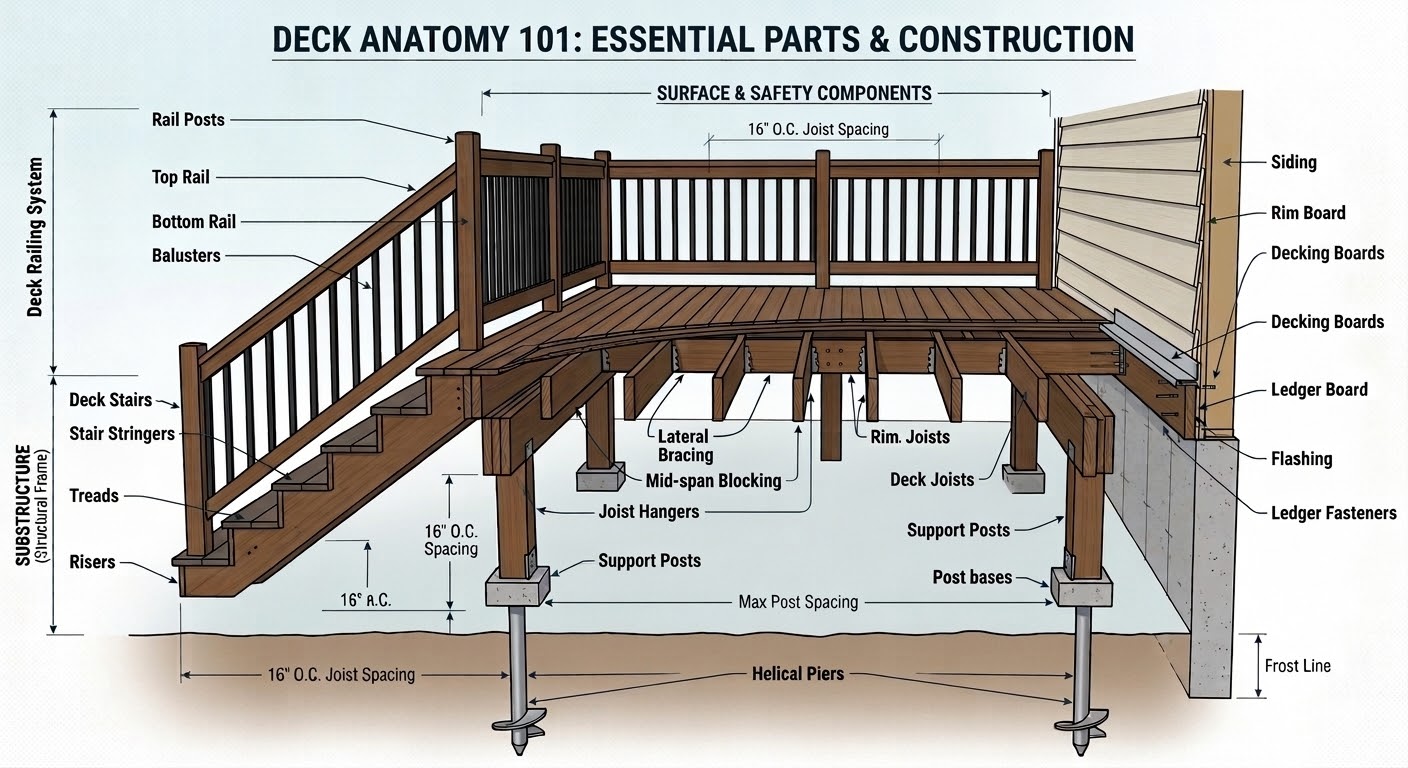
A well-built deck is a coordinated structural system:
- Footings anchor the structure
- Support posts transfer weight
- Beams distribute loads
- Deck joists create a stable frame
- Deck boards form the surface
- Rail posts secure the railing system
- Stairs connect levels safely
Every component must work together to provide strength, durability, and safety. When someone installs one element poorly, it affects the entire system.
Following Local Building Codes for Safe Deck Construction
Local building codes exist to protect homeowners.
They regulate:
- Joist spacing
- Beam sizing
- Railing height
- Stair tread dimensions
- Structural support requirements
Permits and inspections ensure the deck meets safety standards. Code-compliant construction not only protects your family but also preserves property value and prevents costly future corrections.
Frequently Asked Questions About Deck Anatomy
What are the essential parts of a deck?
The essential parts include footings, support posts, beams, ledger boards, deck joists, rim joists, decking boards, railing systems, and stairs.
What supports the decking boards?
Deck joists support the decking boards, transferring weight to beams and support posts.
How far apart should deck joists be?
Joist spacing commonly ranges from 12 to 16 inches on center, depending on decking material and local building codes.
What causes deck rot?
Excess moisture, poor drainage, and improper flashing can lead to rot within the deck frame.
What is the purpose of a rim joist?
A rim joist stabilizes the outer edge of the deck frame and ties the joists together.
Why are ledger boards important?
Ledger boards connect the deck to the home and provide primary structural support. Proper flashing is essential to prevent moisture intrusion.