Pergola vs. Gazebo: Which Is Best for Your Backyard?
Choosing the right outdoor structure is a defining moment for any homeowner looking to enhance their outdoor living experience. Choosing between a pergola and a gazebo usually comes down to how you want to use your outdoor space. They differ in design, cost, and how much weather protection they provide.
What is a Pergola?
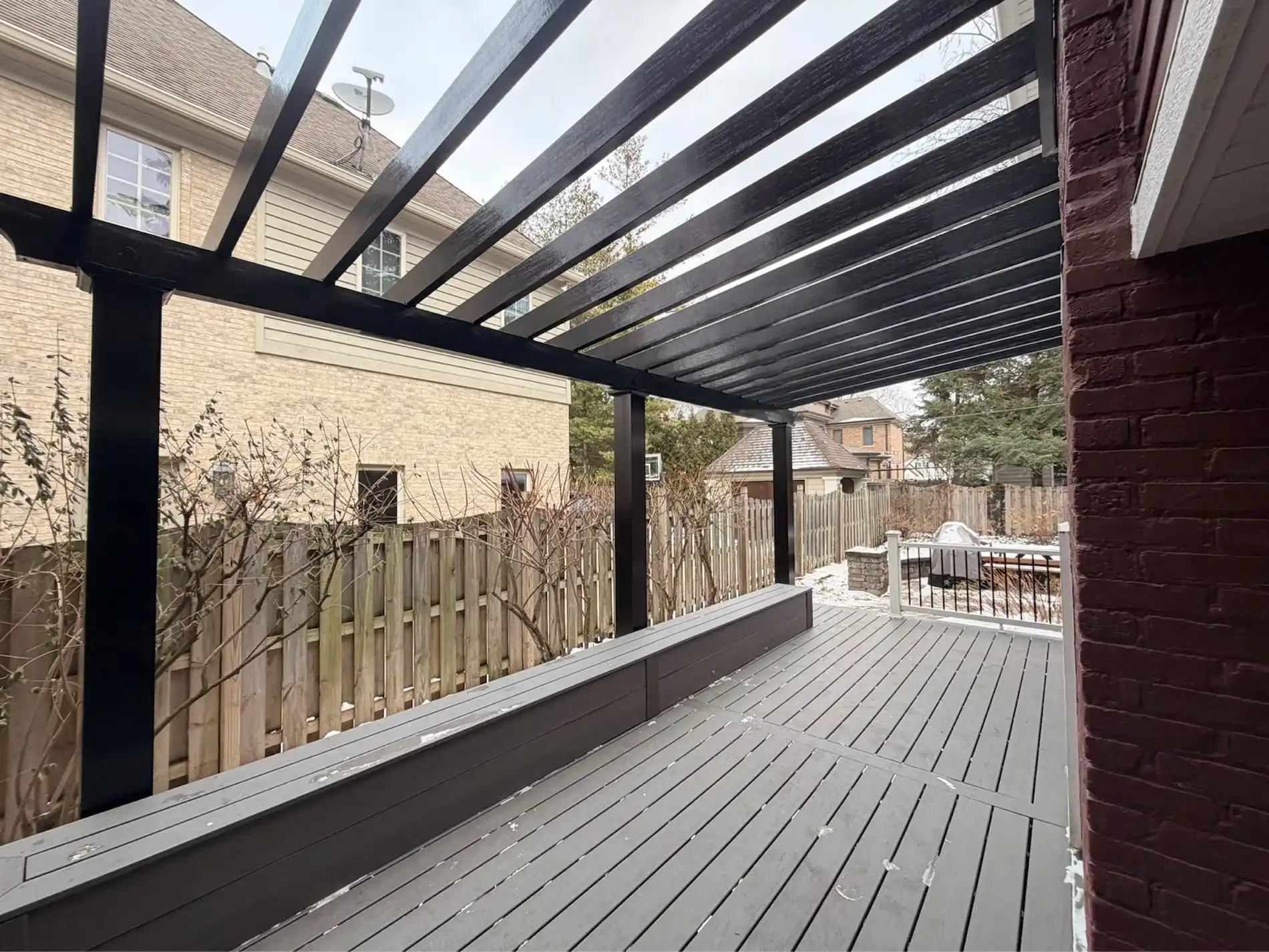
A pergola is a shade structure known for its architectural beauty and versatility. It often defines seating areas on a deck or patio without making the space feel closed off.
How a Pergola Works
Traditional pergolas feature an open-roof design. Modern motorized pergola systems offer adjustable full shade and rain protection, but at a much higher price point.
Types of Pergolas
- Attached: These anchor directly to the side of your home and act as a seamless extension of your indoor living room.
- Freestanding: You can place these anywhere in your yard, and they often create a focal point over a stone fire pit or garden path.
- Arched & Traditional (Wood): A highly decorative style featuring curved overhead beams. It adds a softer, classical look and a romantic touch to traditional wood gardens.
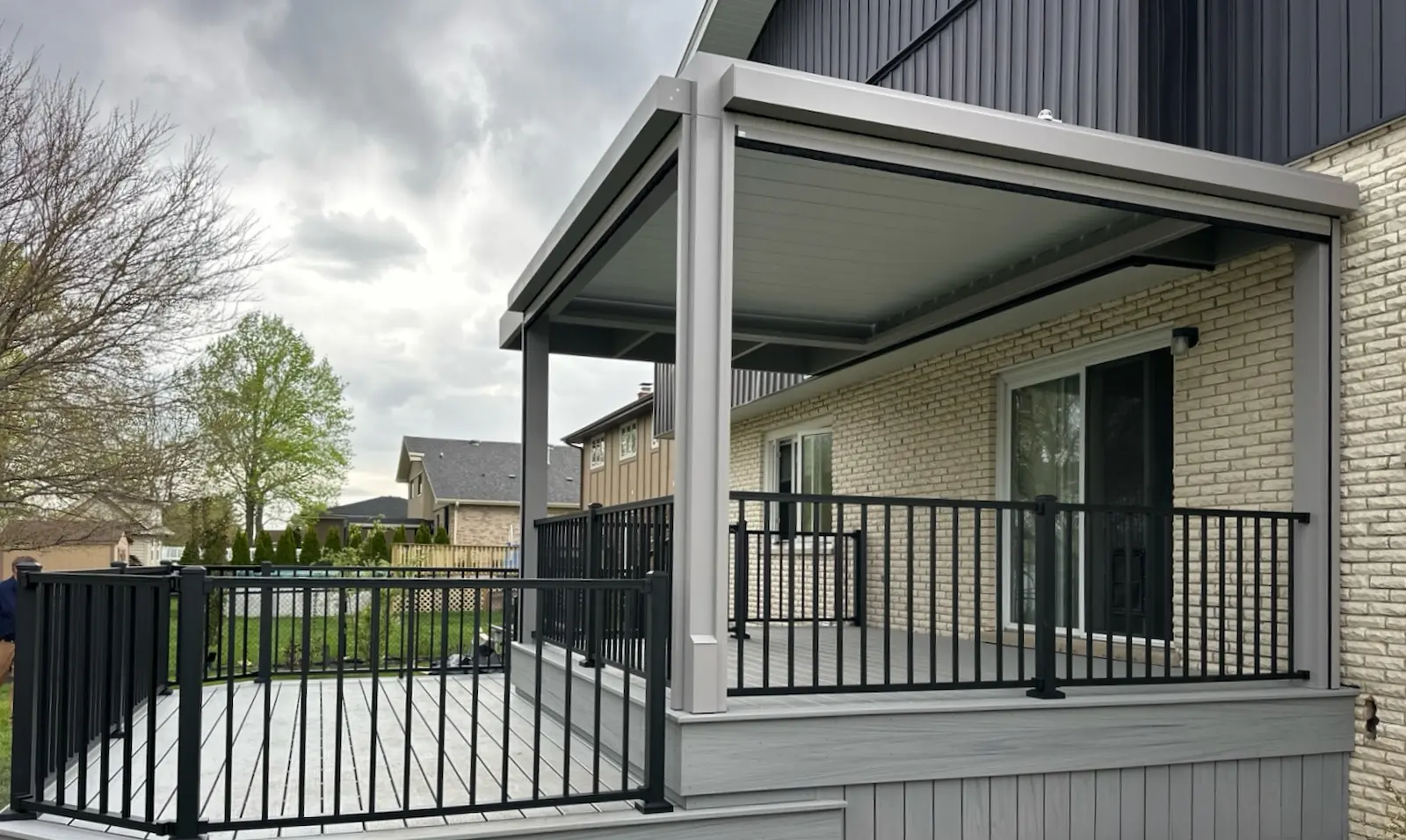
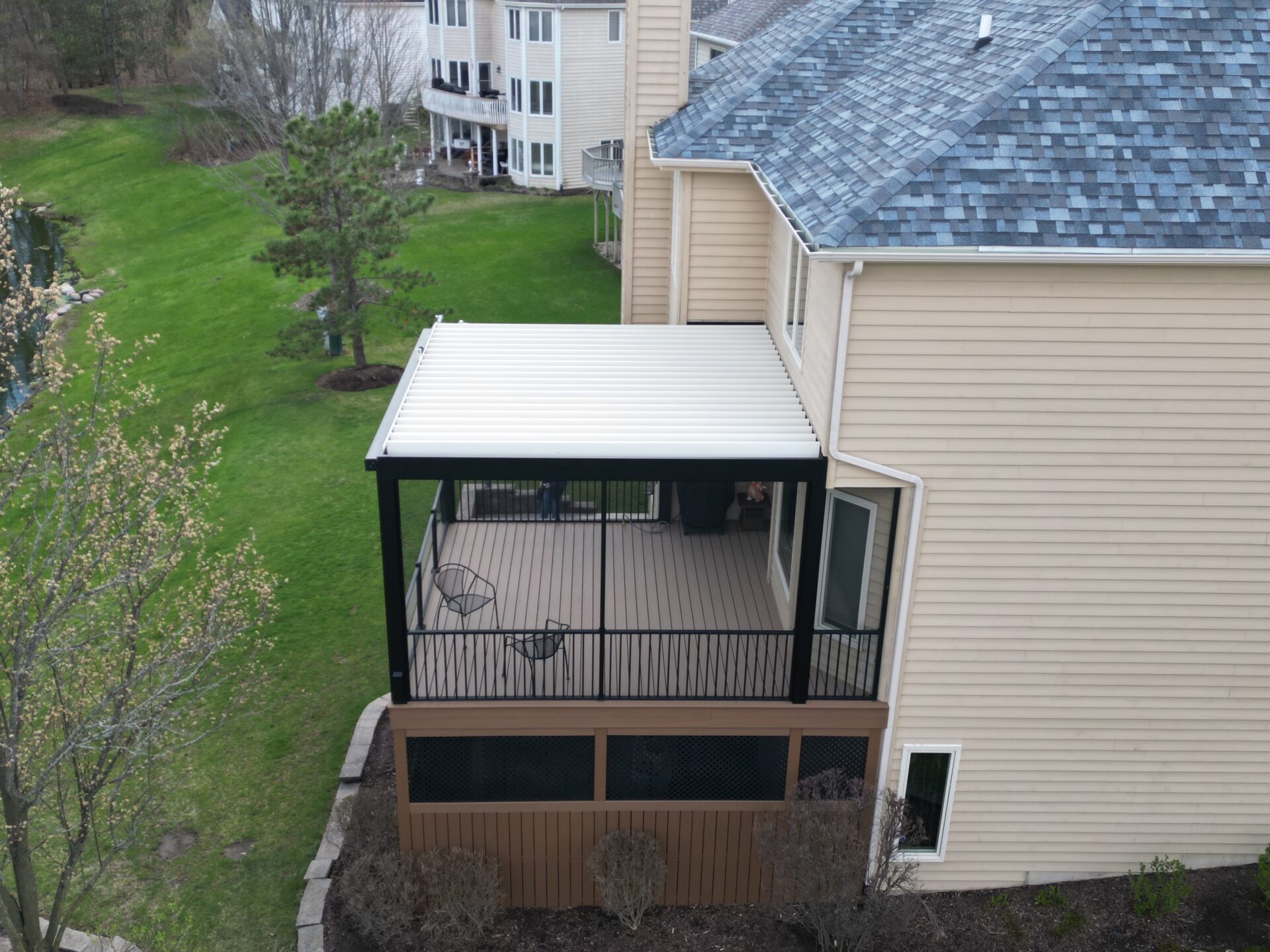
- Motorized Aluminum Louvered: Modern, all-weather systems with adjustable roof slats. Open them for sunlight or close them for rain and snow protection using a remote or mobile app.
- Trex®: Durable structures with a hidden aluminum core and a low-maintenance exterior shell. They give you the look of painted wood without the upkeep.
- Fiberglass: Sleek, heavy-duty structures engineered to withstand harsh weather without warping or cracking. Their strength allows for longer spans with fewer posts.
Best Uses for a Pergola
Pergolas are ideal for homeowners who prioritize aesthetics and airflow. They maximize shade and fresh air, making them ideal for midday dining.
What is a Gazebo?
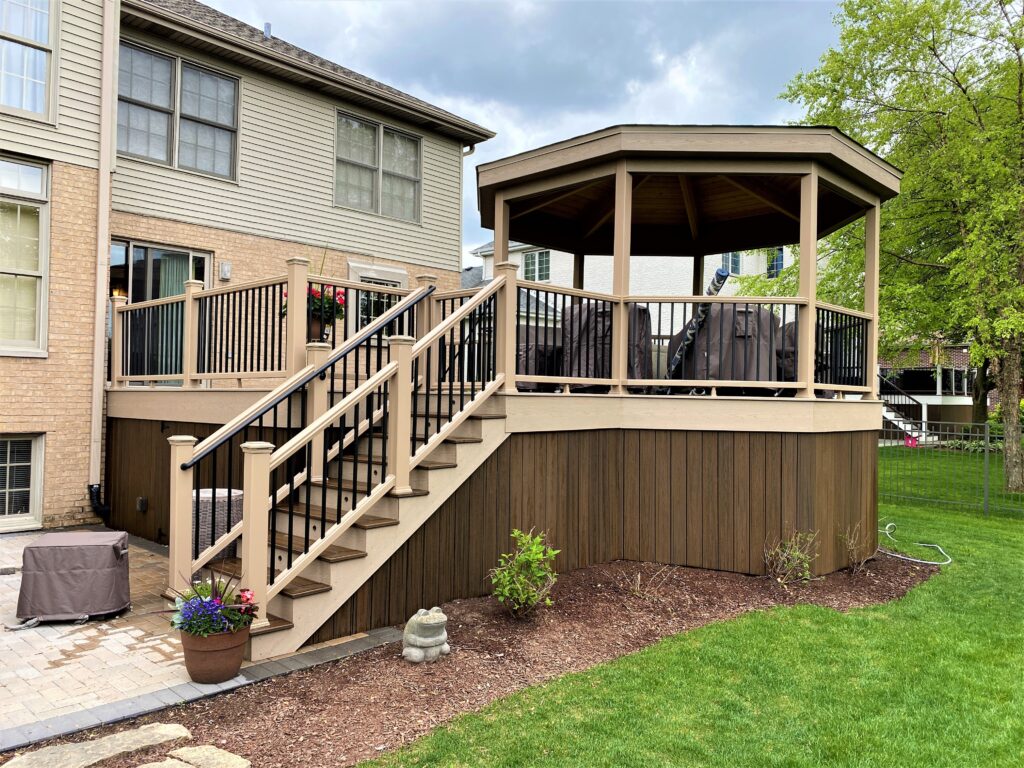
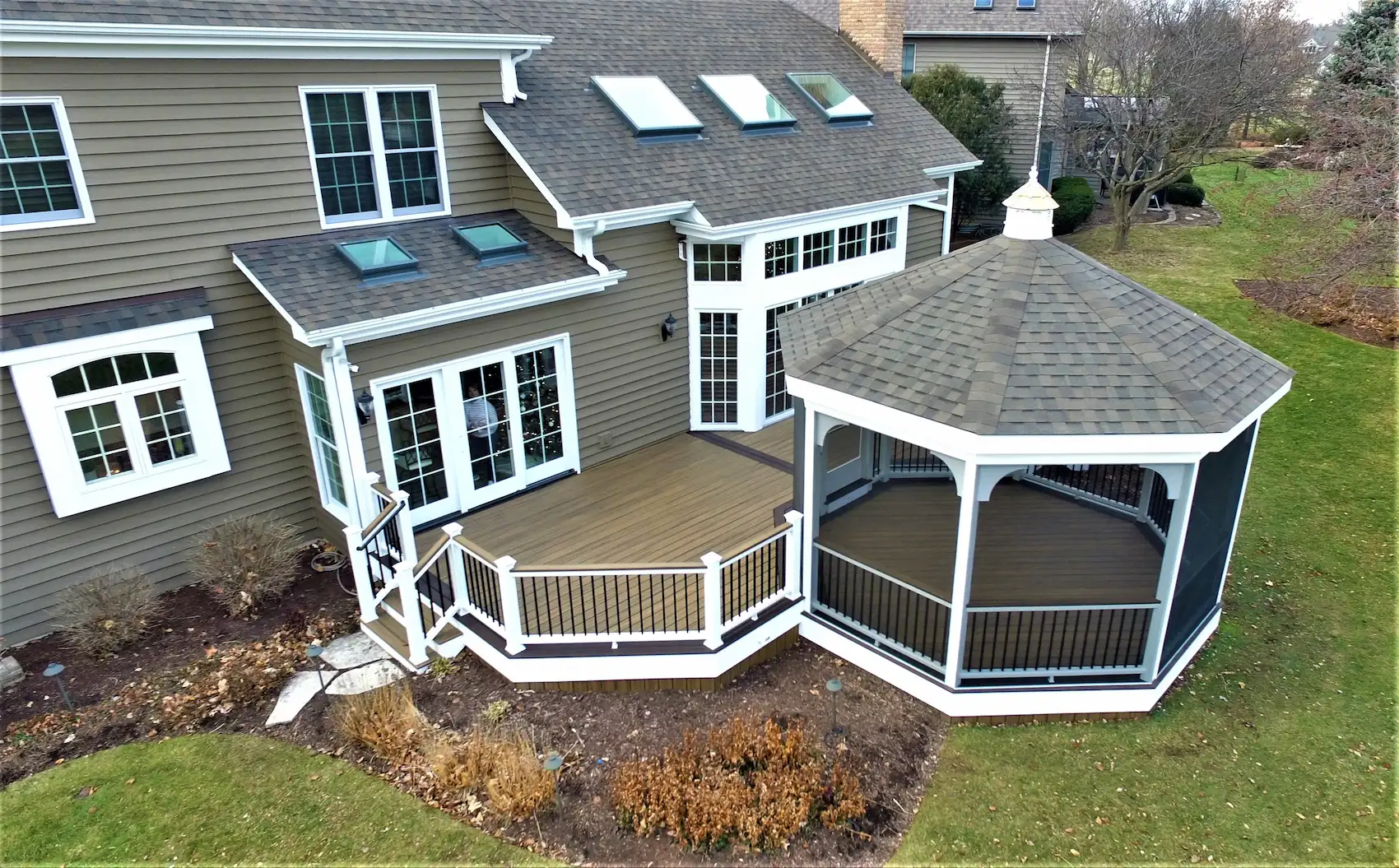
A gazebo is a sturdy, self-contained outdoor structure built for maximum shelter.
How a Gazebo Works
The defining feature of a gazebo is its solid roof. Unlike the open roofs of a pergola, a gazebo’s roof is permanent and pitch-designed to shed water and snow.
Types of Gazebos: Permanent, Pop-up, and Hardtop
- Permanent: Built on a foundation, these are heavy-duty structures meant to last decades.
- Hardtop: Typically made of metal or high-end wood, these offer the best year-round protection.
- Pop-up: People often use temporary fabric structures for events, but they don’t offer the same long-term value as a permanent build.
A gazebo creates an enclosed outdoor space. Its solid roof makes it better for protecting furniture, electronics, or a hot tub from rain and debris.
Pergola vs Gazebo: Key Differences at a Glance
Roof Structure: Open vs. Closed
This is the primary engineering difference. A pergola uses a slat roof to filter light, while a gazebo uses a solid roof for full shade and protection from rain.
Shape and Footprint
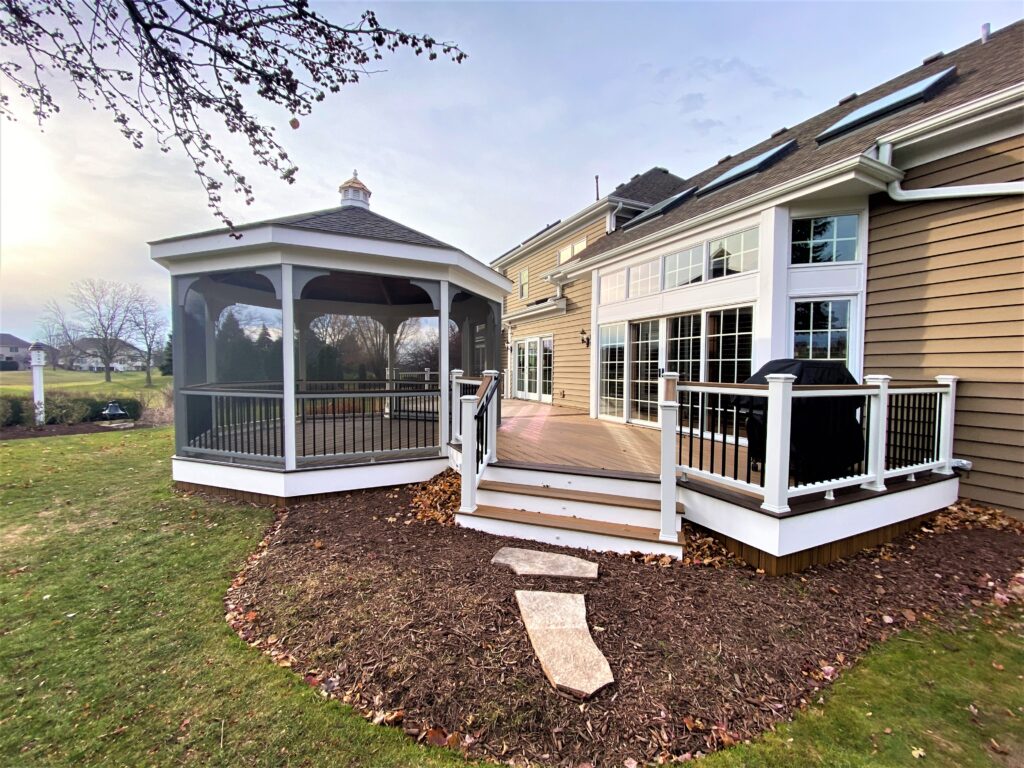
Pergolas are typically rectangular or square, making them easy to fit into modern backyard designs. Gazebos often feature more ornate octagonal or round shapes, which can require more space and more complex landscaping integration.
Materials: Wood, Vinyl, and Aluminum
While a wood pergola is a classic choice, there is a major shift toward low-maintenance materials. High-performance aluminum and composite materials provide the look of natural wood without rotting or requiring constant staining.
Pergola vs Gazebo Cost Comparison
How much does a pergola cost?
Pergolas are generally more budget-friendly because they require fewer materials. However, a custom wood pergola or a modern aluminum system can still require a significant investment depending on size.
How much does a gazebo cost?
Gazebos are almost always more expensive. The complexity of the solid roof, along with the additional materials needed for flooring and structure, increases the cost.
Which is more cost-effective to install?
Regarding pure labor and material ROI, a pergola is often more cost-effective. If you plan to use the space in the rain, a gazebo’s protection may be worth the higher upfront cost of a pergola.
Shade and Weather Protection: Pergola vs Gazebo
Does a pergola provide enough shade?
Traditional pergolas provide partial shade. By adjusting the spacing of the slats, you can increase sun protection. Louvered roof systems offer adjustable full protection via app or handheld remote.
Is a gazebo fully weatherproof?
Yes, the solid roof makes a gazebo weatherproof against vertical rain and snow.
Best Choice for Midwest Weather (Heat, Rain, Wind, Snow)
In the Chicago metropolitan area, weather durability is vital. In towns like Naperville, Plainfield, and St. Charles, we must account for heavy snow loads.
- Gazebos: Excellent for snow but can trap heat during humid summers.
- Traditional Pergolas: allow heat to escape freely but offer zero shelter during sudden Midwest thunderstorms.
- Louvered Pergolas: deliver the ultimate year-round solution, easily managing heavy snow loads, torrential rain, high winds, and intense summer heat.
Pros and Cons
Pros and Cons of a Pergola
- Advantages: Excellent airflow, modern architectural style, and lower maintenance if built with aluminum.
- Disadvantages: Very limited protection from the elements; you will get wet if it rains.
Pros and Cons of a Gazebo
- Advantages: 365-day use, total dry coverage, and a classic aesthetic.
- Disadvantages: Higher cost, more difficult to clean, and the potential to feel dark or “stuffy” if not ventilated properly.
Pergola vs Gazebo: Which is Right for Your Backyard?
- Choose a pergola for a modern look, filtered light, and a space that feels connected to the rest of the yard.
- Choose a gazebo if you need a permanent dry spot for a dining set or a hot tub.
Key Decision Factors
- Budget: Pergolas are often more affordable, although louvered roof systems can reach high price ranges. Gazebos may vary in cost depending on size and materials.
- Space: Gazebos require more visual and physical “weight” in the yard.
- Climate: Consider how much you value being outside during a light rain.
Do you need a permit for a pergola or gazebo?
Permitting is a major content gap in the outdoor structure industry. In the Chicago market, zoning laws vary by municipality. Generally, you need a permit if the structure is permanent or attached to your home. Always review your neighborhood HOA regulations.
- Often set limits on roof height and material colors.
- Rules help protect a neighbor’s view.
- Keep the neighborhood look consistent.
Pergola vs Gazebo Maintenance
How to Maintain a Pergola
A wood pergola needs staining every few years to prevent weather damage. High-performance aluminum pergolas, however, only require a simple seasonal wash with a garden hose.
How to Maintain a Gazebo
Maintaining a gazebo involves checking the solid roof for debris or shingle damage. Because they have more “nooks and crannies,” you must also check for pests like wasps or birds nesting in the rafters.
Frequently Asked Questions
What is the purpose of a pergola?
A pergola is an open outdoor structure that defines a space and provides partial shade without fully enclosing it. Some modern versions include adjustable louvered roofs for added control over sun, snow and rain.
Do pergolas provide shade?
Pergolas provide shade, although the amount of coverage depends on the roof design. Traditional pergolas use slats to filter sunlight, while louvered pergolas feature adjustable roofs that create full shade when closed.
Do you need permit for a pergola?
Permit requirements vary by location, but you usually need a permit for large, permanent, or attached pergolas.
What is a gazebo?
A gazebo is a fully covered outdoor structure that provides complete overhead protection and a more enclosed, sheltered space.
Do you need a permit for a gazebo?
In many areas, a gazebo requires a permit if it is permanent, anchored, or exceeds local size limits. Always check local building codes and HOA rules.