Deck vs. Patio: Choosing the Right Outdoor Structure
Adding outdoor living space to your home is one of the smartest investments you can make. Choosing the right structure a deck or a patio depends on your yard, budget, and lifestyle. Both expand your usable living space, boost curb appeal, and add value to your home.
Decks and patios differ in construction, cost, and suitability for various yards and lifestyles. This guide explains the key factors to consider when choosing the ideal outdoor space for your backyard.
Understanding the Difference Between a Deck and a Patio
| Feature | Deck | Patio |
|---|---|---|
| Structure | Elevated, built above ground | Ground-level, built on grade |
| Base Material | Wood or composite framing | Concrete, pavers, or stone |
| Average Cost | $15–$35+ per sq ft | $8–$20+ per sq ft |
| Best For | Sloped yards, elevated views | Flat yards, low-maintenance living |
| Lifespan | 15–30+ years (material dependent) | 25–50+ years |
| Maintenance | Moderate to high | Low to moderate |
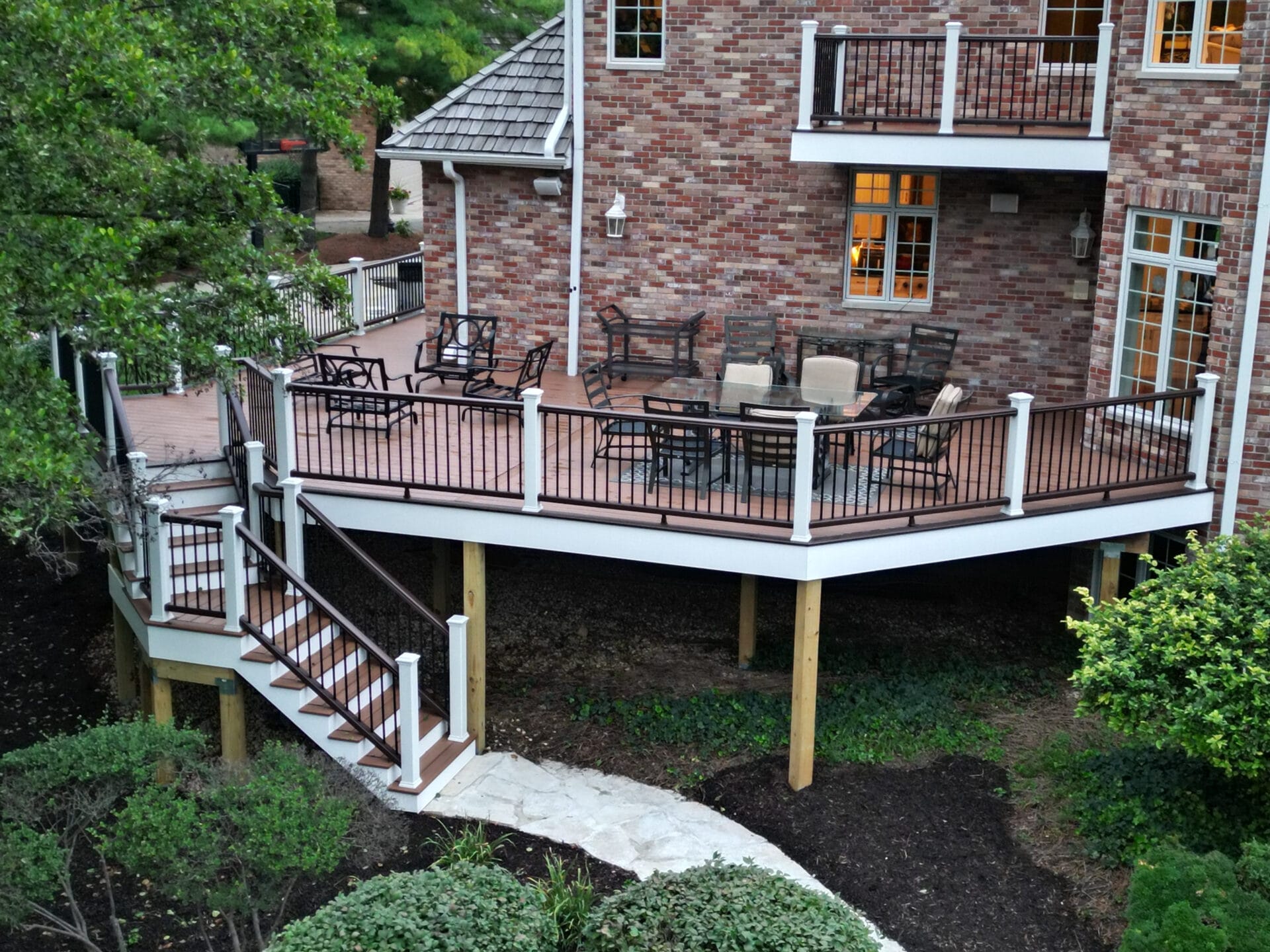
A deck serves as an elevated outdoor platform, either attached to your home or constructed as a freestanding structure. It rises above ground level sometimes just a few inches, sometimes several feet and rests on a frame of posts, beams, and joists. Decks rise above ground, so municipalities typically require permits, and building codes enforce proper structure and railing height.
Decks are well-suited for homes with sloped or uneven backyards where a ground-level patio simply is not practical. They create a natural flow from interior living spaces when connected to a back door, or kitchen.
Best Deck Materials and Styles for Your Backyard
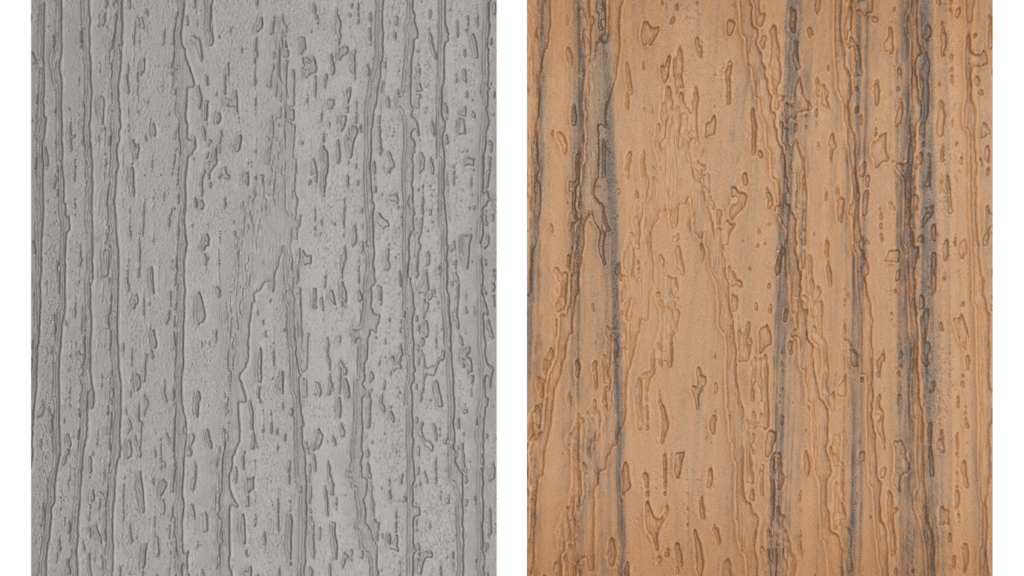
Composite Decking is the fastest-growing material category in the decking market. Made from a blend of wood fibers and recycled plastics, composite decking offers resist fading, staining, mold, and moisture. They require little maintenance and hold their appearance far longer than wood. Leading brands include Trex, TimberTech, and Fiberon.
PVC Decking contains no wood fiber, making it the most moisture-resistant option available. Highly suitable for environments with high humidity or areas adjacent to pools.
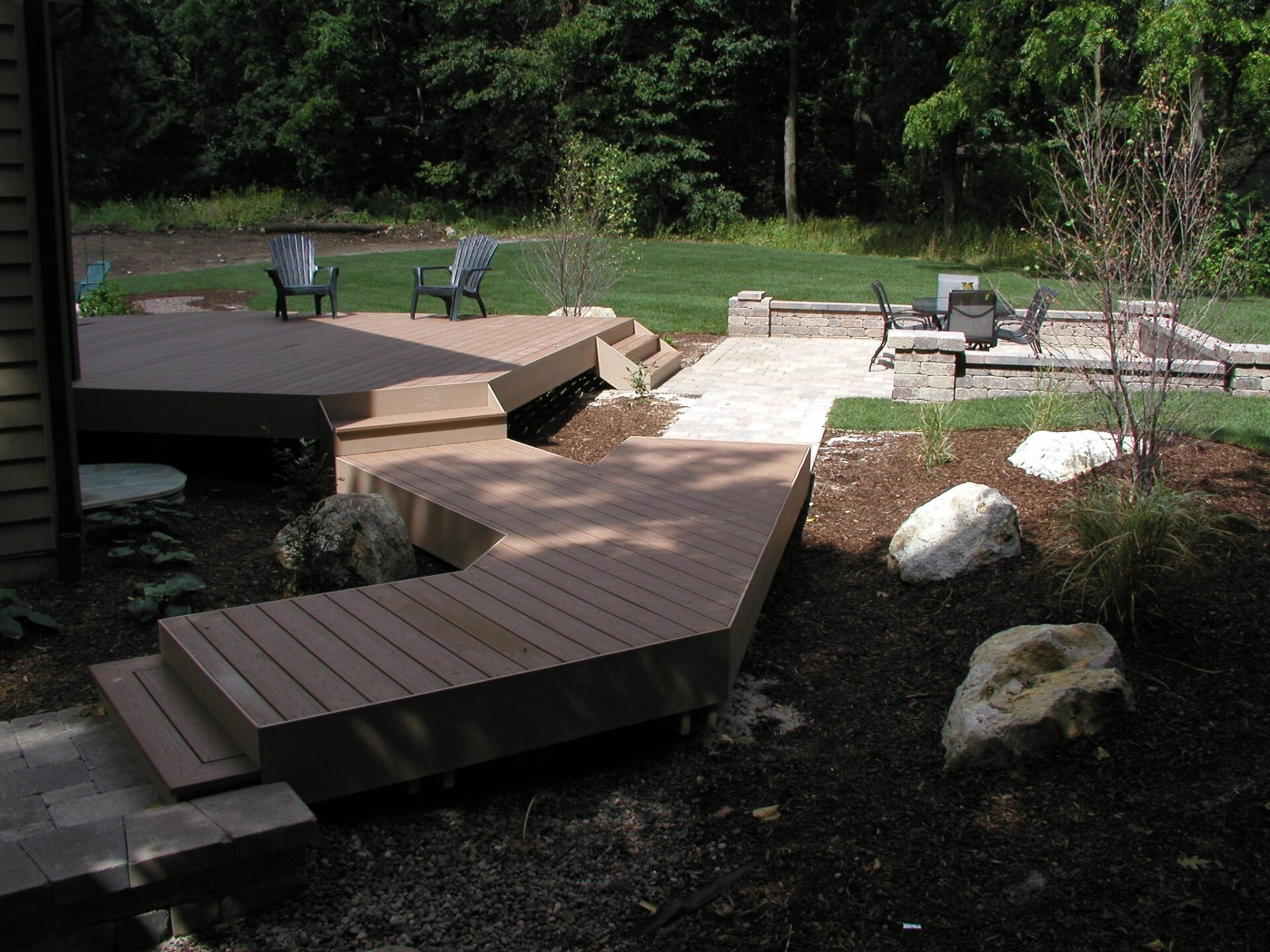
Popular deck styles: Common deck styles include single-level attached decks, wraparound decks, multi-level decks, and freestanding decks. Some freestanding decks have pergolas or other shade structures.
What Exactly Is a Patio?
A patio is a ground-level outdoor surface installed directly on or just above grade. Unlike a deck, a patio requires no structural framing or elevated support system. It rests on a prepared base of compacted gravel and sand, or a concrete slab. Patios install faster, often require no permit or simpler approval, and cost less per square foot than decks.
Patios work best in yards that are already relatively flat. Homeowners install patios next to the house or anywhere in the yard as a standalone entertaining area.
Popular Patio Materials and Styles
Concrete: the most affordable and widely used patio material. A standard poured concrete patio is durable and easy to maintain. Though it can crack over time and can feel plain without decorative finishing. Stamped concrete adds texture and visual interest at a moderate upcharge.
Pavers: Including brick, concrete, and natural stone pavers. Offers a more upscale look with excellent durability. You can remove and replace individual pavers if they crack, making repairs straightforward.
Natural Stone: such as bluestone, flagstone, travertine, and slate offers premium aesthetics and exceptional longevity. Natural stone patios are among the most visually striking outdoor surfaces available, though material and labor costs are higher.
Gravel and decomposed granite: are low-cost options used in casual or dry-climate applications. They drain well but shift over time and require periodic replenishment.
Popular patio styles: Patio designs range from simple rectangles to flagstone patterns. They also include enclosed courtyards. Some patios have built-in fire pits or outdoor kitchens.
Pros and Cons of a Deck vs. Patio
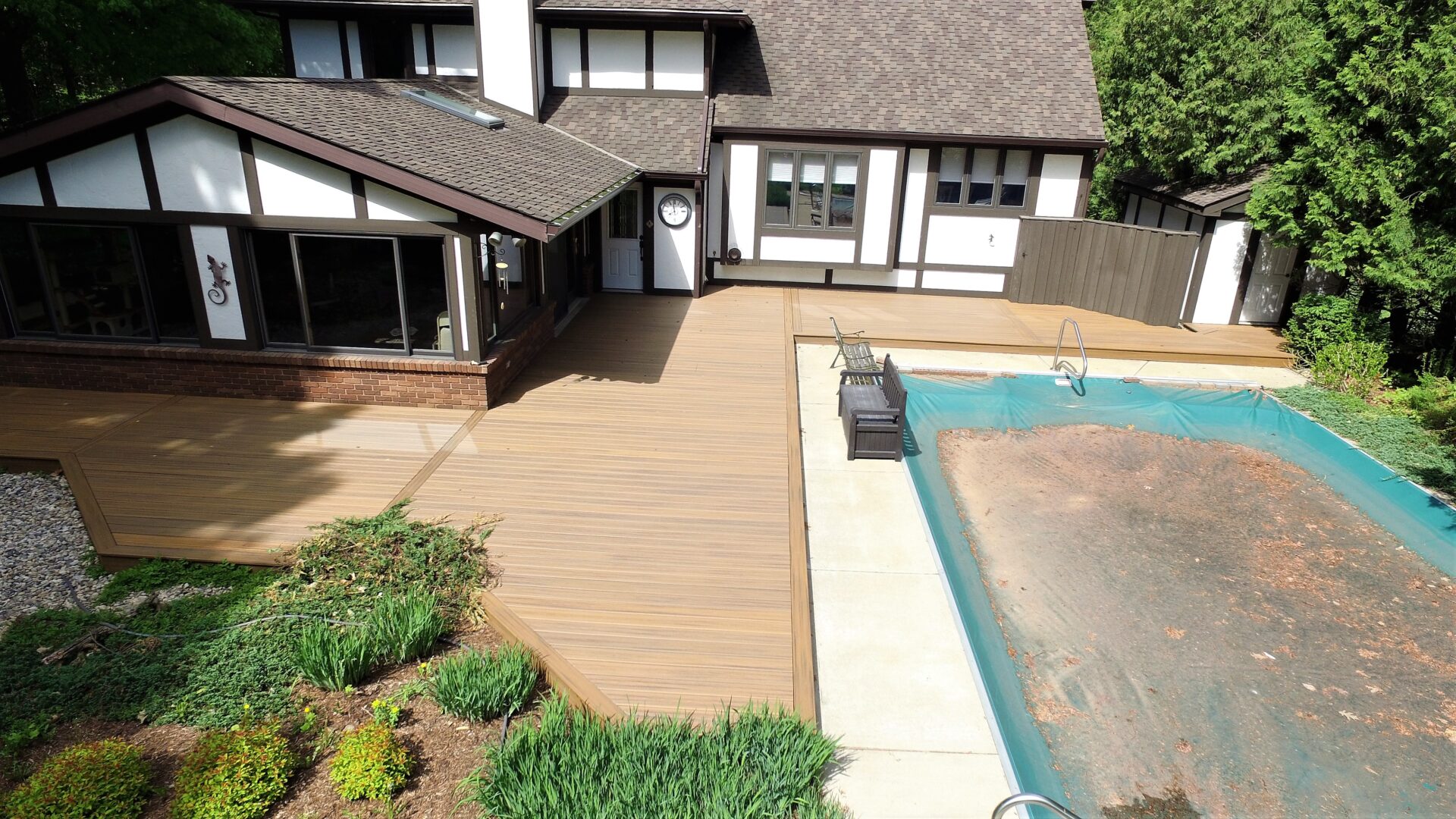
Pros and Cons of a Deck
- Works on sloped or uneven terrain where a patio isn’t feasible
- Creates seamless indoor-to-outdoor flow from the home’s interior
- Elevated positioning offers better views and improved privacy
- Composite and PVC are great options offering low long-term maintenance
- Highly customizable in shape, size, railing style, and elevation
- Requires periodic inspection of structural components, joists, and ledger board
- Higher average cost per square foot than a patio
- Traditional wood decks require annual or bi-annual maintenance
- Elevated structures require permits and must meet building codes
- The underside of a deck can become a maintenance issue (moisture, pests)
Pros and Cons of a Patio
Pros:
- Lower cost per square foot than most deck builds
- Extremely durable – natural stone and pavers can last 50+ years
- No structural framing means simpler installation and fewer permit requirements
- Paver patios allow for easy spot repairs without replacing the entire surface
- Works well with landscaping, gardens, and water features
Cons:
- Limited to relatively flat or gently sloping terrain
- Concrete can crack over time, especially in freeze-thaw climates
- Feels less connected to interior living spaces without intentional design
- Ground-level placement offers less privacy in dense neighborhoods
- Gravel or sand base can shift and require re-leveling over the years
Comparing Costs: Deck vs. Patio
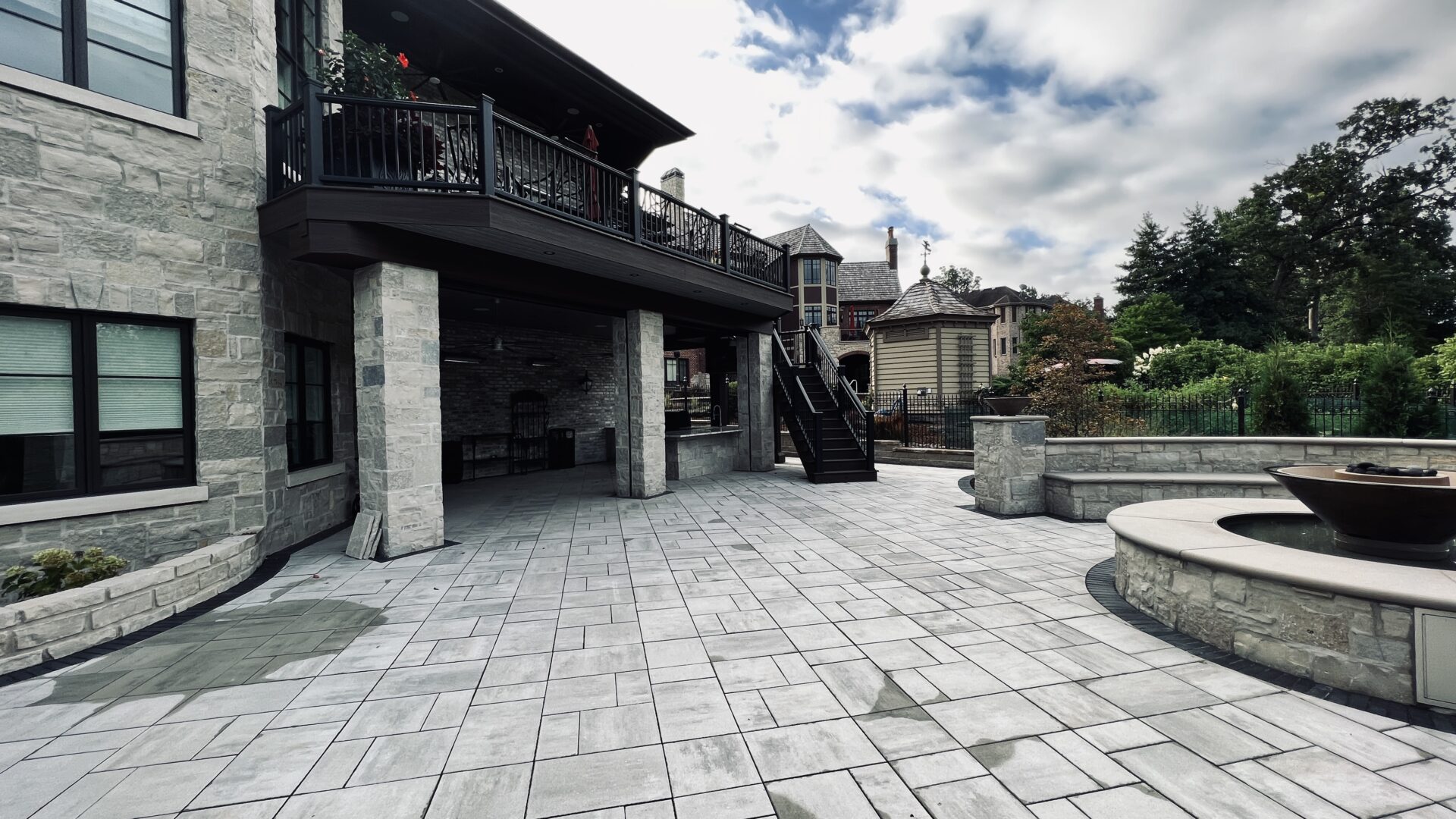
How Much Does It Cost to Build a Deck?
The cost to build a deck varies significantly based on size, materials, and the complexity of the design. Here’s a general breakdown:
- Pressure-treated wood deck: $15–$25 per square foot installed
- Cedar or redwood deck: $20–$35 per square foot installed
- Composite deck boards: $25–$45+ per square foot installed
- PVC deck: $30–$50+ per square foot installed
For a standard 300-400 square foot deck, homeowners can expect to spend anywhere from $6,000 to $20,000+. Pricing depends on material selection, railing systems, stairs, and any built-in features like lighting or pergolas. Multi-level decks or those requiring significant structural support will push costs higher.
*Be sure to account for permits, footings, ledger attachments, railing systems, stairs, and any additional decking components.
How Much Does It Cost to Build a Patio?
Patios typically cost less to install than decks of equivalent size, as they do not require structural framing.
Typical cost ranges include:
- Poured concrete patio: $6-$12 per square foot installed
- Stamped concrete patio: $12-$20 per square foot installed
- Concrete paver patio: $10-$20 per square foot installed
- Natural stone patio: $20-$40+ per square foot installed
For a comparable 300-400 square foot patio, most homeowners spend between $3,000 and $12,000 for standard materials. Complex natural stone projects like intricate patterns or retaining walls on sloped lots often cost more than standard installations.
Which Option Gives the Best Long-Term Value?
From a pure return-on-investment standpoint, both decks and patios add measurable value to a home.
According to Remodeling Magazine’s Cost vs. Value data, a wood deck recoups approximately 50-65% of its cost at resale. A composite deck can recoup a similar percentage because of lower perceived maintenance costs for buyers. Patios, particularly those built with quality pavers or stone, tend to recoup 30-60% of their cost.
However, return on investment does not capture the full picture. A deck or patio that improves your daily quality of life has value that goes well beyond resale numbers. The “right” choice is whichever one you’ll actually use and use often.
Key Factors to Consider Before Choosing
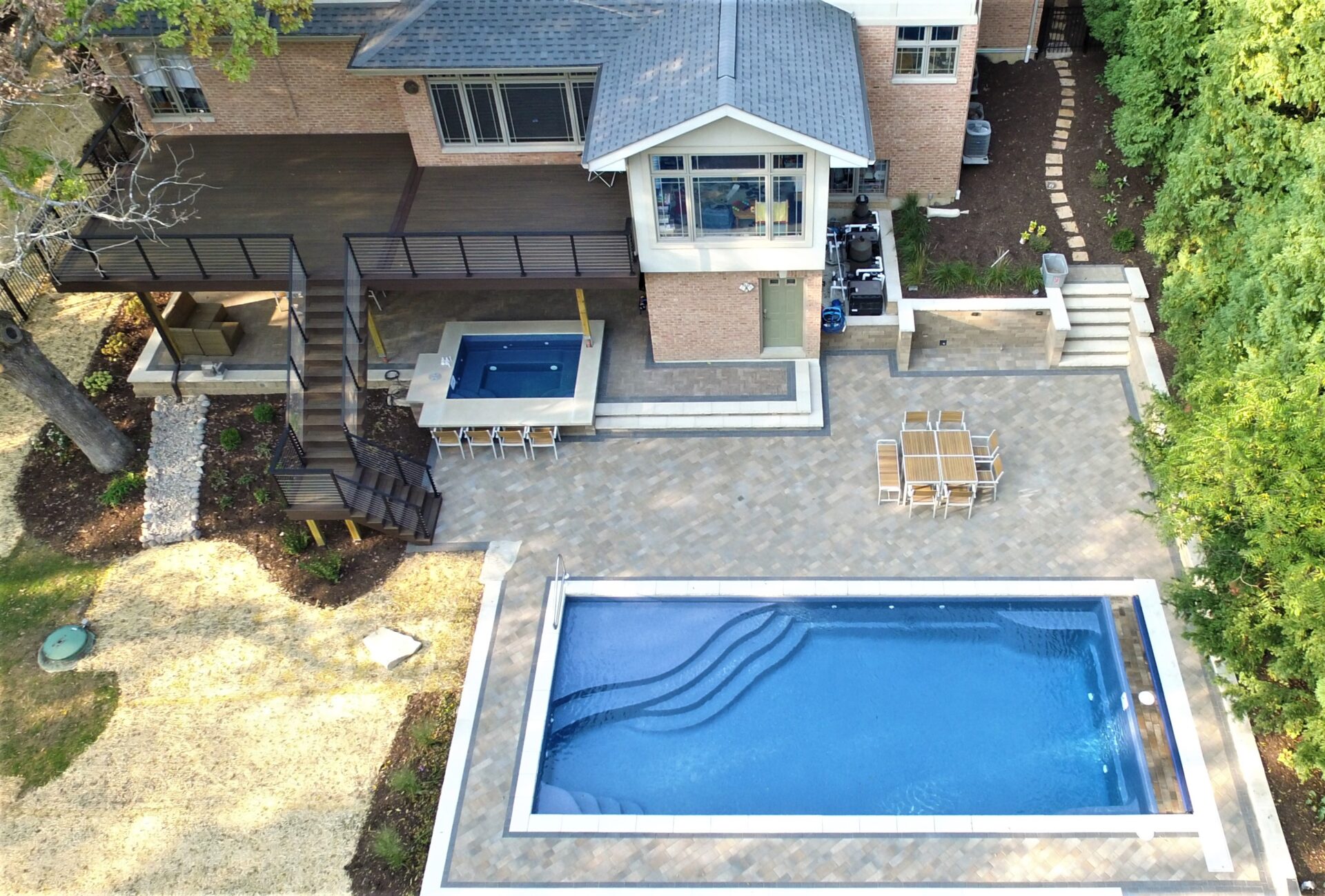
Maintenance and Longevity: What to Expect
Wood decks demand the most ongoing attention. Clean, sand, and reseal or re-stain your wood deck every 1 to 3 years. This helps prevent moisture damage, fading, and wear. Neglected wood decks can develop rot, splinter, and become structurally unsound within a decade.
Composite and PVC decks are significantly lower maintenance. Most require only periodic cleaning with soap and water. They resist fading, staining, mold, and moisture, and most come with 25-30 year manufacturer warranties.
Concrete patios require little maintenance initially but may develop cracks over time, especially in regions with harsh winter freezes. Sealing a concrete patio every 2–3 years helps extend its life and appearance.
Paver patios are among the most forgiving outdoor surfaces regarding maintenance and repair. You can lift, relevel, and reset individual pavers without disturbing the surrounding surface. Sealing pavers every few years protects against staining and weed growth between joints.
Style, Design, and How It Impacts Your Backyard
Design flexibility is one area where decks and patios each have distinct strengths.
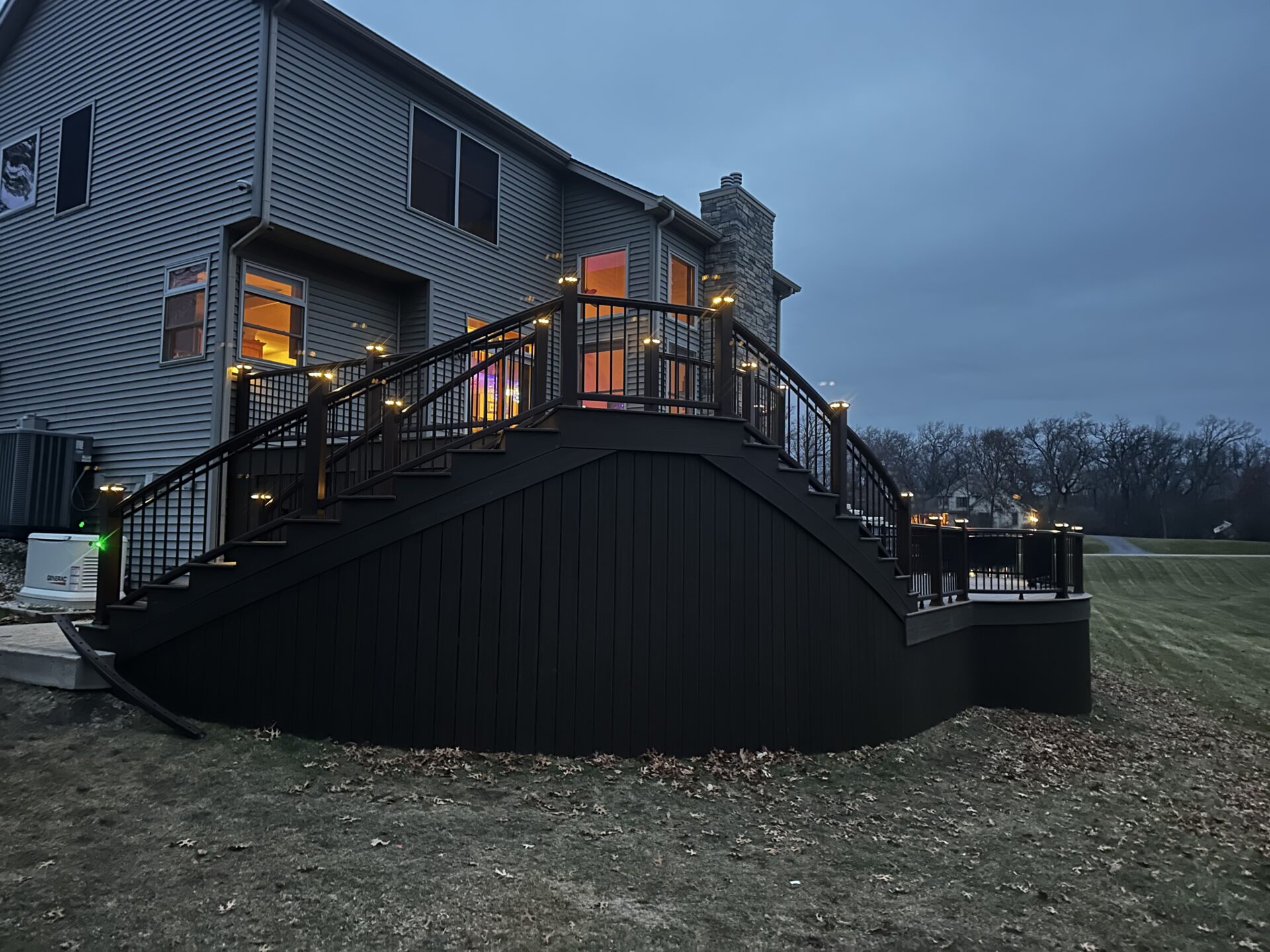
Decks work well with architectural details. Built-in benches, planters, and multi-level platforms add style. Cable railing, pergolas, and integrated lighting can make a deck look stunning. They also draw the eye upward and create a sense of vertical dimension in the yard.
Patios integrate naturally with the landscape. They can flow seamlessly into garden beds, pool surrounds, outdoor kitchens, and fire pit areas. Paver and stone patios offer incredible design variety through material mix, pattern, color, and edging details.
When thinking about design, consider how the space connects to your home’s interior style. A modern home pairs beautifully with a clean-lined composite deck or a large-format porcelain paver patio. A traditional or craftsman-style home might call for warm cedar decking or natural flagstone.
Which Outdoor Space Fits Your Home Best?

Backyards That Benefit Most From a Patio
A patio is typically the better choice when:
- Patios highlight a natural aesthetic. Stone, brick, and paver surfaces connect beautifully to the earth and surrounding landscape.
- Your yard is flat and level. You’ll avoid the cost and complexity of structural framing and footings.
- Provides a durable, low-maintenance surface. Quality pavers and natural stone require little upkeep and outlast most decking materials.
- Ideal for homeowners with budget constraints. Even mid-range paver patios cost less per square foot than composite or wood decking.
- You want flexibility in layout. Patio designs allow you to integrate pools, gardens, and landscaping features more easily than decks.
Start Creating Your Dream Outdoor Space
Every backyard is unique. A professional site assessment checks your yard’s slope, drainage, sun exposure, soil, and local permits. It helps choose the best deck or patio and confirms the final cost.
Frequently Asked Questions
Which Is More Budget-Friendly: Deck or Patio?
Costs vary significantly based on your yard’s topography, local labor rates, and the complexity of the design. A patio on a flat lot typically costs less than a comparable deck. Patios on sloped lots with grading or retaining walls can cost as much as or more than decks.
Which Adds More Value to My Home?
Homebuyers in most markets consider both decks and patios desirable, and they add value to a home. Wood decks historically recoup 50-65% of their construction cost at resale. Composite decks tend to score similarly and can outperform wood in markets where buyers value low-maintenance features. Patios built with high-quality pavers or stone also add measurable value. ROI varies depending on the region and the materials used. Maintain, use, and style your outdoor space well to maximize its return whether it’s a deck or a patio.
Which Lasts Longer: Deck or Patio?
A well-built patio generally has a longer raw lifespan than a deck built with traditional wood. Natural stone and quality paver patios can last 30–50 years or more with minimal intervention. Concrete, if properly installed and sealed, also delivers exceptional longevity.
Traditional wood decks, without consistent maintenance, may show significant deterioration within 10-15 years. Composite and PVC decks reduce this gap. Premium products last 25-30+ years with minimal upkeep, and many include warranties that reflect their lifespan.
Can I Have Both a Deck and a Patio in My Backyard?
Absolutely, and many homeowners discover that using both together creates the strongest overall outcome. Pair a deck with a patio for multi-level homes, walk-out basements, or properties with spacious, larger lots. Create clear zones for different uses. A deck can serve as the main space for eating and relaxing near the home. A patio can extend that space into the yard for a fire pit, garden seating, or a pool area. If your budget and yard support it, combining both structures is worth serious consideration.