Tips for Maintaining Composite Decking in Naperville, IL

Composite decking is built for durability but low maintenance doesn’t mean zero maintenance. To keep your deck looking great and performing well, regular care is essential especially with Northern Illinois weather. Here is how to protect your investment and keep your outdoor living space looking brand new year-round.
Why Composite Decking Requires Unique Care in Naperville
Naperville, IL climate subjects outdoor materials to extreme environmental shifts throughout the year. Heavy winter snow, summer humidity, and freeze-thaw cycles can all affect your deck. That’s why seasonal maintenance is important:
- Freeze-Thaw Cycles: Quick temperature drops can cause trapped moisture to freeze and expand. Over time, this can stress your deck boards and framing.
- Spring Humidity & Pollen: Spring moisture and heavy tree pollen can lead to mold and buildup on your deck if they are left too long.
- Winter Deicing Wear: Using the wrong deicing agents or harsh scraping tools can etch, pit, or scratch composite cap stock during cold months.
Understanding these regional factors allows you to tailor your routine to counteract Midwest wear and tear effectively.
Essential Maintenance Steps for Composite Decks
Seasonal Cleaning Routine
Clean your composite deck at least twice a year to maintain its appearance and condition. Clean it in spring to remove winter grime and again in fall to remove leaves and buildup.
- Clear Surface Debris: Sweep away leaves, pine needles, and dirt using a soft-bristle broom or leaf blower. Pay close attention to the gaps between boards where trapped debris retains moisture.
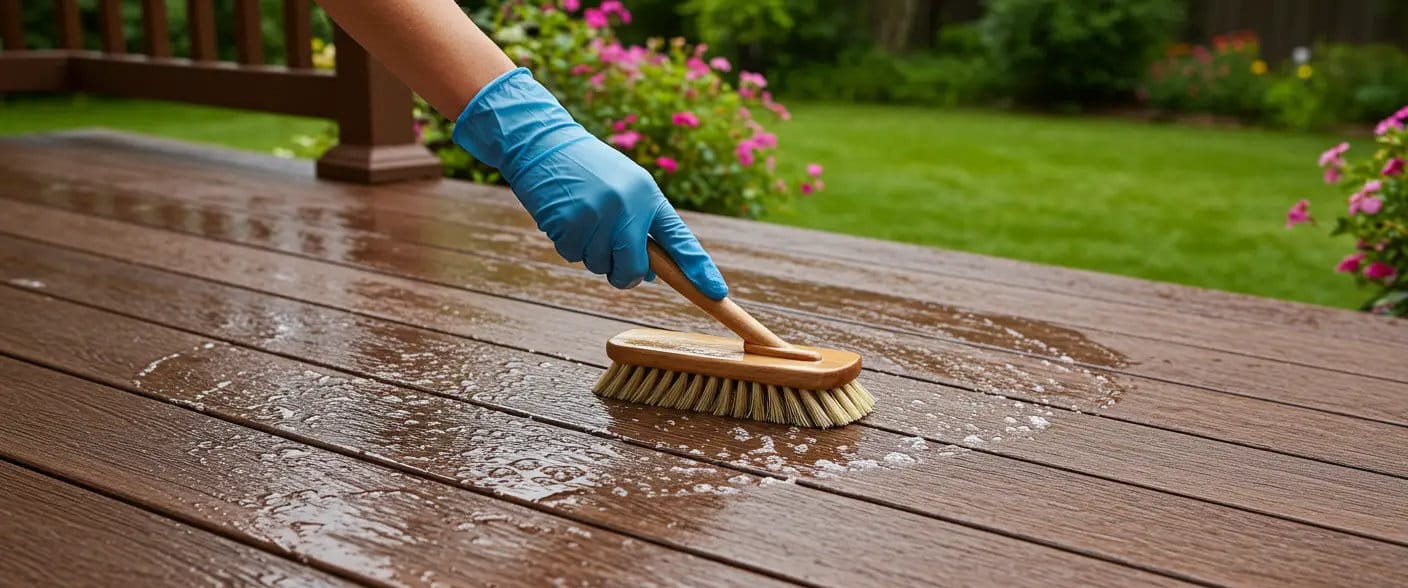
- Wash with Mild Soap: Mix warm water with a gentle, non-abrasive dish detergent.
- Scrub Lightly: Use a soft-bristle nylon brush to scrub along the natural grain pattern of the boards.
- Rinse Thoroughly: Spray down the surface with a standard garden hose equipped with a spray nozzle to clear all soap residue.
Removing Food Stains, Grease, and Tree Sap
Accidental spills and sap drips need prompt attention before they sit and become stubborn:
- Grease and Food Spills: Wipe up oil and grease immediately. Wash the area with warm water and a grease-cutting dish soap, scrubbing gently with a soft brush before rinsing clean.
- Tree Sap: Apply isopropyl alcohol or an oil-free citrus cleaner directly to sticky sap spots. Let it soften the sap for a minute, then wipe gently with a soft cloth and rinse thoroughly. Avoid scraping dried sap with metal putty knives or sharp blades.
Preventing Mold, Mildew, and Algae Growth
Mold, mildew, and algae are most likely to develop where moisture and organic debris remain on the deck surface.
- Keep board gaps clear of wet leaves, dirt, and trapped debris to maintain proper water drainage and under-deck airflow.
- Treat early signs of mold with a composite-safe deck cleaner, preferably one containing sodium percarbonate. Avoid harsh chlorine bleach, which can dull surrounding finishes over time.
Preventing Scratches From Furniture and Foot Traffic
Composite surface caps are tough, but heavy furniture, metal bases, and sharp grit can still scuff the surface:
- Attach rubber or protective plastic pads to the feet of patio tables, chairs, grills, and heavy planters.
- Always lift heavy furniture when moving items across the deck rather than dragging them.
- Place colorfast outdoor doormats at entry points to catch sand, gravel, and grit before they reach your deck boards.
Winter Care and Safe Ice Melt Practices
Clearing snow and ice correctly protects your composite surface from physical and chemical damage during cold months:
- Shoveling: Use a plastic shovel with a smooth blade. Avoid metal edges, sharp scrapers, or aggressively chopping at hard-packed ice. Push the shovel in the direction of the deck boards whenever possible.
- Ice Melt: Choose an ice-melt product specifically identified as safe for composite decking (such as calcium chloride blends). Avoid heavy applications of coarse rock salt, which can scratch the surface cap underfoot and leave white chemical residue.
Annual Structural and Safety Inspection
Composite deck boards require surface care, but the underlying framing and hardware supporting your deck still need periodic evaluation. Perform a quick structural walk-through once a year.
Checking Fasteners, Flashing, and Joist Health
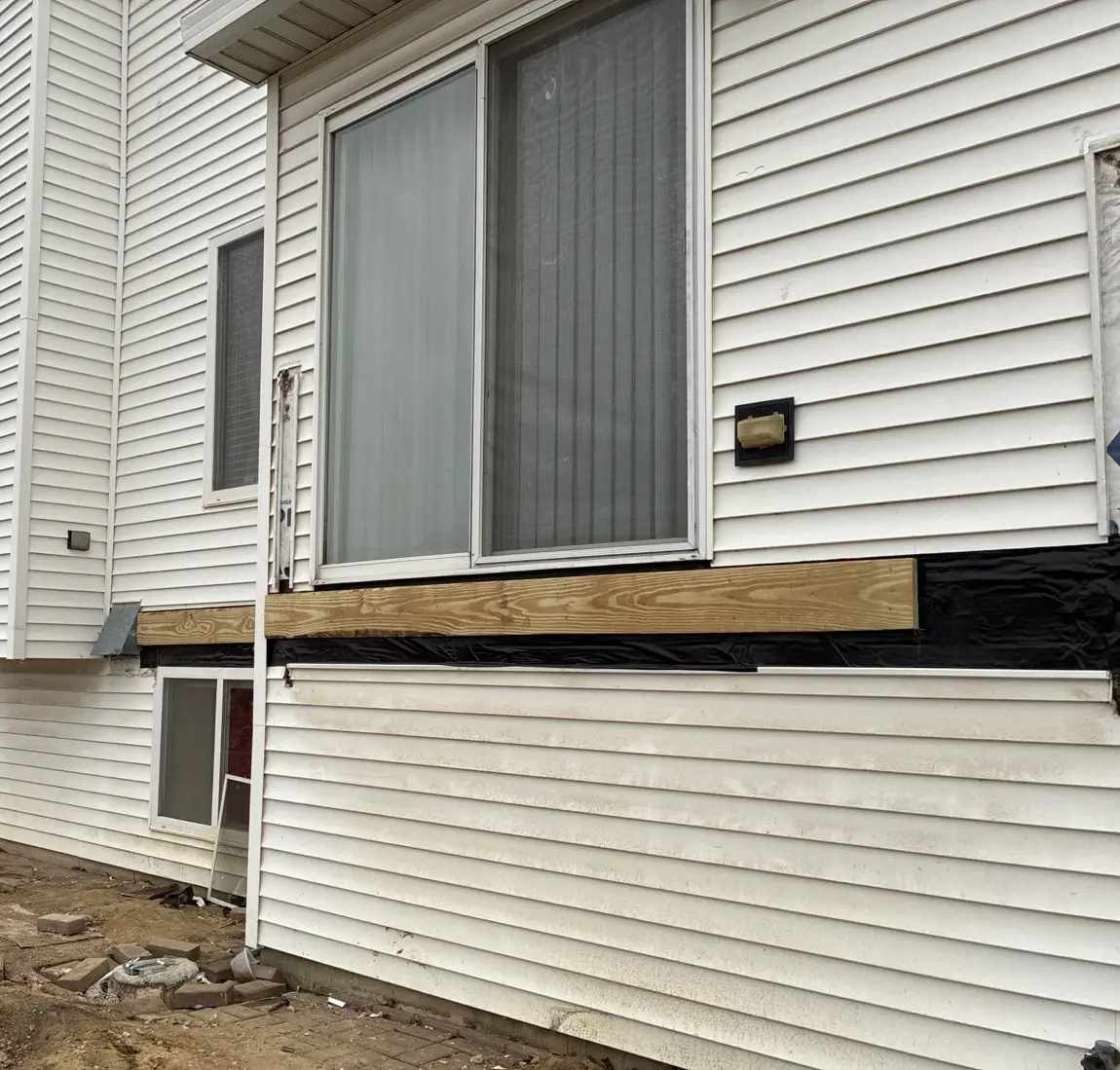
- Ledger Board Flashing: Inspect the metal flashing along the house wall to make sure it directs water away from the ledger and prevents pooling.
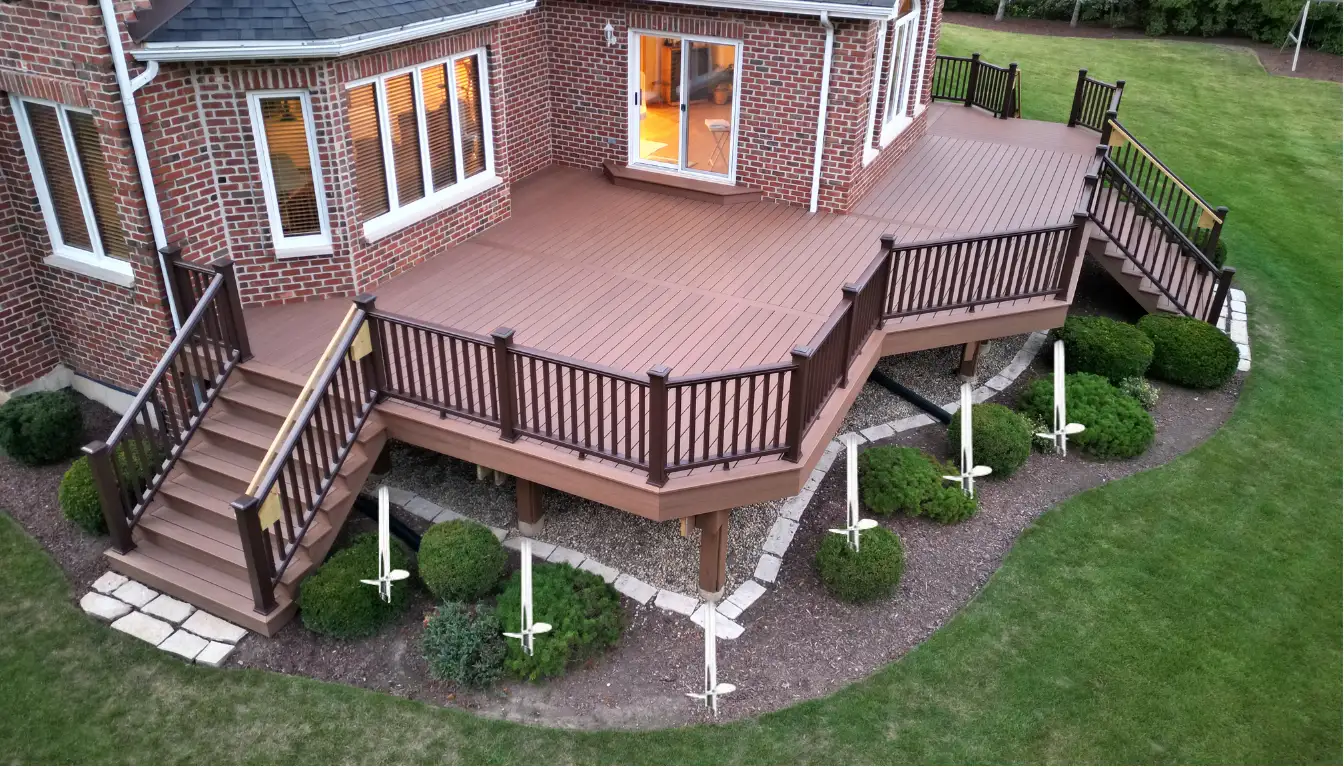
- Joist & Framing Health: Check visible framing underneath for soft spots, wood rot, or moisture buildup around joist tape and support posts.
- Fasteners & Hardware: Check hidden deck fasteners, face screws, stair brackets, and post-to-beam connectors for looseness, movement, or rust.
Conclusion
Maintaining your composite deck is important to keep it looking beautiful and structurally sound for a long time. By following the tips we have mentioned in this post, you can ensure that your investment will last for many seasons. Need help with your composite decking maintenance or have other questions? Contact us
Frequently Asked Questions About Maintenance In Naperville, IL
How Often Should I Clean My Composite Deck?
Clean your composite deck at least twice a year, once in spring and again in fall, to maintain its appearance and condition. Decks under heavy tree cover may need cleaning every few months. Regular cleaning helps prevent pollen and leaf tannins from building up.
Can I Use a Pressure Washer on Composite Boards?
You can use a pressure washer to clean composite decking, but you must use care. Excessive pressure or holding the nozzle too close to the boards can damage the surface. Use a wide fan-tip nozzle, 40 degrees or wider, and keep the pressure below 2,000 PSI. Maintain a safe distance between the pressure washer nozzle and the deck boards. Avoid prolonged spraying in any one area. If you are cleaning a brand-specific board like Trex, follow their published pressure-washing guidelines for that specific line.
Does Composite Decking Need Sealing or Staining?
No. Composite decking does not need to be sealed or stained like traditional wood decking. Composite boards have a finished surface designed to withstand outdoor exposure without ongoing coatings. Applying a stain, paint, or sealer is generally unnecessary and may affect the deck’s appearance or manufacturer’s warranty.
What Is the Best Way to Clear Snow From a Composite Deck?
Remove light snow with a soft-bristle broom to avoid damaging the deck surface. For heavier snowfall, use a smooth plastic shovel and work parallel to the deck boards to avoid catching the edges of the boards. Once winter weather clears, sweep away any lingering grit and allow the surface to dry completely.