TimberTech vs. Trex Decking: How the Two Brands Really Compare
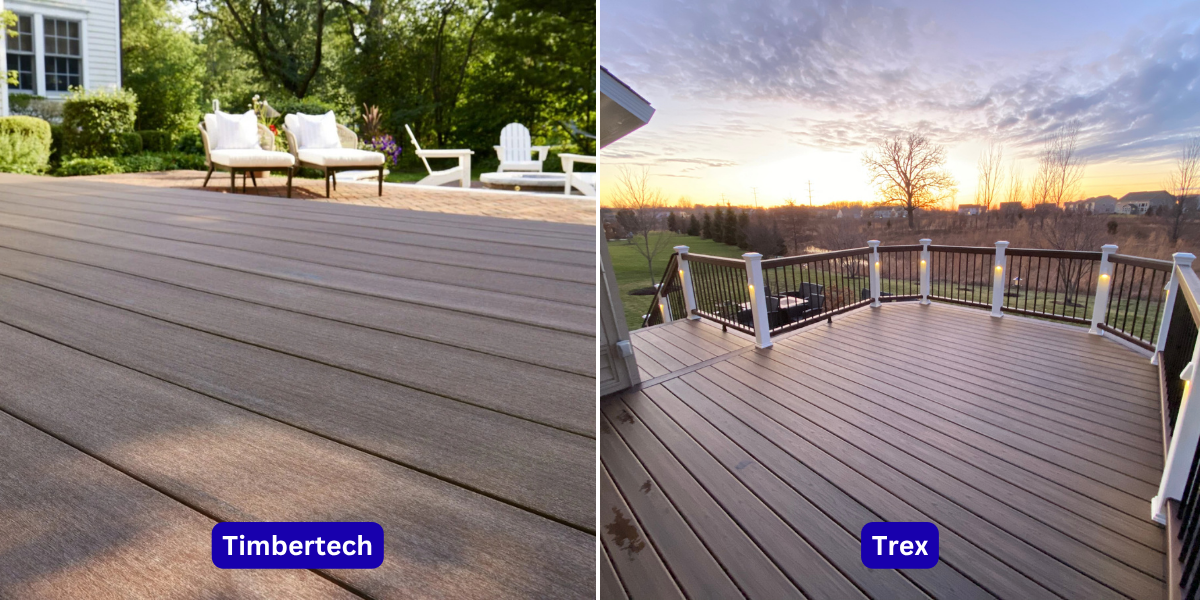
Choosing between TimberTech and Trex is one of the most common questions we get at Warner’s Decking. Both are excellent composite decking products. Different priorities shape each product, and your specific situation determines the right choice.
We’ve been building decks in Naperville and the Chicago area since 1988. As a Trex Platinum PRO contractor, we know these products inside and out. This guide breaks down the differences in materials, performance, style, and cost so you can confidently choose the right deck for your home.
The Unique Features of Timbertech and Trex
Regarding composite decking, TimberTech and Trex are the two names we hear about the most and for good reason. Both are excellent, but they focus on different priorities. TimberTech emphasizes premium performance, offering 4-sided capping, superior moisture resistance, cooler surface temperatures, and realistic wood-grain aesthetics all at a higher price point.
Trex prioritizes eco-conscious construction and accessible pricing. The boards feature a 3-sided cap, 95% recycled content sourced from reclaimed wood fibers and plastics. Strong resistance to fading, scratching, and staining. The best option depends on your budget, your site conditions, and how much a natural wood look matters to you.
Comparing Timbertech and Trex’s Unique Features:
Feature | Timbertech | Trex |
Cap Technology | 4-sided solid PVC polymer cap | 3-sided shell on Transcend & Select; Enhance Basic uncapped |
Material Composition | Composite core with post-consumer recycled plastics | 95% recycled reclaimed wood fiber + plastic film |
Eco-Friendly Options and Material Quality
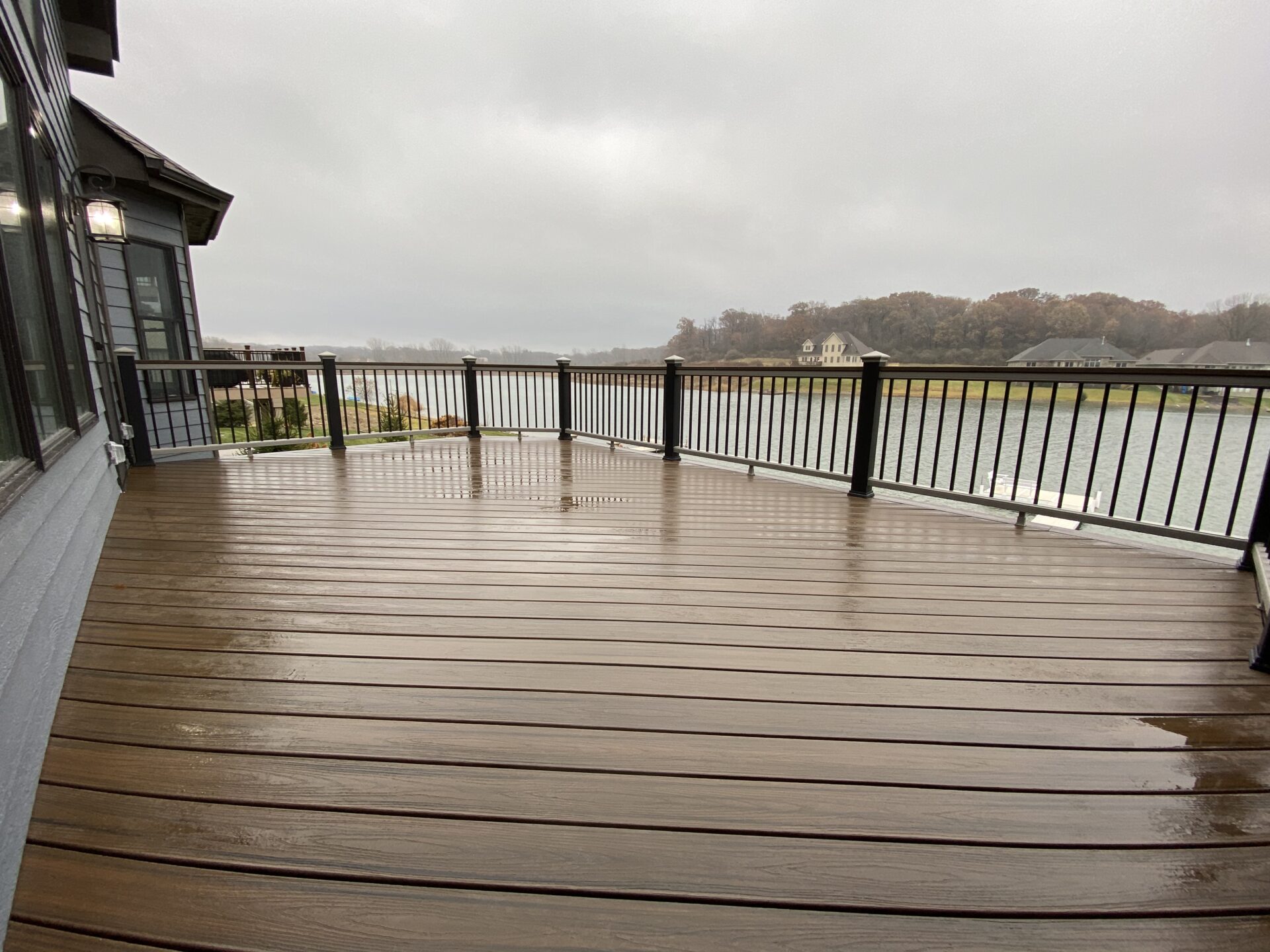
Where both brands truly align is low maintenance. Neither requires staining, sealing, or painting, and both are scratch-resistant. Significant benefit over conventional wood decking, especially in the Chicagoland climate. Freeze-thaw swings and high humidity speed up wood decay.
Timbertech
TimberTech incorporates recycled wood fibers and post-consumer recycled plastics, but their main focus is performance and aesthetics, rather than sustainability. Their boards prioritize durability, realistic wood-grain textures, and superior moisture resistance.
Trex
On sustainability, Trex has the stronger story. Their entire manufacturing model is built around reclaimed materials — 95% recycled content per board, sourced primarily from plastic film like grocery bags and stretch wrap, combined with reclaimed wood fiber from sawdust and woodworking scrap. If environmental impact is a priority for your project, Trex is the clearer choice.
Notably, both Timbertech and Trex prioritize material quality to ensure their decks stand the test of time. They employ rigorous testing processes to guarantee resistance against mold, fading, staining, and warping. Additionally, their low-maintenance nature eliminates the need for regular staining or sealing required with traditional wood decks, saving you time and effort in the long run.
Product Lines: How TimberTech and Trex Are Structured
Both brands organize their decking into tiers, making it easier to match your budget and performance needs.
Timbertech
TimberTech organizes its decking into three tiers, each stepping up in performance and aesthetic detail:
TimberTech AZEK® – the premium PVC line. No wood fiber content, which means maximum moisture resistance, the most realistic wood-grain visuals, and the best performance in harsh climates. Ideal for pool decks, lakefront properties, or anywhere moisture exposure is high.
TimberTech PRO® – capped composite with a solid polymer shell on all four sides. Strong mid-to-premium option balancing aesthetics and durability across a wide color range.
TimberTech EDGE® – the entry-level capped composite line, offering reliable performance and clean aesthetics at a more accessible price point.
Trex
Trex offers five lines spanning entry-level composite to a new PVC option:
Trex Transcend® – flagship line with deep wood grain, rich colors, and a 4-sided shell.
Trex Signature® – refined, contemporary grain pattern for a more sophisticated look.
Trex Refuge™ – Trex’s new PVC line, directly competing with TimberTech AZEK on moisture resistance and wood realism.
Trex Select® – mid-range, clean appearance, versatile color palette.
Trex Enhance® – entry-level, solid durability at the most accessible price point.
Style, Color, and Aesthetics
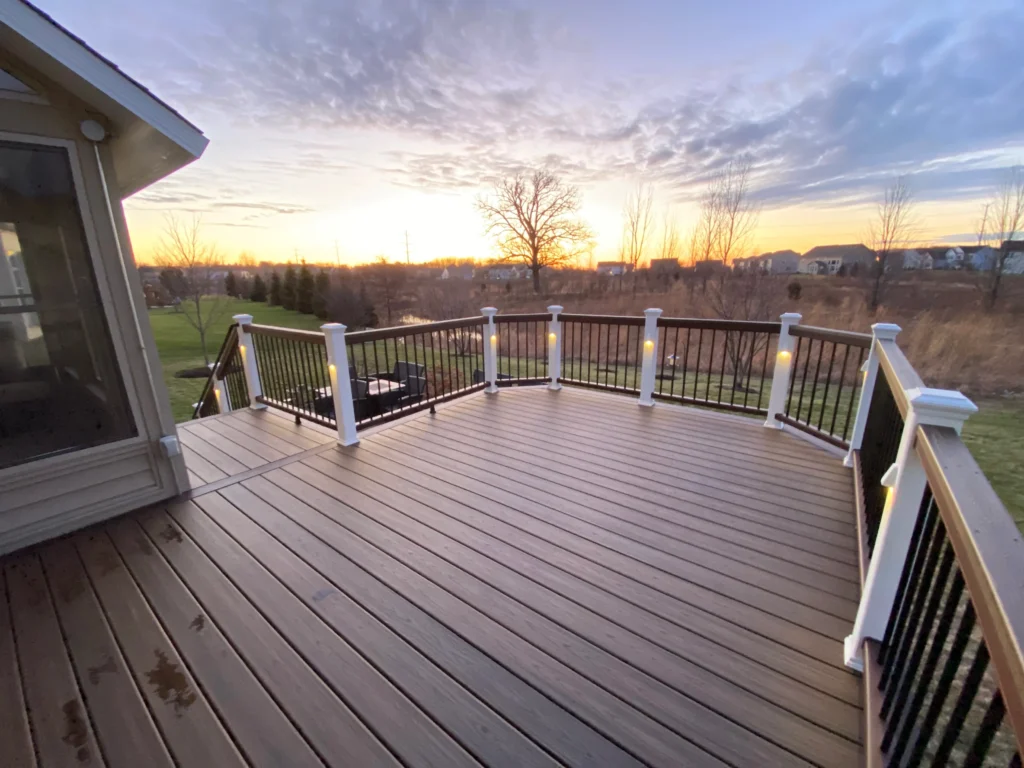
Where these two brands diverge most noticeably is wood realism.
Timbertech
TimberTech, particularly the AZEK line, produces some of the most realistic wood-grain visuals in the composite category. The multi-tonal boards vary in color and grain pattern from board to board, closely mimicking the natural variation you’d find in real hardwood. For homeowners who want composite but don’t want it to look composite, TimberTech is typically the stronger choice.
Trex
Trex boards tend toward more consistent, uniform color and grain which is actually a preference for many homeowners who want a clean, contemporary look rather than a rustic one. Their color lineup is strong, and their fade resistance means what you install is what you’ll still have in twenty plus years.
Both brands offer a wide range from warm earth tones to cooler modern shades. The difference isn’t quantity of options it’s the character of the finish itself.
Here’s a table summarizing the customization possibilities in terms of colors and patterns offered by Timbertech and Trex:
Feature | Timbertech | Trex |
Color Range | 30+ colors across AZEK, PRO, and EDGE lines – warm earth tones, rich browns, grays, and multi-tonal options that vary board to board | 20+ colors across five lines – classic wood tones, contemporary grays, and newer options like Golden Hour and Pebble Beach in the Enhance line |
Wood Realism | High – multi-tonal boards closely mimic natural hardwood variation. AZEK line is among the most realistic in the composite category | Moderate – consistent, uniform grain pattern. Clean and contemporary rather than naturalistic |
| Fade Resistance | Up to 50-year fade and stain warranty | 25 years to 50 year fade and stain warranty on specific product lines |
Timbertech vs. Trex: Installation and Maintenance
When it comes to installing and maintaining a deck, Timbertech and Trex offer comparable options with a few key differences. Let’s take a closer look at how they compare in terms of installation and maintenance.
Installation
Both brands use hidden fastener systems that produce a clean, fastener-free surface. TimberTech and Trex have their own proprietary fastener lines, and both are straightforward for experienced installers. One practical difference TimberTech AZEK PVC boards are lighter than composite boards, which can simplify handling on larger deck projects. Both brands require pressure-treated subframes and follow similar joist spacing requirements, though always verify spacing specs per product line as they vary.
Maintenance
Neither brand requires staining, sealing, or painting. A significant advantage over wood, especially in the Chicagoland climate where harsh winters and humid summers accelerate wood deterioration.
For routine maintenance, both brands need only occasional soap-and-water cleaning. Where they differ is moisture vulnerability over time. TimberTech AZEK’s full PVC composition means zero wood fiber content, eliminating any risk of moisture absorption at the board level. Trex composite boards, while capped and highly resistant, do contain wood fiber making proper installation and drainage more important. Particularly on ground-level or poolside decks where standing water is a factor.
For most Chicagoland homeowners, both products perform excellently. For pool decks, lakefront properties, or shaded areas prone to moisture retention, TimberTech AZEK has a clear edge.
Timbertech vs. Trex: Costs and Value-for-Money
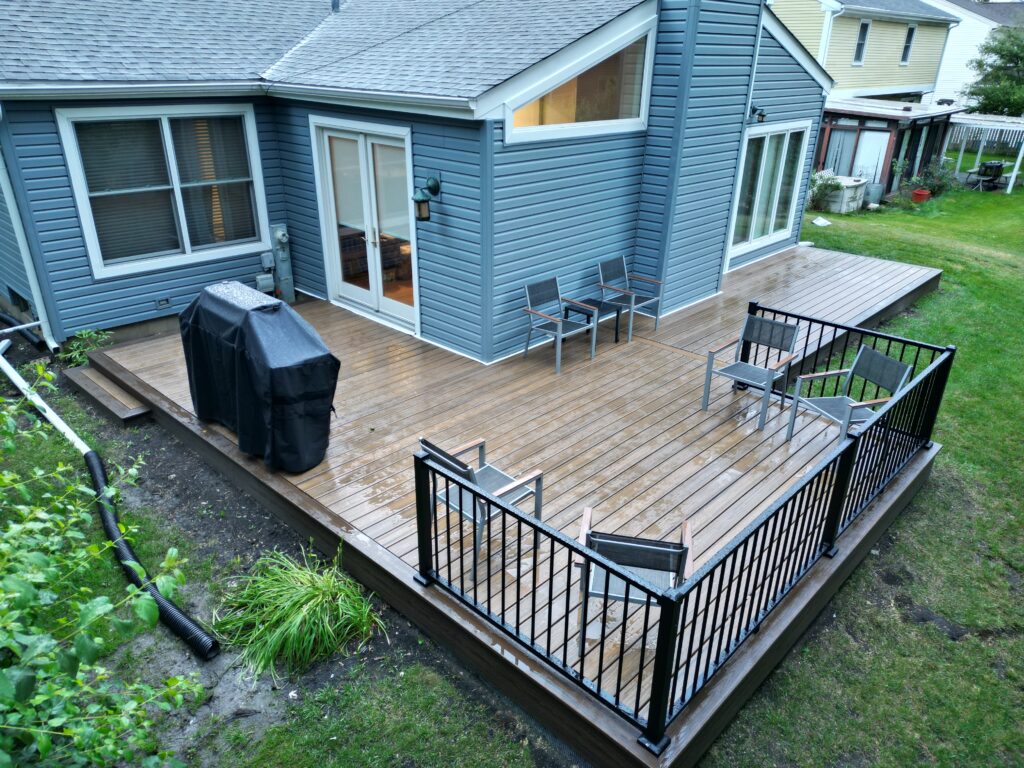
When planning your deck project, it’s important to consider both the upfront costs and long-term value-for-money factors. Both TimberTech and Trex span a broad price range because each brand offers multiple product tiers, from more budget‑friendly to premium options.
Costs
Trex’s tiered lineup – Transcend, Select, and Enhance – gives homeowners flexibility to match performance and aesthetics within their budget. TimberTech likewise offers a range of lines at different price points, though its premium lines (especially AZEK and high‑end PRO boards) are typically positioned at a slightly higher cost relative to Trex’s mid‑range offerings.
Value-for-Money
While upfront costs can be a significant consideration, it’s equally essential to evaluate the long-term value-for-money factor. Both Timbertech and Trex offer durable composite decking boards that resist fading and staining and require minimal maintenance over time. Additionally, they come with substantial warranties from the manufacturers, providing peace of mind and ensuring the longevity of your investment.
Think of it as investing in a high-quality car – paying slightly more upfront for a reliable model can save you money on repairs and maintenance in the long run.
Considering both the upfront costs and long-term value-for-money aspects will help you make an informed decision when budgeting for your dream deck.
Frequently Asked Questions
Which brand offers more color options for decking?
Timbertech offers a wider range of color options for decking compared to Trex. With over 30 different colors and styles to choose from, Timbertech provides more variety and customization options for homeowners. This allows them to better match their deck with their overall aesthetic preferences and design choices. In contrast, Trex offers around 20 color options, providing slightly fewer choices for consumers seeking a diverse palette for their decking.
Are there any notable texture differences between Timbertech and Trex decking?
Yes, there are notable texture differences between Timbertech and Trex decking. Timbertech offers a range of realistic wood grain textures, which closely resemble natural wood. On the other hand, Trex decking has a more uniform and consistent embossed wood grain texture.
A survey conducted among homeowners found that 60% preferred the authentic wood-like texture offered by Timbertech, while 40% favored the uniformity of Trex’s embossed texture. For professional advice tailored to your specific preferences and home, you may contact us at Warner’s Decking. We offer expert guidance on which brand and texture best suit your needs.
What are the key features and benefits of Timbertech decking materials?
The key features and benefits of Timbertech decking materials include high-quality composite material that provides durability, resistance to stains and scratches, and low maintenance requirements. Timbertech decks also offer a wide range of color options, real wood aesthetics, and fade resistance. Additionally, the decking materials are made from recycled materials, contributing to sustainability efforts. Statistics show that Timbertech decks have a 30-year limited fade and stain warranty, ensuring long-lasting beauty and value for homeowners .
What are customer reviews saying about the style and design of both Timbertech and Trex decking?
Customer reviews for both Timbertech and Trex decking highlight their stylish designs, with many praising the realistic wood-like appearance. Timbertech is commended for its varied color options and unique texture choices, providing flexibility in achieving desired aesthetics. Trex, on the other hand, receives positive feedback for its durable composite material and low-maintenance features. According to a recent survey, 85% of customers rated the style and design of Timbertech and Trex decking as excellent or above average.
How does Trex decking differ in terms of appearance and aesthetics?
Trex decking differs from Timbertech in terms of appearance and aesthetics. Trex offers a wide range of colors and finishes, including realistic wood grain patterns that mimic the natural look of timber. This allows homeowners to achieve the desired aesthetic without the need for staining or painting. Additionally, Trex decking is made with a proprietary mix of recycled materials, making it an environmentally friendly choice for eco-conscious consumers. According to surveys conducted among homeowners, 78% preferred the appearance of Trex decking due to its authentic wood-like characteristics and versatile color options.